At the Clinic: Talking About Pain, Allergies, and Symptoms
About this lesson: This is an A2 (Elementary) ESL lesson in the General English category. It takes about 60 minutes. It includes 5 vocabulary words, a reading text, comprehension questions, discussion questions and speaking patterns. Suits one-to-one or small-group online classes. Free to open and teach with no login, and it prints as a PDF.
Print just the discussion questions
How this lesson is built
This is a complete conversation lesson built on a scientific pedagogical formula, not a generic worksheet: recall prior topic vocabulary, pre-teach the new words in depth, read in context, practise active recall with flashcards and synonyms/antonyms, build accuracy with exercises, and finish with deep discussion.
- Warm-up: Discussion questions that connect the topic to the student’s own life and recall vocabulary they already know about the subject.
- Reading: A text written for this CEFR level that uses each new word two or three times in context, giving the student something meaningful to react to.
- Key vocabulary: 5 new words, pre-taught before the reading with a definition, pronunciation guide, example sentences and a picture, plus word families, usage notes, recall flashcards and synonyms/antonyms, giving a solid grounding before reading.
- Comprehension: 5 questions that check the new words: retrieval practice, not rereading.
- Sentence frames: 3 speaking patterns, each at three levels of support (emerging, developing, expanding) with model answers—especially helpful scaffolding for beginners and less confident speakers.
- Gap-fill: The new words again, in a shuffled order, so the student recalls them by meaning in context.
- Sentence unscramble: Natural sentences with the new words to put back in order, reinforcing grammar and collocation.
- Discussion: 5 open questions designed to talk deeply about the subject while actively using the lesson’s target vocabulary: the heart of a conversation lesson.
- Quiz: A short retrieval check that brings every new word back once more.
Unlike a generic worksheet, the new words are taught before the reading and met again in the activities, the speaking is supported at three levels and most of the time goes on the student talking. Teachers who use PlanWise ESL also get per-student vocabulary tracking (recycling earlier words into future readings and questions), a private learner dashboard with flashcards and custom lesson creation, and a downloadable study PDF.
Warm-up: How Do You Feel Today?
Look at the questions and talk about health, feeling sick, and going to the doctor.
- How do you feel today — good, tired, or something else?
- When was the last time you were sick? What was wrong?
- When you have a cold, what do you do first?
- Do you like going to the doctor? Why or why not?
- Do you take medicine quickly, or do you wait and rest?
Reading Text: Maria Goes to the Clinic
Maria did not feel well last week. Let's read her story and see what the doctor said.
Last week, Maria felt sick. She had many symptoms. Her head hurt and she felt dizzy in the morning. She did not want to go to work.
Her throat was very sore. It hurt when she drank water. Her eyes were red too. She was worried, so she went to the clinic.
At the clinic, the doctor asked about her symptoms. 'When did you feel dizzy? Is your throat sore?' Maria answered all the questions.
The doctor looked at Maria's arms. There was a small red rash. 'This is an allergy,' the doctor said. 'Your new soap caused it.'
The doctor gave Maria medicine for the allergy and for her cold. Now her rash is gone and her throat is not sore. She feels much better and she is not dizzy anymore.
Key Vocabulary
symptom

a sign that shows you are sick
A headache is a common symptom of a cold.
More examples: A fever is another symptom of the flu. • Tell the doctor your symptoms. • My first symptom was a cough.
Common collocations: a common symptom, the first symptom, symptoms of the flu
Word family: symptoms, symptomatic
Synonyms: sign, warning
Antonyms: cure, recovery
Related concepts: illness, doctor, fever
Contexts: at the clinic, talking to a doctor, feeling sick at home
Usage note: Use with 'have': 'I have symptoms.' You can talk about one symptom or many symptoms. Doctors often ask, 'What are your symptoms?'
allergy

a bad body reaction to some food or things
She has an allergy to nuts.
More examples: My brother has a milk allergy. • Dust is a common allergy for many people. • I carry medicine because of my allergy.
Common collocations: have an allergy, a food allergy, an allergy to cats
Word family: allergic, allergies
Synonyms: reaction, sensitivity
Antonyms: tolerance
Related concepts: food, medicine, skin problems
Contexts: eating out, at the doctor, shopping for food
Usage note: Use the pattern 'allergy to + thing'. The adjective form is very common in daily talk: 'Are you allergic to anything?'
sore
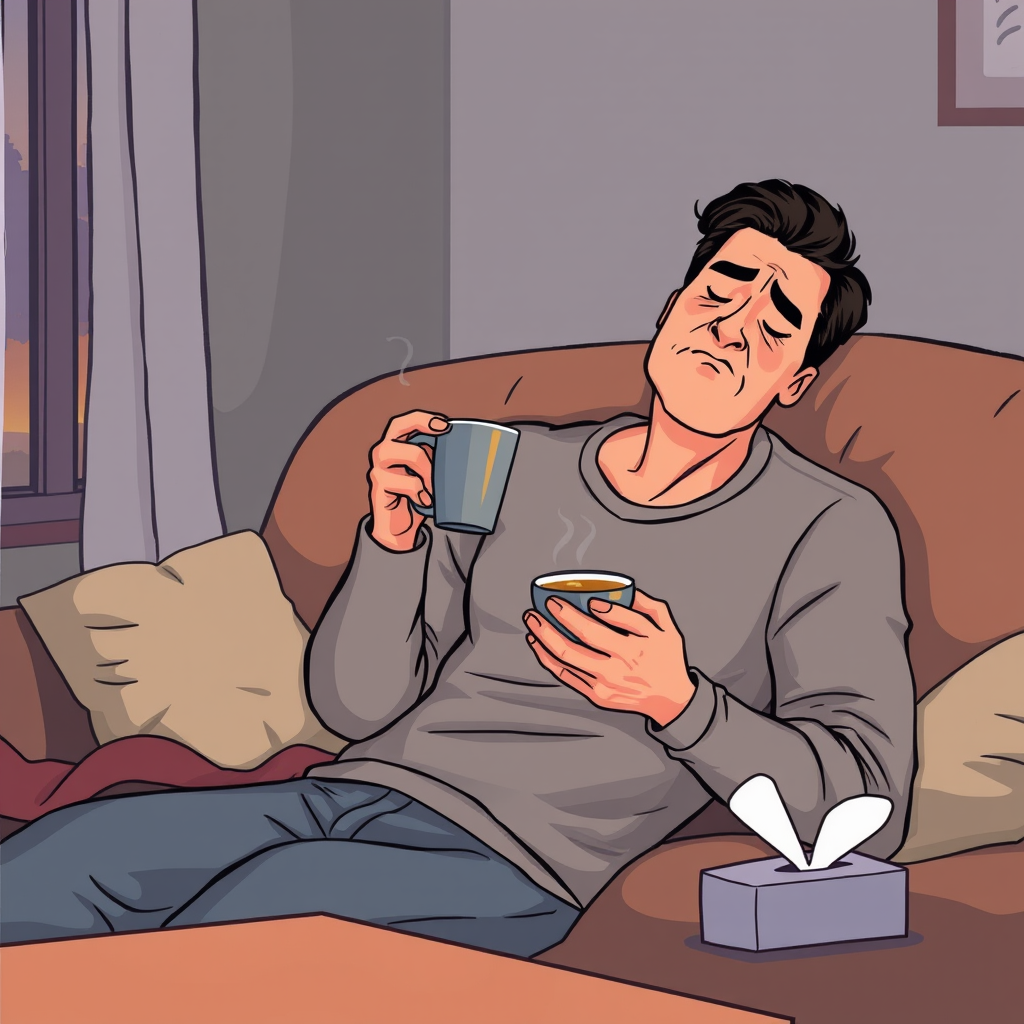
painful when you touch or use it
I have a sore throat.
More examples: My legs are sore after running. • He has a sore back from sitting all day. • Her eyes feel sore and tired.
Common collocations: a sore throat, sore muscles, feel sore
Word family: soreness, sorely
Synonyms: painful, hurting
Antonyms: comfortable, painless
Related concepts: pain, throat, muscles
Contexts: having a cold, after exercise, at the doctor
Usage note: Put 'sore' before a body part: sore throat, sore back, sore eyes. Also use with 'feel': 'My shoulders feel sore.'
dizzy

feeling that everything is turning around you
I felt dizzy after standing up fast.
More examples: She gets dizzy on hot days. • He felt dizzy and sat down quickly. • The room spins when I am dizzy.
Common collocations: feel dizzy, get dizzy, a dizzy spell
Word family: dizziness
Synonyms: unsteady, light-headed
Antonyms: steady, balanced
Related concepts: balance, standing up, heat
Contexts: hot weather, being sick, standing up fast
Usage note: Almost always used with 'feel' or 'get': 'I feel dizzy.' You can be dizzy from heat, standing up fast, or being sick.
rash

red spots on the skin
He has a rash on his arm.
More examples: The rash is itchy. • A rash can come from an allergy. • The rash went away after two days.
Common collocations: an itchy rash, a red rash, a rash on my skin
Word family: rashes
Synonyms: skin spots, irritation
Antonyms: clear skin, healthy skin
Related concepts: skin, itching, allergy
Contexts: at the clinic, after using new soap, with a fever
Usage note: Use with 'have' and say where it is: 'I have a rash on my arm.' Rashes often come with allergies or sickness.
Vocabulary Check
- What does 'symptom' mean?
- a kind of medicine
- a doctor at a clinic
- a sign that shows you are sick
- a place you go when you are sick
- Which sentence uses 'allergy' correctly?
- I have an allergy to cats.
- I allergy my throat every winter.
- The allergy was very sore.
- She allergy to the clinic yesterday.
- In which situation would you use the word 'sore'?
- When you are very happy
- When your throat hurts
- When you buy food at the market
- When you sleep very well
- What does 'dizzy' mean?
- Very tired
- Very hungry
- Feeling that everything is turning around you
- Feeling angry
- What is a 'rash'?
- Red spots on the skin
- A kind of soap
- A doctor's question
- A pain in your head
Language Practice: Talking About How You Feel
Practice describing symptoms, allergies, and giving advice about health.
- Describing symptoms and how you feel
- Emerging: I have a sore ___. / I feel ___. — I have a sore throat.
- Developing: I have a sore ___ and I feel ___. — I have a sore throat and I feel dizzy.
- Expanding: When I ___, I feel ___, so I ___. — When I stand up fast, I feel dizzy, so I sit down.
- Talking about allergies
- Emerging: I have an allergy to ___. — I have an allergy to dust.
- Developing: I'm allergic to ___, so I don't eat ___. — I'm allergic to nuts, so I don't eat chocolate with nuts.
- Expanding: When I eat ___, I get a ___, so I always ___. — When I eat shellfish, I get a rash, so I always check the menu.
- Giving advice about health
- Emerging: You should ___. — You should rest.
- Developing: If you feel ___, you should ___. — If you feel dizzy, you should sit down.
- Expanding: If your symptoms last for more than ___ days, you should ___. — If your symptoms last for more than three days, you should go to the clinic.
Fill in the Blanks
Yesterday Ben did not feel well. A runny nose is a common _____ of a cold, but Ben also had a _____ throat and he felt _____. He looked in the mirror and saw a red _____ on his neck. He remembered that his sister has an _____ to soap, so he went to the doctor.
Word bank: symptom, allergy, sore, dizzy, rash
Sentence Unscramble
- I / feel / dizzy / when / I / stand / up / too / fast.
- She / has / a / sore / throat / and / a / bad / cough.
- The / doctor / says / my / rash / is / an / allergy.
Discussion Questions
Think about the last time you were sick. Maybe you had a sore throat or a headache. Maybe you felt dizzy or hot. When we are sick, we all do different things: some people rest, some people take medicine, and some people go straight to the doctor.
When you feel sick, what do you usually do first — rest at home or go to the doctor? Why?
Many people have an allergy. Some people are allergic to food like nuts, milk, or seafood. Other people get a rash or feel sick because of cats, dust, or pollen. Allergies are different in every country and every family.
Do you have any allergies, or does someone in your family? What happens when they eat or touch that thing?
Going to the doctor is different in every country. In some places you wait a long time in the clinic. In other places the doctor comes fast. Some doctors ask many questions about your symptoms, and some doctors give medicine very quickly.
What is a doctor's visit like in your country? Do you like going to the doctor?
When people have a cold or a sore throat, some people take medicine from the shop. Other people drink hot tea with honey or lemon. In many families, there are old ideas for getting better that parents teach their children.
What do you do at home when you have a cold? Does it really help you?
Some people take medicine for every small pain — a headache, sore muscles, or a small cold. Other people never take medicine and just rest and wait. People have strong opinions about this, and doctors do not always agree.
Do you think it is better to take medicine or to rest and wait? Why?
Knowledge Check
- Which one is a symptom of a cold?
- A new phone
- A runny nose
- A big house
- A fast car
- True or false: 'Sore' means painful.
- True
- False
- If you are allergic to nuts, what happens when you eat them?
- You feel happy
- Nothing happens
- Your body has a bad reaction
- You sleep better
- True or false: A rash is red spots on the skin.
- True
- False
- Your friend says: 'I feel dizzy.' What is good advice?
- Sit down and rest
- Run very fast
- Eat a very big meal
- Stand on one leg
Free to use with your students: Free to teach, screen-share, print and share with your students, with a credit to PlanWise ESL. Please do not sell it or republish it as your own. What you can do with free lessons.