Visiting a Doctor and Describing Symptoms
About this lesson: This is an A2 (Elementary) ESL lesson in the General English category. It takes about 60 minutes. It includes 5 vocabulary words, a reading text, comprehension questions, discussion questions and speaking patterns. Suits one-to-one or small-group online classes. Free to open and teach with no login, and it prints as a PDF.
Print just the discussion questions
How this lesson is built
This is a complete conversation lesson built on a scientific pedagogical formula, not a generic worksheet: recall prior topic vocabulary, pre-teach the new words in depth, read in context, practise active recall with flashcards and synonyms/antonyms, build accuracy with exercises, and finish with deep discussion.
- Warm-up: Discussion questions that connect the topic to the student’s own life and recall vocabulary they already know about the subject.
- Reading: A text written for this CEFR level that uses each new word two or three times in context, giving the student something meaningful to react to.
- Key vocabulary: 5 new words, pre-taught before the reading with a definition, pronunciation guide, example sentences and a picture, plus word families, usage notes, recall flashcards and synonyms/antonyms, giving a solid grounding before reading.
- Comprehension: 5 questions that check the new words: retrieval practice, not rereading.
- Sentence frames: 3 speaking patterns, each at three levels of support (emerging, developing, expanding) with model answers—especially helpful scaffolding for beginners and less confident speakers.
- Gap-fill: The new words again, in a shuffled order, so the student recalls them by meaning in context.
- Sentence unscramble: Natural sentences with the new words to put back in order, reinforcing grammar and collocation.
- Discussion: 5 open questions designed to talk deeply about the subject while actively using the lesson’s target vocabulary: the heart of a conversation lesson.
- Quiz: A short retrieval check that brings every new word back once more.
Unlike a generic worksheet, the new words are taught before the reading and met again in the activities, the speaking is supported at three levels and most of the time goes on the student talking. Teachers who use PlanWise ESL also get per-student vocabulary tracking (recycling earlier words into future readings and questions), a private learner dashboard with flashcards and custom lesson creation, and a downloadable study PDF.
Warm-up: How Do You Feel?
Look at the pictures and talk about being sick and going to the doctor.
- When was the last time you were sick? What happened?
- Do you like going to the doctor? Why or why not?
- What do you do first when you feel sick?
- Do you take medicine quickly, or do you wait?
- Who do you call first when you feel bad - family, a friend, or a doctor?
Reading Text: Maria's Bad Week
Read about Maria. She did not feel well, so she visited a doctor. What happened to her?
Last Monday, Maria woke up and felt terrible. Her head hurt and her throat was sore. She did not want to eat breakfast. She thought, 'Maybe I just need more sleep.'
But on Tuesday, she felt worse. She stood up and felt dizzy, so she sat down again. Her friend Ana said, 'Those are symptoms. You should see a doctor.' Maria agreed.
Maria called the doctor's office in the morning. The nurse said, 'You can have an appointment at three o'clock today.' Maria was happy because it was not a long wait.
At the doctor's office, the doctor asked many questions. 'When did it start? Do you have a sore throat? Do you feel dizzy?' Maria answered everything. Then the doctor said, 'You have the flu.'
The doctor wrote a prescription for some medicine. Maria took it to the pharmacy and got the medicine. After three days, she felt much better. Now she says, 'When you feel bad, don't wait. Go to the doctor!'
Key Vocabulary
symptom

a sign that shows you are sick
A headache is a symptom of the flu.
More examples: A fever is a common symptom of a cold. • Tell the doctor your symptoms, one by one. • My first symptom was feeling very tired.
Common collocations: common symptom, have symptoms, describe your symptoms
Word family: symptoms, symptomatic
Synonyms: sign, warning
Antonyms: health, wellness
Related concepts: illness, fever, cough
Contexts: doctor visits, being sick at home, talking to a nurse
Usage note: Use it when you talk about signs of illness, like a cough or a fever. Doctors often ask, 'What are your symptoms?'
sore

painful when you touch or use it
My throat is sore, so it hurts to talk.
More examples: I have a sore throat and a cough. • My legs are sore after running. • Her eyes were sore from the smoke.
Common collocations: sore throat, sore muscles, feel sore
Word family: soreness, sorely
Synonyms: painful, hurting
Antonyms: comfortable, painless
Related concepts: pain, throat, muscles
Contexts: colds and flu, after exercise, talking to a doctor
Usage note: Use it for body parts that hurt, especially throat, muscles, eyes, and feet. Very common in 'sore throat'.
dizzy
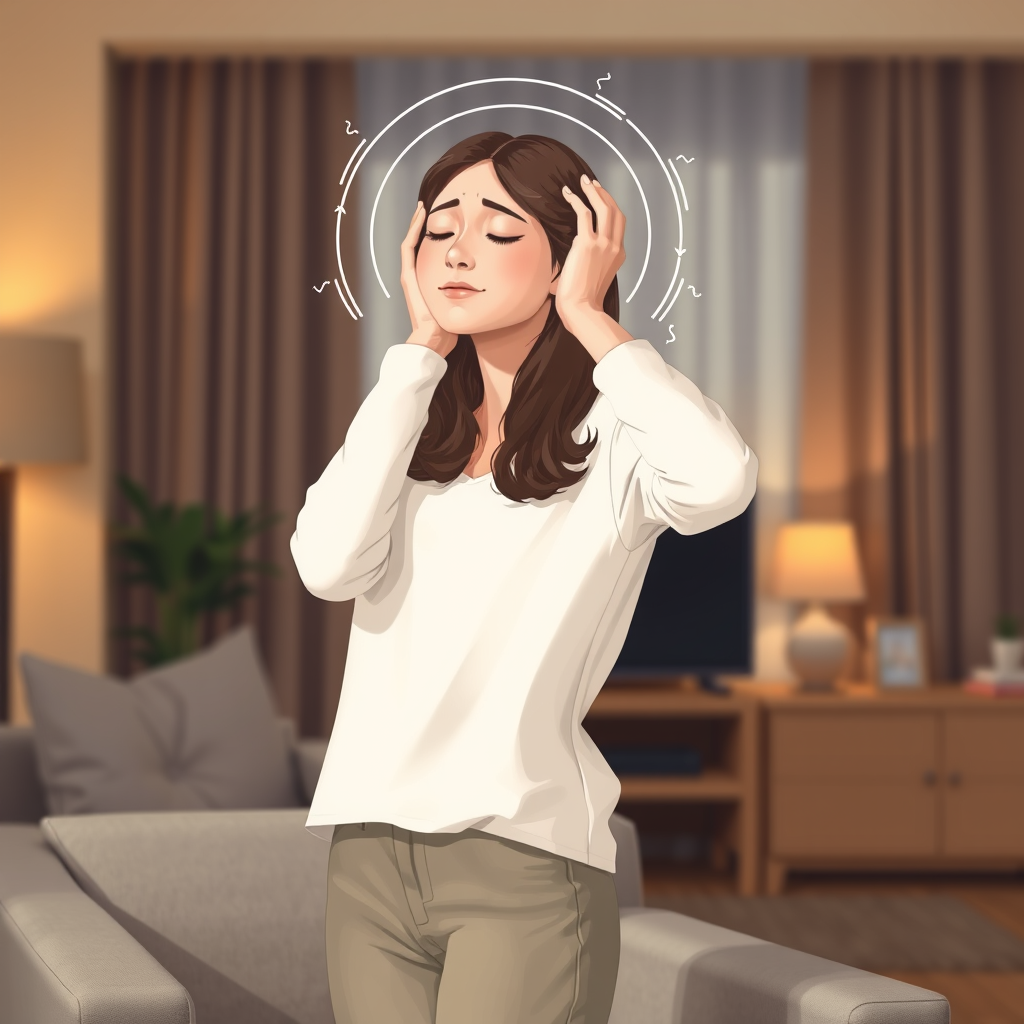
feeling that the room is moving around you
I stood up fast and felt dizzy.
More examples: She felt dizzy in the hot sun. • Don't get up too fast or you'll feel dizzy. • He was dizzy and had to sit down.
Common collocations: feel dizzy, get dizzy, slightly dizzy
Word family: dizziness, dizzily
Synonyms: light-headed, unsteady
Antonyms: steady, balanced
Related concepts: falling, standing up, heat
Contexts: illness, hot weather, after exercise
Usage note: Always use with 'feel' or 'get': 'I feel dizzy.' It describes how you feel, not a thing.
prescription

a paper from a doctor for medicine
The doctor gave me a prescription for strong medicine.
More examples: Take this prescription to the pharmacy. • You need a prescription for these pills. • My prescription was for five days of medicine.
Common collocations: write a prescription, fill a prescription, get a prescription
Word family: prescribe, prescribed
Synonyms: doctor's note, medicine order
Antonyms: over-the-counter medicine
Related concepts: pharmacy, medicine, doctor
Contexts: doctor visits, pharmacies, buying medicine
Usage note: Use it for medicine you can only buy with a doctor's paper. The verb is 'prescribe': 'The doctor prescribed antibiotics.'
appointment

a time you plan to meet someone
I have a doctor's appointment at three o'clock.
More examples: Can I make an appointment for tomorrow? • She was late for her appointment. • I need to cancel my appointment.
Common collocations: make an appointment, doctor's appointment, cancel an appointment
Word family: appoint, appointments
Synonyms: meeting, booking
Antonyms: free time, cancelation
Related concepts: schedule, doctor, time
Contexts: clinics, dentists, hair salons
Usage note: Use it for planned meetings with doctors, dentists, or hairdressers. The verb is 'make' or 'have': 'I made an appointment.'
Vocabulary Check
- What does 'symptom' mean?
- A kind of medicine
- A sign that shows you are sick
- A doctor's paper
- A time to meet the doctor
- Which sentence uses 'sore' correctly?
- I feel sore in my throat when I talk.
- I am sore a doctor tomorrow.
- She sore some medicine.
- The sore gave me a prescription.
- In which situation would you say 'I feel dizzy'?
- When your leg hurts
- When the room seems to move around you
- When you are hungry
- When you have a doctor's paper
- What does 'prescription' mean?
- A sign of illness
- A painful body part
- A paper from a doctor for medicine
- A planned meeting time
- Which sentence uses 'appointment' correctly?
- I appointment the medicine.
- My appointment is dizzy today.
- I have an appointment with the doctor at three.
- The appointment was sore.
Language Practice: Talking About Health
Practice describing how you feel and talking about doctor visits.
- Describing symptoms to a doctor
- Emerging: I have a ___. — I have a headache.
- Developing: I have a ___ and I feel ___. — I have a sore throat and I feel dizzy.
- Expanding: Since ___, I have had a ___ and I also feel ___ when I ___. — Since Monday, I have had a sore throat and I also feel dizzy when I stand up.
- Making and talking about appointments
- Emerging: I have an appointment on ___. — I have an appointment on Monday.
- Developing: I have an appointment with ___ at ___ on ___. — I have an appointment with the doctor at three on Monday.
- Expanding: I need to ___ my appointment with ___ because ___. — I need to change my appointment with the doctor because I have to work.
- Giving advice about being sick
- Emerging: You should ___. — You should see a doctor.
- Developing: You should ___ because you ___. — You should see a doctor because you feel dizzy.
- Expanding: If you ___, you should ___ because ___. — If you feel dizzy, you should sit down because you might fall.
Fill in the Blanks
Last week, Ben did not feel well. His first _____ was a headache, and his throat was _____. When he stood up, he felt _____, so he called the doctor. The nurse gave him an _____ for the same day. The doctor checked him and wrote a _____ for some medicine. After two days, Ben felt much better.
Word bank: symptom, sore, dizzy, appointment, prescription
Sentence Unscramble
- I / feel / dizzy / when / I / stand / up / fast
- The / doctor / gave / me / a / prescription / for / medicine
- Can / I / make / an / appointment / for / tomorrow
Discussion Questions
Everyone feels sick sometimes. Some people go to the doctor quickly. Other people wait and rest at home first. There is no one right way - it depends on the person and the problem.
When you feel sick, do you go to the doctor quickly or wait at home first? Why?
Maria had to describe her symptoms to the doctor. This can be hard in another language! Think about the last time you were sick and what your body felt like.
Think of the last time you were sick. What symptoms did you have? How did you feel?
In some countries, you can call and see a doctor the same day. In other places, you wait many days for an appointment. Some people also use the internet or a pharmacy first.
Is it easy or difficult to get a doctor's appointment in your country? Tell me about it.
Some people take medicine for every small problem. Other people prefer to rest, drink tea, or use home ideas like honey for a sore throat. Families often have their own habits.
Do you prefer medicine or home ideas when you are sick? What do people in your family do?
Talking to a doctor in English can feel stressful. Maybe you will travel or live in another country one day. Practicing now can help you feel ready.
If you had to see a doctor in English, what would be easy for you and what would be difficult?
Knowledge Check
- Your throat hurts when you talk. What is this?
- A prescription
- A sore throat
- An appointment
- A dizzy throat
- What do you take to the pharmacy to get medicine?
- A symptom
- An appointment
- A prescription
- A sore
- True or false? 'Dizzy' means your throat hurts.
- True
- False
- Which word means 'a sign that shows you are sick'?
- Appointment
- Prescription
- Symptom
- Sore
- True or false? You can 'make an appointment' with a doctor.
- True
- False
Free to use with your students: Free to teach, screen-share, print and share with your students, with a credit to PlanWise ESL. Please do not sell it or republish it as your own. What you can do with free lessons.