My Day, Every Day: Talking About Daily Routines
About this lesson: This is an A2 (Elementary) ESL lesson in the General English category. It takes about 60 minutes. It includes 5 vocabulary words, a reading text, comprehension questions, discussion questions and speaking patterns. Suits one-to-one or small-group online classes. Free to open and teach with no login, and it prints as a PDF.
Print just the discussion questions
How this lesson is built
This is a complete conversation lesson built on a scientific pedagogical formula, not a generic worksheet: recall prior topic vocabulary, pre-teach the new words in depth, read in context, practise active recall with flashcards and synonyms/antonyms, build accuracy with exercises, and finish with deep discussion.
- Warm-up: Discussion questions that connect the topic to the student’s own life and recall vocabulary they already know about the subject.
- Reading: A text written for this CEFR level that uses each new word two or three times in context, giving the student something meaningful to react to.
- Key vocabulary: 5 new words, pre-taught before the reading with a definition, pronunciation guide, example sentences and a picture, plus word families, usage notes, recall flashcards and synonyms/antonyms, giving a solid grounding before reading.
- Comprehension: 5 questions that check the new words: retrieval practice, not rereading.
- Sentence frames: 3 speaking patterns, each at three levels of support (emerging, developing, expanding) with model answers—especially helpful scaffolding for beginners and less confident speakers.
- Gap-fill: The new words again, in a shuffled order, so the student recalls them by meaning in context.
- Sentence unscramble: Natural sentences with the new words to put back in order, reinforcing grammar and collocation.
- Discussion: 5 open questions designed to talk deeply about the subject while actively using the lesson’s target vocabulary: the heart of a conversation lesson.
- Quiz: A short retrieval check that brings every new word back once more.
Unlike a generic worksheet, the new words are taught before the reading and met again in the activities, the speaking is supported at three levels and most of the time goes on the student talking. Teachers who use PlanWise ESL also get per-student vocabulary tracking (recycling earlier words into future readings and questions), a private learner dashboard with flashcards and custom lesson creation, and a downloadable study PDF.
Warm-Up: Your Morning
Look at the questions and talk about your typical morning. There are no wrong answers - just start talking!
- What time do you usually wake up?
- What is the first thing you do in the morning?
- Do you eat breakfast at home or on the way out?
- Are mornings easy or difficult for you? Why?
- What do you do every day without thinking about it?
Reading Text: A Day in Leo's Life
Read about Leo, a young man who works in an office. What is the same in your day? What is different?
Leo wakes up at seven o'clock every day. His alarm rings, but he does not get up at first. He lies in bed for five minutes because he loves his warm bed. Then he gets up and opens the window.
Leo has the same routine every morning. He takes a shower, gets dressed, and makes coffee. He does not eat a big breakfast. He only drinks coffee and eats one banana.
After breakfast, Leo tidies the kitchen. He washes his cup and puts it away. He likes a tidy home before he leaves. A messy kitchen makes him feel bad all day.
On Saturday, Leo does his chores. He cleans the bathroom, washes his clothes, and buys food for the week. He does not like chores, but he feels happy when they are finished.
Leo goes to bed at eleven o'clock. He reads a book for ten minutes. This is a good habit, he thinks. It helps him sleep well. Then he turns off the light and sleeps until his alarm rings again.
Key Vocabulary
routine

the things you do the same way every day
My morning routine starts with coffee.
More examples: Her evening routine is simple: dinner, TV, bed. • I need a new routine for the weekend. • My routine changed when I started a new job.
Common collocations: morning routine, daily routine, same routine
Word family: routine (adjective), routinely (adverb)
Synonyms: habit, system, pattern
Antonyms: surprise, change
Related concepts: schedule, morning, every day
Contexts: work, school, home life
Usage note: Use 'routine' to talk about the order of things you do every day. It is often used with 'morning', 'daily' or 'evening'.
alarm
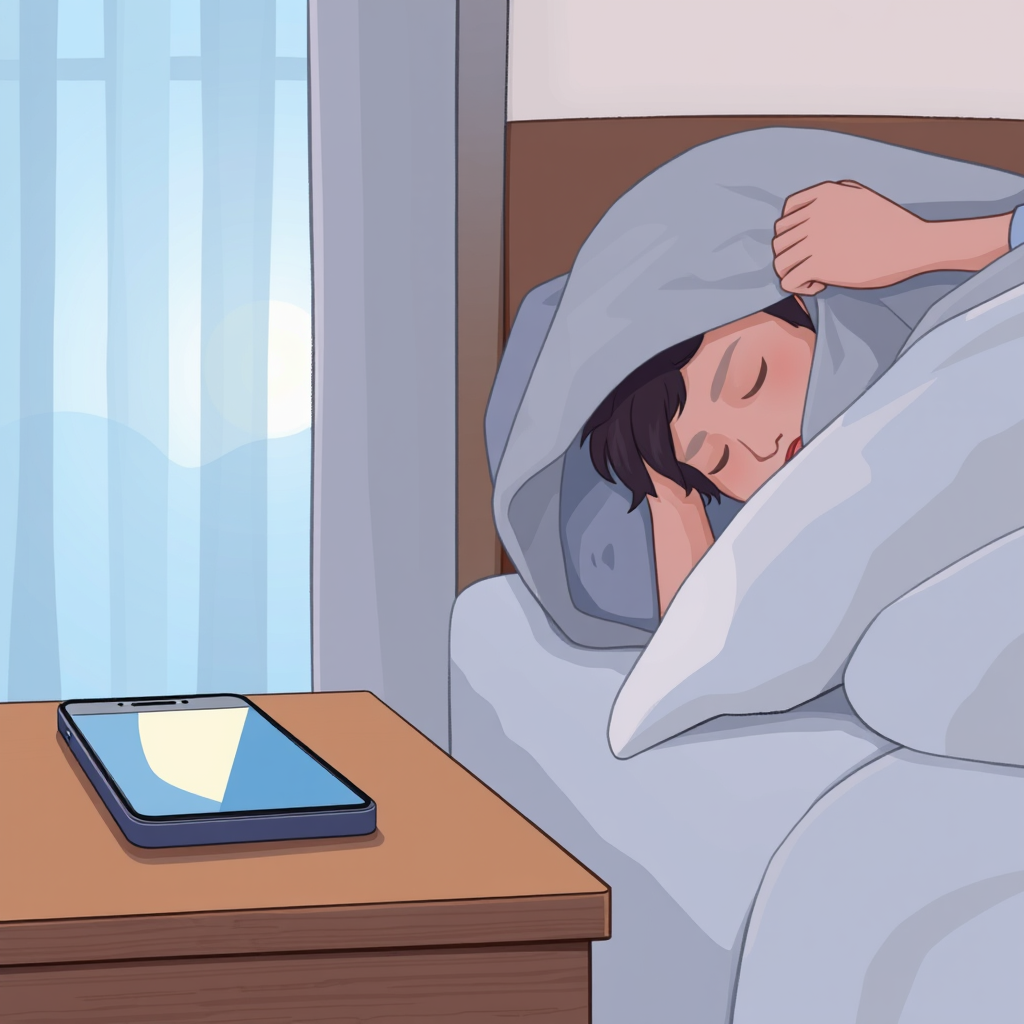
a clock or phone that makes a loud sound to wake you
My alarm rings at six thirty every day.
More examples: I set my alarm before I go to bed. • She turned off the alarm and got up. • He sleeps through his alarm sometimes!
Common collocations: set an alarm, the alarm rings, turn off the alarm
Word family: alarm clock (noun)
Synonyms: alarm clock, wake-up call
Antonyms: silence
Related concepts: waking up, morning, time
Contexts: bedroom, phone, travel
Usage note: Use 'set' with alarm: 'set an alarm for seven'. The alarm 'rings' or 'goes off'.
tidy

to put things in the right place so a place looks nice
I tidy my desk before I start work.
More examples: She tidies her room every Sunday. • Can you tidy the living room, please? • He tidied the kitchen after dinner.
Common collocations: tidy the room, tidy up, keep things tidy
Word family: tidy (adjective), tidily (adverb)
Synonyms: clean up, organize, neaten
Antonyms: mess up
Related concepts: clean, order, home
Contexts: bedroom, kitchen, office
Usage note: Use 'tidy' for putting things away. 'Tidy up' means the same thing and is very common in speech.
chores
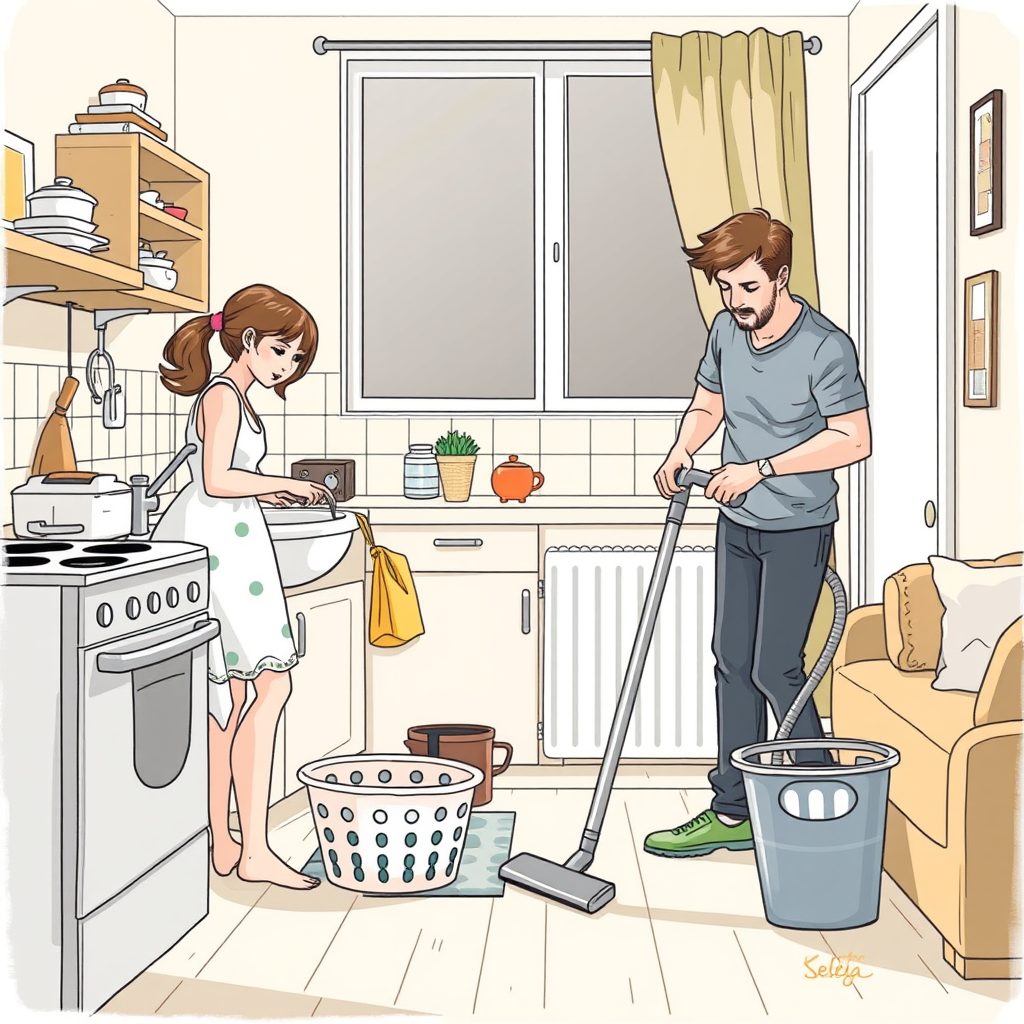
small jobs you do at home, like cleaning or washing
I do my chores on Saturday morning.
More examples: My chores are washing dishes and taking out the trash. • The children help with the chores after school. • He finished all his chores before lunch.
Common collocations: do the chores, household chores, share the chores
Word family: chore (noun, one job)
Synonyms: housework, jobs, tasks
Antonyms: fun, free time
Related concepts: cleaning, home, weekend
Contexts: home, family, weekend
Usage note: Always use 'do' with chores: 'do the chores', not 'make the chores'.
habit
something you do often, almost without thinking
Drinking tea after dinner is my habit.
More examples: She has a habit of reading before bed. • It is a bad habit to check your phone in bed. • Good habits take time to build.
Common collocations: good habit, bad habit, break a habit
Word family: habitual (adjective)
Synonyms: routine, custom, practice
Antonyms: one-time thing
Related concepts: routine, behavior, health
Contexts: health, work, free time
Usage note: Use 'have a habit of' + -ing: 'I have a habit of waking up early'. Talk about good and bad habits.
Vocabulary Check
- What does 'routine' mean?
- A loud sound in the morning
- The things you do the same way every day
- A small job at home
- Something you do only one time
- Which sentence uses 'tidy' correctly?
- I tidy my room every Sunday.
- I tidy my alarm at seven.
- I tidy a big breakfast.
- I tidy my habit.
- In which situation would you use the word 'alarm'?
- When you wash the dishes
- When you want to wake up at a certain time
- When you read a book in bed
- When you buy food for the week
- What does 'chores' mean?
- Things you do for fun
- Food you eat in the morning
- Small jobs you do at home
- The time you go to bed
- Which sentence uses 'habit' correctly?
- I habit my coffee in the morning.
- She has a habit of reading before bed.
- He habits at seven o'clock.
- They habit the kitchen on Saturday.
Language Practice: Talking About Your Day
Practice expressing ideas about your daily routine with these sentence patterns.
- Describing your daily routine
- Emerging: Every day, I ___ at ___. — Every day, I wake up at seven.
- Developing: In the morning, I usually ___ and then I ___. — In the morning, I usually make coffee and then I check my phone.
- Expanding: My daily routine is ___, because I need to ___. — My daily routine is simple, because I need to start work early.
- Talking about housework and preferences
- Emerging: I like / don't like ___. — I like cooking.
- Developing: I don't like ___, but I like ___. — I don't like washing dishes, but I like cooking.
- Expanding: ___ is the worst chore for me, because ___. — Cleaning the bathroom is the worst chore for me, because it takes a long time.
- Talking about habits and changes
- Emerging: I have a habit of ___ every day. — I have a habit of drinking coffee every day.
- Developing: I want to ___ more, so I can ___. — I want to read more, so I can learn new words.
- Expanding: I have a bad habit of ___, and I want to change it by ___. — I have a bad habit of checking my phone at night, and I want to change it by leaving it in the kitchen.
Fill in the Blanks
Marta is a nurse, so her days are busy. Her _____ rings at five thirty, and she gets up quickly. She has the same _____ every morning: a shower, coffee, and toast. Before she leaves, she _____s the kitchen, because she likes a clean home. In the evening, she is tired, so she does her _____ only on her free day. Reading before bed is her favorite _____, and it helps her sleep well.
Word bank: alarm, routine, tidy, chores, habit
Sentence Unscramble
- my / rings / at / alarm / six / thirty / every / morning
- she / the / kitchen / before / tidies / work
- Reading / is / a / good / habit / at / night
Discussion Questions
Some people wake up early and feel great. Other people love to sleep late and start slowly. Leo wakes up at seven every day, even on weekends. Think about your own mornings.
Are you a morning person or a night person? What does your morning routine look like?
Everyone has a different alarm story. Some people set five alarms. Some people wake up before any alarm. Some people sleep through every alarm and are late!
How many alarms do you set? Do you get up at the first alarm, or later? Why?
Chores are the small jobs at home: washing dishes, cleaning, doing laundry, cooking. Some people do a little every day. Other people do everything on one day, like Leo on Saturday.
Which chore do you hate the most, and which one is okay for you? Why?
A tidy home makes some people feel calm. Other people do not mind a little mess. Leo tidies the kitchen every morning before work because a messy kitchen makes him feel bad.
Is your home usually tidy or messy? How do you feel in a messy room?
Habits are things we do without thinking: drinking coffee, checking the phone, walking every evening. Some habits help us, and some habits do not. Changing a habit is hard, but possible.
What is one good habit you have, and one bad habit you want to change? Why do you want to change it?
Knowledge Check
- Your phone makes a loud sound at seven o'clock to wake you up. What is this?
- A chore
- An alarm
- A habit
- A routine
- True or false: 'Chores' means fun activities you do on the weekend.
- True
- False
- Which word means 'to put things in the right place so a room looks nice'?
- Tidy
- Habit
- Alarm
- Routine
- Which phrase is correct?
- make the chores
- do the chores
- go the chores
- have the chores
- True or false: A 'routine' is something you do only one time in your life.
- True
- False
Free to use with your students: Free to teach, screen-share, print and share with your students, with a credit to PlanWise ESL. Please do not sell it or republish it as your own. What you can do with free lessons.