Travelling Solo vs. Travelling with Friends
About this lesson: This is a B1 (Intermediate) ESL lesson in the General English category. It takes about 60 minutes. It includes 5 vocabulary words, 3 phrasal verbs and expressions, a reading text, comprehension questions, discussion questions and speaking patterns. Suits one-to-one or small-group online classes. Free to open and teach with no login, and it prints as a PDF.
Print just the discussion questions
How this lesson is built
This is a complete conversation lesson built on a scientific pedagogical formula, not a generic worksheet: recall prior topic vocabulary, pre-teach the new words in depth, read in context, practise active recall with flashcards and synonyms/antonyms, build accuracy with exercises, and finish with deep discussion.
- Warm-up: Discussion questions that connect the topic to the student’s own life and recall vocabulary they already know about the subject.
- Reading: A text written for this CEFR level that uses each new word two or three times in context, giving the student something meaningful to react to.
- Key vocabulary: 5 new words, pre-taught before the reading with a definition, pronunciation guide, example sentences and a picture, plus word families, usage notes, recall flashcards and synonyms/antonyms, giving a solid grounding before reading.
- Comprehension: 5 questions that check the new words: retrieval practice, not rereading.
- Idioms and phrasal verbs: Expressions taken from the reading, each with its meaning, an example and a speaking question.
- Sentence frames: 3 speaking patterns, each at three levels of support (emerging, developing, expanding) with model answers—especially helpful scaffolding for beginners and less confident speakers.
- Gap-fill: The new words again, in a shuffled order, so the student recalls them by meaning in context.
- Sentence unscramble: Natural sentences with the new words to put back in order, reinforcing grammar and collocation.
- Discussion: 5 open questions designed to talk deeply about the subject while actively using the lesson’s target vocabulary: the heart of a conversation lesson.
- Quiz: A short retrieval check that brings every new word back once more.
Unlike a generic worksheet, the new words are taught before the reading and met again in the activities, the speaking is supported at three levels and most of the time goes on the student talking. Teachers who use PlanWise ESL also get per-student vocabulary tracking (recycling earlier words into future readings and questions), a private learner dashboard with flashcards and custom lesson creation, and a downloadable study PDF.
Warm-up Activity
Look at the pictures and talk about travelling alone and travelling with other people.
- Do you like travelling? What was your last trip?
- Do you usually travel with other people or alone?
- What is one good thing about travelling alone?
- What can go wrong when you travel with friends?
- Would you like to try a big adventure one day? Why or why not?
Reading Text: Two Ways to See the World
Read about two friends who travel in very different ways. What do you think about their choices?
Marta and her brother Diego both love travelling, but they do it very differently. Marta always travels alone because she enjoys her independence. She says a solo adventure teaches you things about yourself. Last year she went to Japan with no plan and loved every minute.
Diego thinks a trip without a companion sounds lonely. He prefers travelling with a group of friends. For him, the best part of a holiday is laughing at dinner with people you know. He says, 'A good view means nothing if you have nobody to share it with.'
Money is another difference. Marta travels on a small budget because she pays for everything herself. She sleeps in hostels and eats street food. Diego and his friends share the costs, so they can stay in nicer places. However, organising a group trip is not easy.
Marta is also more flexible. If she wants to stay another day, she stays. If she is tired, she rests. Diego's group makes a plan and follows it, even when someone feels sick or bored. Their trips are usually planned months before.
So, who travels better? Marta is spontaneous and free, but she sometimes feels lonely in the evening. Diego has fun with his friends, but he cannot always do what he wants. Perhaps the perfect trip depends on the person, not the plan.
Key Vocabulary
adventure

an exciting and unusual experience or trip
Moving to a new city was a big adventure for her.
More examples: Their trip through the mountains was a real adventure. • Studying abroad sounds like a great adventure. • For me, trying street food in Bangkok was a small adventure.
Common collocations: a big adventure, a real adventure, have an adventure
Word family: adventurous (adjective), adventurer (person)
Synonyms: experience, journey, exploit
Antonyms: routine, boredom
Related concepts: travel, discovery, risk
Contexts: holidays, stories, outdoor activities
Usage note: Use with 'a' or 'an'. Often positive — an adventure is exciting, even when it is a bit difficult.
budget

the money you have or plan to spend on something
Our budget for the trip was only five hundred euros.
More examples: I need to plan my budget before I book the flights. • Students often travel on a small budget. • The hotel was beautiful, but it was over our budget.
Common collocations: on a budget, a small budget, stay within a budget
Word family: budget (verb), budgeting (noun)
Synonyms: money plan, funds, allowance
Antonyms: unlimited spending, luxury
Related concepts: saving, prices, planning
Contexts: travel, shopping, family life
Usage note: Common in everyday talk about money: 'We're on a budget' means we don't have much to spend.
flexible
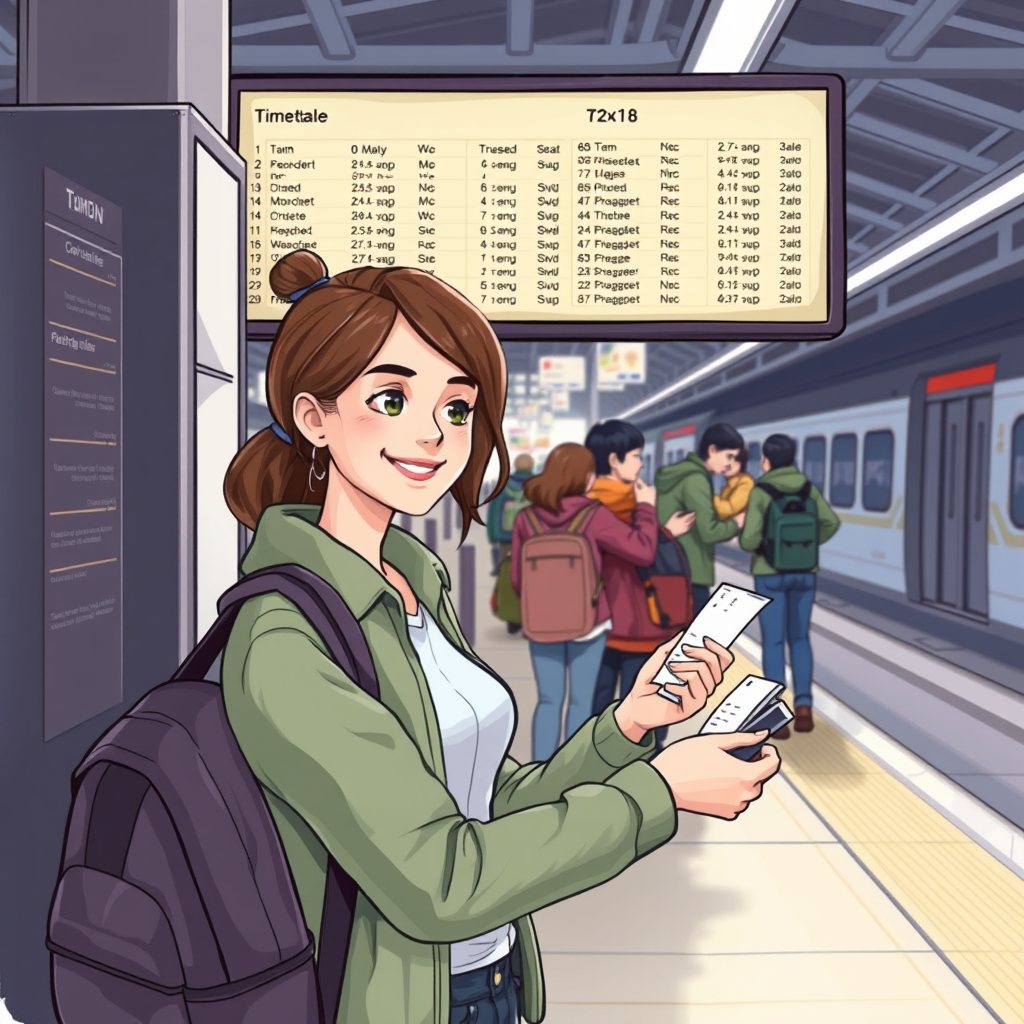
able to change plans easily when things change
I'm flexible about dates, so I can travel any weekend.
More examples: Her job gives her flexible hours, so she can travel more. • Being flexible helps when flights change. • The plan is not fixed — let's stay flexible.
Common collocations: flexible hours, flexible plans, stay flexible
Word family: flexibility (noun), flexibly (adverb)
Synonyms: adaptable, open to change, easy-going
Antonyms: strict, fixed, rigid
Related concepts: plans, change, freedom
Contexts: work, travel, schedules
Usage note: Used for people, plans and times. Opposite idea: 'strict' or 'fixed' plans.
spontaneous

doing things without planning first, in the moment
She's very spontaneous — yesterday she booked a flight to Lisbon.
More examples: Let's be spontaneous and take the next train. • He made a spontaneous decision to stay one more day. • Their spontaneous trip to the beach was the best day of summer.
Common collocations: a spontaneous decision, be spontaneous, a spontaneous trip
Word family: spontaneously (adverb), spontaneity (noun)
Synonyms: unplanned, impulsive, in the moment
Antonyms: planned, organised, careful
Related concepts: surprise, freedom, fun
Contexts: travel, weekends, friendship
Usage note: Usually positive — it suggests fun and freedom. The adverb form is 'spontaneously'.
companion
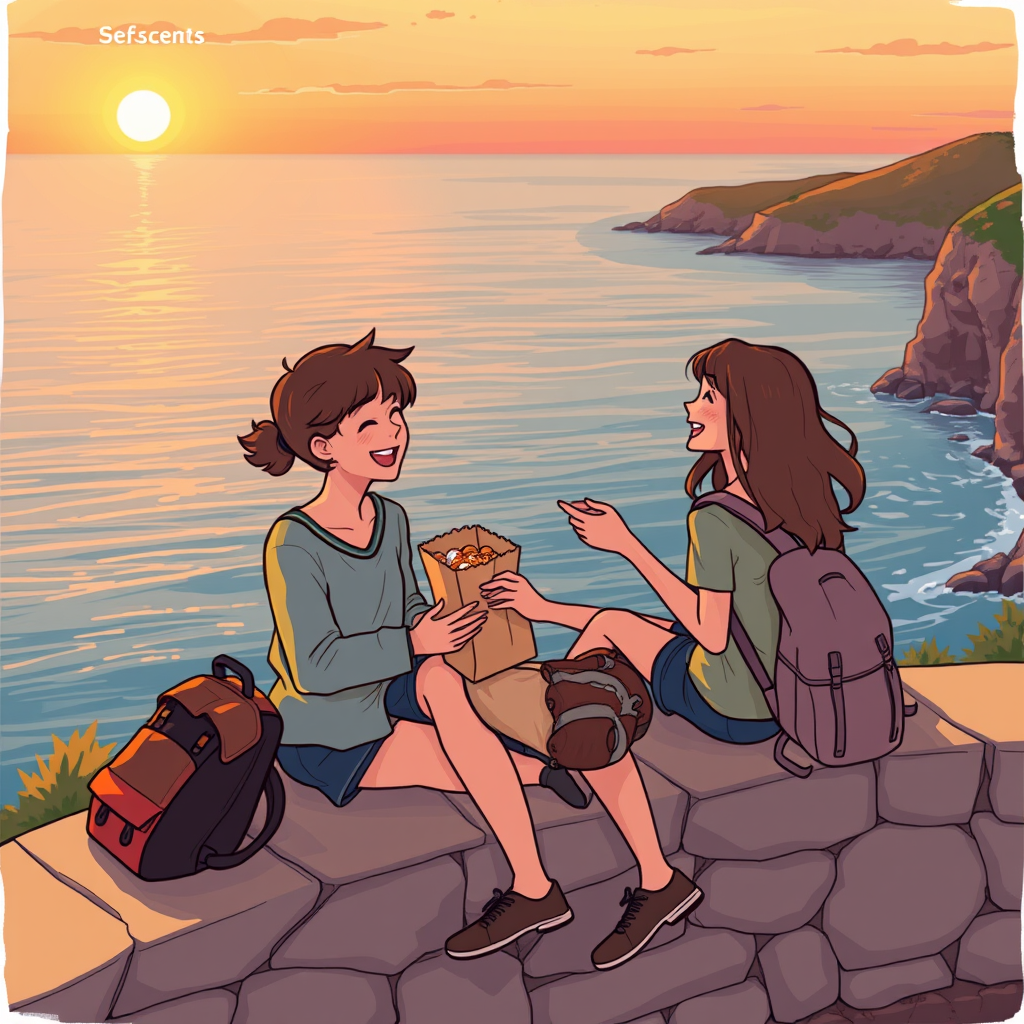
a person who travels or spends time with you
A good travel companion makes every trip better.
More examples: She was looking for a companion for her trip to Peru. • His dog is his favourite companion on long walks. • They became great companions during the journey.
Common collocations: a travel companion, a faithful companion, a companion on a journey
Word family: companionship (noun), accompany (verb)
Synonyms: friend, partner, buddy
Antonyms: stranger, loner
Related concepts: friendship, travel, sharing
Contexts: travel, hobbies, daily life
Usage note: A companion is usually a friendly person you spend time with; it sounds slightly warmer than just 'partner' or 'friend'.
Vocabulary Check
- What does 'adventure' mean?
- a quiet day at home
- an exciting and unusual experience
- a type of ticket
- a boring trip
- Which sentence uses 'budget' correctly?
- She budgets her hair very well.
- We travelled on a small budget.
- He budgeted to the beach yesterday.
- They are budget people in the photo.
- In which situation would you use 'flexible'?
- When you can change your travel dates easily
- When your ticket is locked and fixed
- When you never change your mind
- When you always follow the plan exactly
- What does 'spontaneous' describe?
- A decision made after months of planning
- A decision made in the moment, without planning
- A very expensive decision
- A decision made by a group
- Who is a 'companion'?
- A person who travels alone
- A person you spend time with
- A hotel receptionist
- A type of train ticket
Phrasal Verbs & Expressions
love every minute
enjoy all the time, from start to end
The trip was hard, but I loved every minute of it.
Usage note: People often add 'of it': · Right: I loved every minute of it. · Avoid: I loved every minute of the minute.
Usage note: Very common in speaking when you look back at a good experience.
share the costs
each person pays part of the money
We shared the costs of the hotel, so it was cheap for everyone.
Usage note: You can also say 'split the costs' or 'split the bill' at a restaurant.
Usage note: Use 'share' + what you pay for: share the costs, share a taxi, share a room.
eat out
eat at a restaurant, not at home
On holiday we eat out every evening because cooking is no fun.
Usage note: No object needed: just 'eat out'. Do not say 'eat out a restaurant'. · Right: We eat out on Fridays. · Avoid: We eat out a restaurant on Fridays.
Usage note: The opposite is 'eat in' (at home).
Language Practice: Comparing Travel Styles
Practise expressing your ideas about travelling solo and travelling with friends.
- Giving an opinion with a reason
- Emerging: I think ___ because ___. — I think travelling alone is fun because you are free.
- Developing: In my opinion, ___ is better because ___. — In my opinion, travelling with a companion is better because you share the costs.
- Expanding: I'd say ___, mainly because ___, and also because ___. — I'd say travelling alone is the best choice, mainly because you're more spontaneous, and also because you meet new people.
- Talking about consequences and habits
- Emerging: When I ___, I ___. — When I travel, I take photos.
- Developing: When I travel with ___, I usually ___. — When I travel with friends, I usually laugh a lot.
- Expanding: If ___, I'll probably ___, so ___. — If I have a flexible ticket, I'll probably stay an extra day, so I don't need to rush.
- Comparing two options
- Emerging: ___ is easier than ___. — Driving is easier than flying.
- Developing: Travelling alone is ___ than travelling with friends because ___. — Travelling alone is more spontaneous than travelling with friends because nobody has to agree.
- Expanding: The best thing about ___ is ___, while the best thing about ___ is ___. — The best thing about solo travel is freedom, while the best thing about group travel is the fun at dinner.
Fill in the Blanks
Last summer my friend Leo decided to plan a _____ trip around Portugal. He had a very small _____, so he took the bus instead of the train and cooked his own food. He didn't want a fixed plan, because he likes to be _____ and change his ideas every morning. On the first day, he found a travel _____ at the hostel, and together they had one big _____ after another — hiking, swimming and getting lost in small towns.
Word bank: adventure, budget, flexible, spontaneous, companion
Sentence Unscramble
- a / good / makes / companion / trip / better / every
- we / travelled / on / a / small / budget / last / year
- she / is / very / spontaneous / when / she / travels / alone
Discussion Questions
Some people love the freedom of travelling alone. You can eat when you want, rest when you want, and change your plan any time. Other people find solo travel lonely, especially at dinner in the evening.
Would you enjoy travelling alone for a week? Why or why not?
Travel costs can go up fast. When friends share a room, a taxi or a big dinner, each person pays less. But when you travel with a companion, you also have to agree on how to spend the money.
Do you spend more or less money when you travel with friends? Tell me about a time money affected a trip.
Travelling with a group means planning together. Someone always wants to stay longer at the beach, and someone else wants to visit a museum. A flexible traveller can accept these changes easily, but it is not always simple.
Are you a flexible traveller, or do you prefer a fixed plan? Why?
Some of the best travel stories start with no plan at all. Missing a train or taking a wrong bus can become a great adventure. But without any plan, you can also waste time and money.
Tell me about a spontaneous moment on a trip. Was it a good idea or not?
Choosing the right person to travel with matters a lot. A good travel companion stays calm when things go wrong and shares the little jobs. The wrong person can make a beautiful place feel stressful.
Who would be your perfect companion for a big trip, and what makes someone good to travel with?
Knowledge Check
- If someone 'travels on a budget', what do they do?
- They travel without a plan
- They travel with little money
- They travel with a big group
- They travel very fast
- A 'companion' is usually a ___
- a kind of ticket
- a person who travels with you
- a type of hotel
- a travel plan
- True or false: A 'spontaneous' decision is planned weeks in advance.
- True
- False
- Which word means 'able to change plans easily'?
- adventurous
- spontaneous
- flexible
- budget
- True or false: 'Having an adventure' usually means doing something boring and safe.
- True
- False
- Your friend says, 'I don't like cooking on holiday, so we eat out every day.' What does she mean?
- She cooks food at the place where she stays.
- She eats outside in the garden.
- She eats at restaurants every day.
- She eats her food very quickly.
Free to use with your students: Free to teach, screen-share, print and share with your students, with a credit to PlanWise ESL. Please do not sell it or republish it as your own. What you can do with free lessons.