My Place: Talking About House and Home
About this lesson: This is a B1 (Intermediate) ESL lesson in the General English category. It takes about 60 minutes. It includes 5 vocabulary words, 3 phrasal verbs and expressions, a reading text, comprehension questions, discussion questions and speaking patterns. Suits one-to-one or small-group online classes. Free to open and teach with no login, and it prints as a PDF.
Print just the discussion questions
How this lesson is built
This is a complete conversation lesson built on a scientific pedagogical formula, not a generic worksheet: recall prior topic vocabulary, pre-teach the new words in depth, read in context, practise active recall with flashcards and synonyms/antonyms, build accuracy with exercises, and finish with deep discussion.
- Warm-up: Discussion questions that connect the topic to the student’s own life and recall vocabulary they already know about the subject.
- Reading: A text written for this CEFR level that uses each new word two or three times in context, giving the student something meaningful to react to.
- Key vocabulary: 5 new words, pre-taught before the reading with a definition, pronunciation guide, example sentences and a picture, plus word families, usage notes, recall flashcards and synonyms/antonyms, giving a solid grounding before reading.
- Comprehension: 5 questions that check the new words: retrieval practice, not rereading.
- Idioms and phrasal verbs: Expressions taken from the reading, each with its meaning, an example and a speaking question.
- Sentence frames: 3 speaking patterns, each at three levels of support (emerging, developing, expanding) with model answers—especially helpful scaffolding for beginners and less confident speakers.
- Gap-fill: The new words again, in a shuffled order, so the student recalls them by meaning in context.
- Sentence unscramble: Natural sentences with the new words to put back in order, reinforcing grammar and collocation.
- Discussion: 5 open questions designed to talk deeply about the subject while actively using the lesson’s target vocabulary: the heart of a conversation lesson.
- Quiz: A short retrieval check that brings every new word back once more.
Unlike a generic worksheet, the new words are taught before the reading and met again in the activities, the speaking is supported at three levels and most of the time goes on the student talking. Teachers who use PlanWise ESL also get per-student vocabulary tracking (recycling earlier words into future readings and questions), a private learner dashboard with flashcards and custom lesson creation, and a downloadable study PDF.
Warm-up: Think About Your Home
Look at the questions and talk about the place where you live. There are no wrong answers - just say what you think!
- Do you live in a house or a flat? Do you like it?
- What is your favourite room in your home? Why?
- Is your home big, small, or just right for you?
- Who lives with you, and who does the cleaning?
- If you could change one thing about your home, what would it be?
Reading Text: My Sister's New Flat
Read this short story about a woman looking for a new home in the city. Think about what you would do in her situation.
When my sister moved to the city last year, she wanted to rent a flat near her office. However, flats in the centre are small and expensive. She looked online for weeks, but most places had only one tiny room.
In the end, she found a spacious flat in an old building outside the centre. It has two big rooms and lots of light. Although the rent is high, she thinks it is good value because the extra space makes her happy.
Her favourite room is the living room. It is spacious and very cosy, especially in winter, because there is a soft sofa and warm lamps. Her friends always say it is the cosiest room in the flat.
The neighbourhood is quiet and friendly. There is a small park, a bakery and a market on Saturdays. Her neighbours say hello every morning, so she quickly felt at home there.
Of course, there are problems too. The flat gets messy fast, so she has to tidy it every weekend to keep it tidy. However, she says it is worth it. 'A good home is more important than a short journey to work,' she told me.
Key Vocabulary
spacious

big, with a lot of space inside
Our new kitchen is spacious, so we can all cook together.
More examples: The hotel room was spacious and had two big windows. • This is a spacious flat for one person. • I'd love a spacious living room like my aunt's.
Common collocations: a spacious room, a spacious flat, spacious and bright
Word family: space (noun), spaciously (adverb)
Synonyms: big, large, roomy
Antonyms: small, crowded, cramped
Related concepts: space, size, comfort
Contexts: describing a flat, hotel reviews, house hunting
Usage note: Use 'spacious' to describe places in a positive way: rooms, flats, houses, offices, gardens. It always sounds like a good thing.
cosy

warm and comfortable, in a nice way
My bedroom is small but very cosy in winter.
More examples: We sat by the fire - it was so cosy. • This cafe feels cosy with its soft chairs and warm lights. • A hot drink makes a cold evening feel cosy.
Common collocations: a cosy room, feel cosy, warm and cosy
Word family: cosily (adverb), cosiness (noun)
Synonyms: comfortable, warm, snug
Antonyms: cold, uncomfortable, unwelcoming
Related concepts: comfort, winter, relaxing at home
Contexts: describing a bedroom, cafes, winter evenings
Usage note: Use 'cosy' for small, warm, comfortable places and feelings. A cosy place is often small - that is a good thing, not a problem.
rent

to pay money every month to live in a place
They rent a small flat near the train station.
More examples: I rent my flat from an old man who lives upstairs. • It's cheaper to rent than to buy in this city. • We rented a house by the sea for the summer.
Common collocations: rent a flat, pay the rent, the rent is high
Word family: rent (noun), rental (noun), renter (noun)
Synonyms: hire, lease
Antonyms: buy, own
Related concepts: money, flats, moving house, contracts
Contexts: moving to a new city, talking about housing costs, student life
Usage note: Use 'rent' for paying to use a home, a car or a tool for a time. You do not own the place - you pay to live there.
tidy
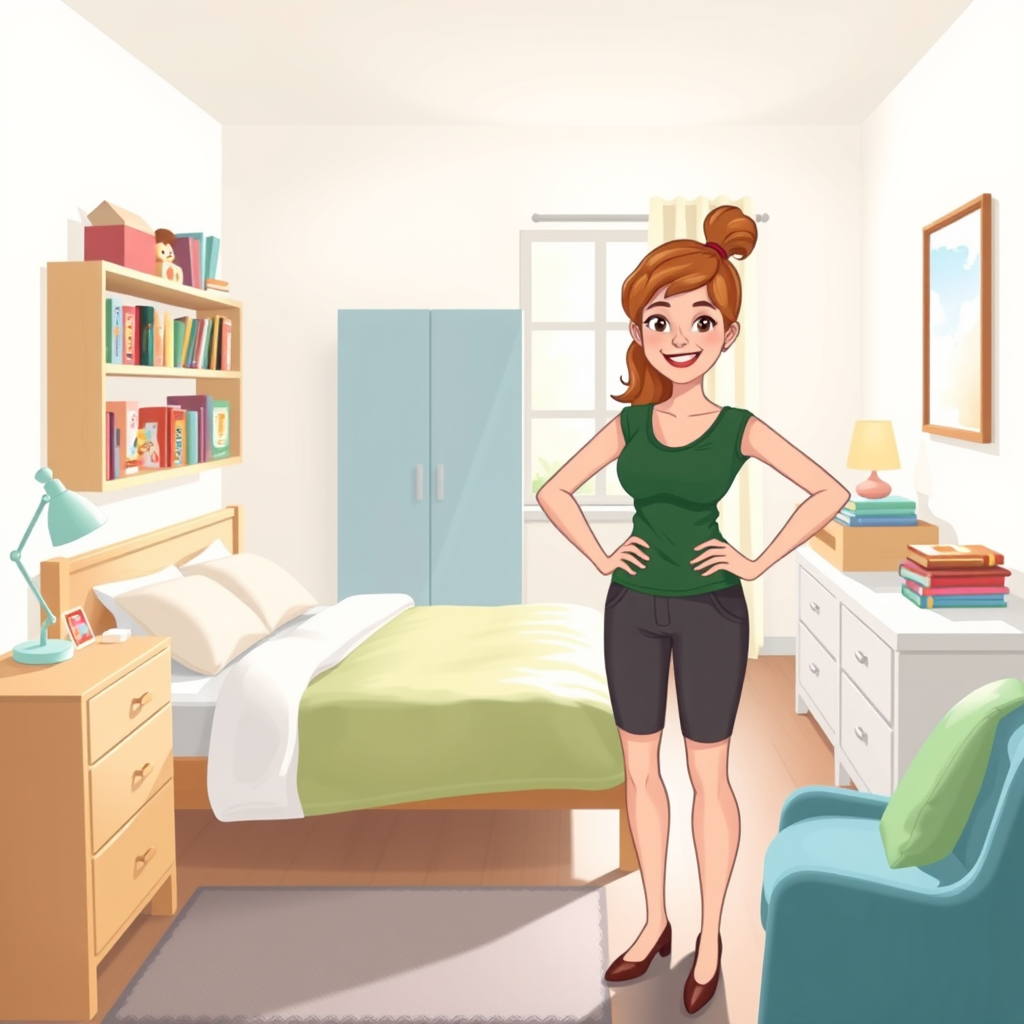
clean and with everything in the right place
Her desk is always tidy, with pens in one box and papers in another.
More examples: Please keep your room tidy - guests are coming. • A tidy kitchen makes cooking much easier. • His bag is never tidy; things fall out of it!
Common collocations: keep it tidy, tidy up, a tidy room
Word family: tidy (verb), untidy (adjective), tidily (adverb)
Synonyms: neat, in order, organized
Antonyms: messy, untidy, chaotic
Related concepts: cleaning, housework, habits
Contexts: talking about your room, chores at home, visiting guests
Usage note: Use 'tidy' for places and things that are in order. As a verb, 'tidy up' means to put things back in their place.
neighbourhood
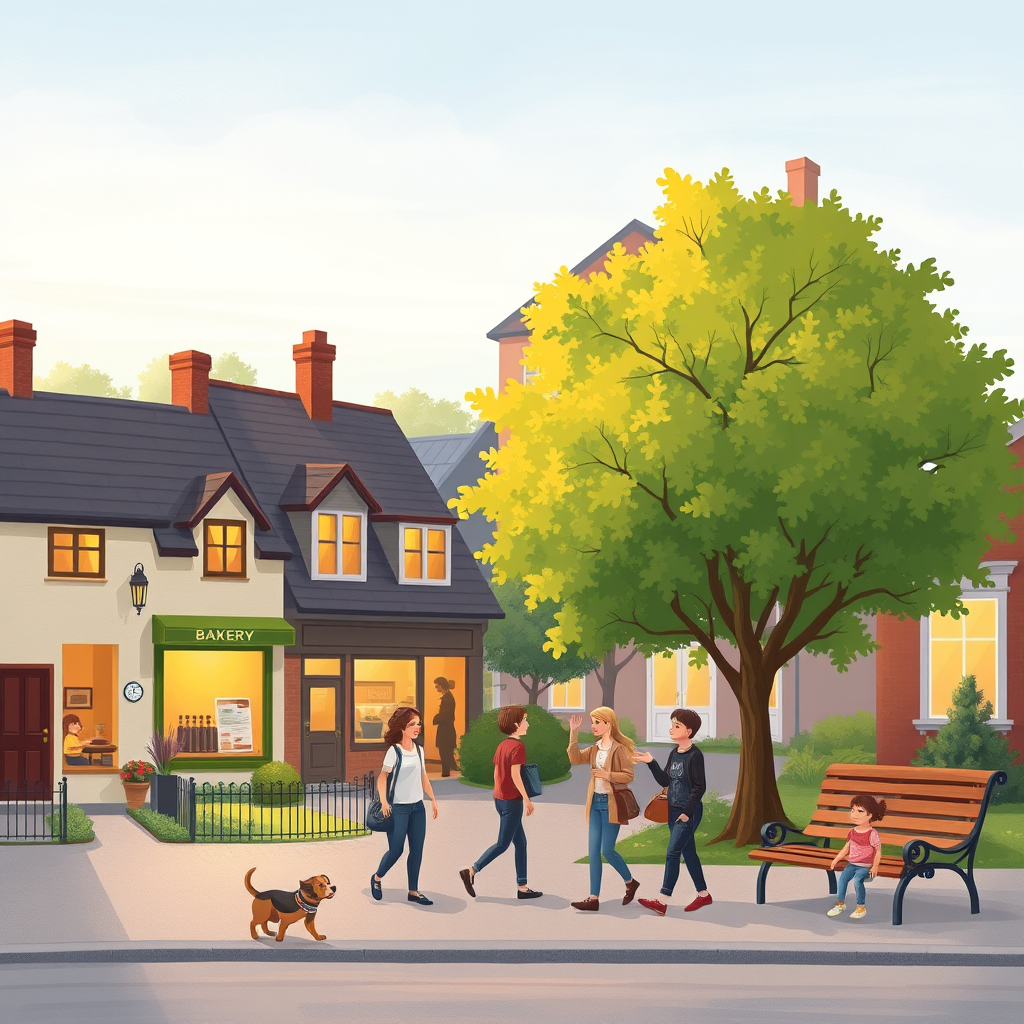
the area of a town where people live
There is a bakery and a park in my neighbourhood.
More examples: Our neighbourhood is quiet, but the centre is noisy. • Everyone knows each other in this neighbourhood. • They moved to a neighbourhood near good schools.
Common collocations: a quiet neighbourhood, in my neighbourhood, a friendly neighbourhood
Word family: neighbour (noun), neighbourly (adjective)
Synonyms: area, district, part of town
Antonyms: the whole city, the countryside
Related concepts: neighbours, community, streets, shops
Contexts: choosing where to live, describing your area, safety and noise
Usage note: Use 'neighbourhood' for the area around your home: its streets, shops, parks and people. It is bigger than your street but smaller than the whole city.
Vocabulary Check
- What does 'spacious' mean?
- dark and cold
- very small
- big, with a lot of space
- very expensive
- Which sentence uses 'cosy' correctly?
- The cosy bus arrived late.
- My bedroom is cosy with warm blankets and soft lights.
- He felt cosy after the long exam.
- The cosy road goes to the city centre.
- In which situation would you use 'rent'?
- You pay money every month to live in someone's flat.
- You buy a house with all your savings.
- You clean your room on Saturday morning.
- You visit a friend for one afternoon.
- What does 'tidy' mean?
- very old
- full of people
- broken
- clean and everything in the right place
- What is a 'neighbourhood'?
- the area of a town where people live
- one single building
- a kind of school
- a very big city
Phrasal Verbs & Expressions
move to
to go and live in a new place
My cousin wants to move to a bigger flat next year.
Usage note: The small word 'to' shows the new place: you always move TO somewhere. · Right: She moved to Madrid. · Avoid: She moved Madrid.
look for
to try to find something
I'm looking for a new flat near the station.
Usage note: You can split it: 'look for a flat' or 'look for it'. · Right: I'm looking for it. · Avoid: I'm looking it for.
feel at home
to feel comfortable and happy in a place
After a week in the new flat, I really felt at home.
Usage note: The picture is simple: the new place feels like your own home.
Usage note: Common forms: 'feel at home' and 'make yourself at home' (a friendly thing to say to guests).
Language Practice: Talking About Homes
Practice expressing ideas about homes and where we live.
- Describing your home and giving reasons
- Emerging: My home is ___ and ___. — My home is small and cosy.
- Developing: I like my home because it is ___, and my favourite room is ___. — I like my home because it is cosy, and my favourite room is the kitchen.
- Expanding: If I could change one thing about my home, I would ___ because ___. — If I could change one thing about my home, I would make the kitchen bigger because I love cooking with friends.
- Comparing choices and giving opinions
- Emerging: I prefer ___ to ___. — I prefer flats to houses.
- Developing: I prefer living in ___ because ___. — I prefer living in a flat because it is easier to clean.
- Expanding: Although ___ is ___, I would choose ___ because ___. — Although a house is more spacious, I would choose a flat because I don't want to cut grass every weekend.
- Talking about habits and problems at home
- Emerging: When ___, I ___. — When I cook, I make a mess.
- Developing: When my home is messy, I usually ___ because ___. — When my home is messy, I usually tidy it on Sunday because I am free that day.
- Expanding: If my home was messy before guests came, I would ___ so that ___. — If my home was messy before guests came, I would tidy the living room first so that they feel welcome.
Fill in the Blanks
Last month, my cousin found a new flat to _____ in a quiet _____ near the river. The flat is small, but her bedroom is _____ with a big bed and warm lights. The kitchen is very _____, so four people can cook together easily. She cleans it every day and keeps everything _____. She says the best thing is the area: her neighbours are friendly and there is a market on Saturdays.
Word bank: spacious, cosy, rent, tidy, neighbourhood
Sentence Unscramble
- our / new / flat / is / spacious / and / full / of / light
- i / keep / my / room / tidy / every / weekend
- the / neighbourhood / is / quiet / so / i / sleep / very / well
Discussion Questions
Everyone's home is different. Some people live in big houses, some in small flats, some with family, some alone. The place where we live says a lot about our life. Think about your own home now.
Can you describe the place where you live? What is your favourite room, and why?
Some people dream of a house with a garden and fresh air. Others love the energy of a city flat, close to shops and cafes. Both choices have good and bad points, and it often depends on your lifestyle.
Would you rather live in a house with a garden or a flat in the city? Why?
Moving to a new city is exciting but difficult. Finding a good flat takes time, and rent can be expensive. Some people rent a place immediately, while others stay with family or friends first while they look around.
If you moved to a new city, would you rent a flat straight away or stay with family first? Why?
Some people clean a little every day and hate mess. Others only tidy when guests come! Many people say a tidy home helps them think and relax, but everyone has different habits.
How tidy is your home usually? Do you think a tidy home helps you feel good? Why?
When people choose a new home, they often think about the area, not just the flat. Some want shops and cafes nearby, some want parks and quiet streets, and some just want friendly neighbours who say hello.
What makes a neighbourhood a good place to live for you - shops, parks, quiet streets, or friendly neighbours? What is most important, and why?
Knowledge Check
- Which word describes a room with a lot of space?
- cosy
- tidy
- spacious
- rent
- True or false: A cosy room feels warm and comfortable.
- True
- False
- You ___ a flat when you pay money to live in it every month.
- tidy
- rent
- build
- sell
- True or false: A neighbourhood is one single building.
- True
- False
- If your room is tidy, it is...
- clean and everything is in the right place
- very big and empty
- full of people
- dark and cold
- Your friend says: 'I'm looking for a new flat.' What does she mean?
- She is trying to find a new flat.
- She is cleaning a new flat.
- She is looking at photos of her old flat.
- She is moving out of her flat today.
Free to use with your students: Free to teach, screen-share, print and share with your students, with a credit to PlanWise ESL. Please do not sell it or republish it as your own. What you can do with free lessons.