Saving Money vs. Enjoying Life Today
About this lesson: This is a B1 (Intermediate) ESL lesson in the Conversation Practice category. It takes about 60 minutes. It includes 5 vocabulary words, 3 phrasal verbs and expressions, a reading text, comprehension questions, discussion questions and speaking patterns. Suits one-to-one or small-group online classes. Free to open and teach with no login, and it prints as a PDF.
Print just the discussion questions
How this lesson is built
This is a complete conversation lesson built on a scientific pedagogical formula, not a generic worksheet: recall prior topic vocabulary, pre-teach the new words in depth, read in context, practise active recall with flashcards and synonyms/antonyms, build accuracy with exercises, and finish with deep discussion.
- Warm-up: Discussion questions that connect the topic to the student’s own life and recall vocabulary they already know about the subject.
- Reading: A text written for this CEFR level that uses each new word two or three times in context, giving the student something meaningful to react to.
- Key vocabulary: 5 new words, pre-taught before the reading with a definition, pronunciation guide, example sentences and a picture, plus word families, usage notes, recall flashcards and synonyms/antonyms, giving a solid grounding before reading.
- Comprehension: 5 questions that check the new words: retrieval practice, not rereading.
- Idioms and phrasal verbs: Expressions taken from the reading, each with its meaning, an example and a speaking question.
- Sentence frames: 3 speaking patterns, each at three levels of support (emerging, developing, expanding) with model answers—especially helpful scaffolding for beginners and less confident speakers.
- Gap-fill: The new words again, in a shuffled order, so the student recalls them by meaning in context.
- Sentence unscramble: Natural sentences with the new words to put back in order, reinforcing grammar and collocation.
- Discussion: 5 open questions designed to talk deeply about the subject while actively using the lesson’s target vocabulary: the heart of a conversation lesson.
- Quiz: A short retrieval check that brings every new word back once more.
Unlike a generic worksheet, the new words are taught before the reading and met again in the activities, the speaking is supported at three levels and most of the time goes on the student talking. Teachers who use PlanWise ESL also get per-student vocabulary tracking (recycling earlier words into future readings and questions), a private learner dashboard with flashcards and custom lesson creation, and a downloadable study PDF.
Warm-up Activity
Look at the questions and talk about money habits in your life.
- When you get money, do you usually save it or spend it? Why?
- What was the last thing you bought just for fun?
- Do you think about prices before you buy something?
- Is there something expensive you really want to buy one day?
- Do your friends spend money the same way you do?
Reading Text: Two Ways to Live
Read about two friends with very different ideas about money.
Marta and Leo are best friends, but they think about money very differently. Marta writes down everything she spends and makes a budget every month. She puts money in her savings account before she pays for anything fun. Leo thinks she worries too much.
Leo loves to splurge on weekends. Last month he bought expensive concert tickets and a new phone. 'You only live once,' he says. However, at the end of the month, he often cannot afford simple things, like dinner with friends.
Marta says small impulse buys are dangerous. 'You see something in a shop, and you buy it without thinking. Those little purchases add up,' she explains. She keeps a list of things she really needs before she goes shopping.
Leo agrees that impulse buying is a problem for him, but he doesn't want to count every coin. 'If I save all my money for the future, I will miss my life today,' he says. His savings are almost zero, but he has great memories.
Last week, Marta's bike broke and she could pay for a new one easily. Leo had to borrow money from his sister. Now Leo is thinking about making a budget too, although he still wants to splurge sometimes. Maybe the best plan is somewhere in the middle.
Key Vocabulary
budget

a plan for how much money you will spend
I make a budget every month so I don't spend too much.
More examples: My budget for food is about $200 a month. • We need to budget carefully before our trip. • She went over her budget buying clothes.
Common collocations: make a budget, stick to a budget, on a tight budget
Word family: budget (noun), budget (verb), budgeting (noun)
Synonyms: spending plan, money plan
Antonyms: unplanned spending
Related concepts: saving, planning, expenses
Contexts: monthly expenses, travel planning, shopping
Usage note: Use 'budget' when talking about planning spending. 'On a tight budget' means you have very little money to spend.
afford

to have enough money to buy something
I can't afford a new car right now, it's too expensive.
More examples: Now I have a job, I can afford to travel. • Can we afford a bigger apartment? • They couldn't afford the tickets, so they stayed home.
Common collocations: can't afford to, afford something, easily afford
Word family: afford, affordable (adjective)
Synonyms: have enough money for, be able to pay for
Antonyms: be too poor for
Related concepts: price, income, expenses
Contexts: shopping, housing, big purchases
Usage note: Almost always used with 'can' or 'can't'. We say 'I can afford it', never 'I afford it'.
splurge

to spend a lot of money on something fun
After her exam, she splurged on a weekend at the beach.
More examples: He splurged on a really nice dinner for his birthday. • It's my payday, so I'm going to splurge a little. • That bag was a splurge, but I love it.
Common collocations: splurge on something, a little splurge, splurge a bit
Word family: splurge (verb), splurge (noun), splurged (past)
Synonyms: treat yourself, spend freely
Antonyms: save, be careful with money
Related concepts: celebration, rewards, luxury
Contexts: birthdays, holidays, payday
Usage note: Use 'splurge on' + the thing you buy. It sounds fun and positive, not bad. Often for special occasions.
savings
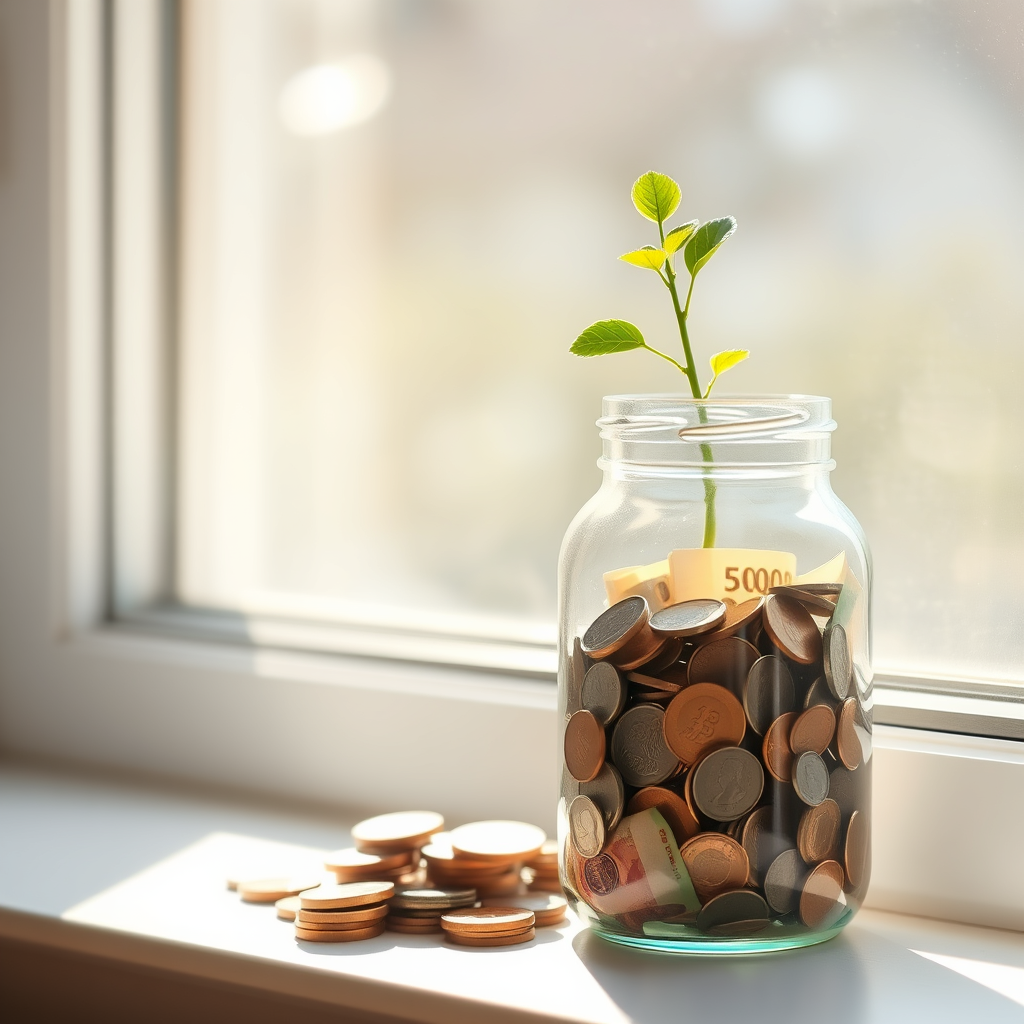
money you keep and do not spend
I put part of my salary into my savings every month.
More examples: She used her savings to buy a used car. • My savings are growing slowly but surely. • He spent all his savings on the trip.
Common collocations: savings account, use your savings, build up savings
Word family: save (verb), savings (noun), savings account (noun)
Synonyms: nest egg, money put aside
Antonyms: debt, spending
Related concepts: future, security, goals
Contexts: bank accounts, future plans, emergencies
Usage note: Always plural in this meaning. 'Savings' is the money itself, not the action.
impulse

a sudden wish to do something without thinking
I bought those shoes on impulse and now I never wear them.
More examples: Don't buy it on impulse - think about it first. • She had an impulse to buy the whole cake. • Impulse buys are often things we don't need.
Common collocations: on impulse, impulse buy, resist the impulse
Word family: impulse (noun), impulsive (adjective)
Synonyms: sudden wish, urge
Antonyms: careful plan, careful thought
Related concepts: shopping, temptation, decisions
Contexts: supermarkets, online shopping, sales
Usage note: Very common in shopping talk: 'impulse buy' or 'buy on impulse' means buying suddenly without planning.
Vocabulary Check
- What does 'budget' mean?
- A plan for spending money
- A type of bank card
- Money you owe to someone
- A very expensive thing
- Which sentence uses 'afford' correctly?
- I afford a new laptop last week.
- I can't afford a holiday this year.
- I afford to buy it every day.
- I am affording that restaurant.
- In which situation would you 'splurge'?
- When you put money in the bank
- When you compare prices in two shops
- When you spend a lot on something fun for a special day
- When you ask for a discount
- What are 'savings'?
- Money you spend every week
- Money you keep and don't spend
- Money you borrow from a friend
- Money you get as a gift
- What is an 'impulse buy'?
- Something you buy after planning for months
- Something you buy suddenly without thinking
- Something you buy for someone else
- Something you buy at a big discount
Phrasal Verbs & Expressions
add up
small amounts grow into a big amount
Coffee every day seems cheap, but it really adds up over a month.
Usage note: No object here - small things add up by themselves. · Right: Small costs add up. · Avoid: Small costs add up them.
Usage note: Also used for numbers: 'The bill doesn't add up' means the maths is wrong.
you only live once
life is short, so enjoy it now
I bought the expensive cake because, you know, you only live once.
Usage note: People often say just 'YOLO' - the same idea, very informal.
Usage note: Use it to laugh about spending money or taking a chance.
break down
a machine or car stops working
My washing machine broke down last week, so I had to buy a new one.
Usage note: The past form is 'broke down'. It's for machines and cars, not people.
Usage note: No object: the machine breaks down by itself. · Right: My car broke down. · Avoid: I broke down my car.
Language Practice: Talking About Money Choices
Practice expressing your money habits, opinions and plans.
- Describing your money habits
- Emerging: I usually ___ with my money. — I usually save with my money.
- Developing: I usually ___ with my money, but sometimes I ___. — I usually save with my money, but sometimes I splurge on clothes.
- Expanding: When I get money, I usually ___ because ___, although sometimes I ___. — When I get money, I usually put some in my savings because I want to travel next year, although sometimes I splurge on dinner with friends.
- Giving opinions with reasons
- Emerging: I think ___ is better because ___. — I think saving is better because life is not safe.
- Developing: In my opinion, ___, because ___, so I try to ___. — In my opinion, saving is important, because you never know what will happen, so I try to keep some savings every month.
- Expanding: I think ___, because ___. However, I can see why some people ___. — I think saving is more important, because it gives you safety when things go wrong. However, I can see why some people spend everything and enjoy today.
- Talking about future money plans
- Emerging: I want to ___ next year. — I want to buy a bike next year.
- Developing: I want to ___, so I'm going to ___ every month. — I want to travel to Japan, so I'm going to put money in my savings every month.
- Expanding: If I ___ every month, I will be able to afford ___ next year. — If I save a little every month, I will be able to afford a big trip next year.
Fill in the Blanks
Ana wants to travel next summer, so she made a _____ for the next six months. She puts a little money into her _____ every week. Her problem is shopping online. She often makes an _____ buy late at night, and then she can't _____ the things she really needs. Her friend told her: 'It's okay to _____ sometimes, but only after you pay for the important things.'
Word bank: budget, savings, impulse, afford, splurge
Sentence Unscramble
- I / can't / afford / a / new / phone / this / month.
- She / put / her / savings / into / a / bank / account.
- He / bought / those / shoes / on / impulse / yesterday.
Discussion Questions
Some people write down everything they spend and plan every month. Others just spend and hope for the best. Both ways can work, but they lead to very different lives.
Are you more of a planner or a spender with money? Why?
Shops put small, cheap things near the checkout, and online stores show 'you might also like' suggestions. These tricks make us buy things we never planned to buy.
Do you often buy things on impulse? What was the last one, and do you still like it?
Imagine you get extra money - maybe a gift or a bonus at work. You could put it in your savings for the future, or splurge on something fun right now.
What would you do with it? Why?
Many people say you should enjoy life today because the future is not sure. Others say you must save now so you can relax later. It is a big question about how to live.
Is it better to enjoy your money now or save it for later? Why?
Everyone has something they dream about - a trip, a car, a course, or moving to a new place. Big dreams usually need money and a plan.
What is something expensive you want one day, and how will you afford it?
Knowledge Check
- If you 'stick to a budget', what do you do?
- You spend more than you planned
- You keep to your spending plan
- You borrow money from friends
- You throw your plan away
- True or false? 'Splurge' usually describes careful, boring spending.
- True
- False
- Which sentence is correct?
- I afford a new bike.
- I can afford a new bike.
- I am affording a new bike.
- I afford to a new bike.
- True or false? 'Savings' means the money you keep for the future.
- True
- False
- You see a candy bar at the checkout and buy it without planning. This is...
- a savings goal
- a budget
- an impulse buy
- a splurge on a special day
- Your friend says: 'I buy a snack every day. It's only two euros, but it adds up.' What does she mean?
- She does maths every day
- The small costs become a big amount over time
- She wants to buy more snacks
- The snacks are too expensive
Free to use with your students: Free to teach, screen-share, print and share with your students, with a credit to PlanWise ESL. Please do not sell it or republish it as your own. What you can do with free lessons.