Can I? Asking for and Giving Permission
About this lesson: This is an A2 (Elementary) ESL lesson in the General English category. It takes about 60 minutes. It includes 5 vocabulary words, a reading text, comprehension questions, discussion questions and speaking patterns. Suits one-to-one or small-group online classes. Free to open and teach with no login, and it prints as a PDF.
Print just the discussion questions
How this lesson is built
This is a complete conversation lesson built on a scientific pedagogical formula, not a generic worksheet: recall prior topic vocabulary, pre-teach the new words in depth, read in context, practise active recall with flashcards and synonyms/antonyms, build accuracy with exercises, and finish with deep discussion.
- Warm-up: Discussion questions that connect the topic to the student’s own life and recall vocabulary they already know about the subject.
- Reading: A text written for this CEFR level that uses each new word two or three times in context, giving the student something meaningful to react to.
- Key vocabulary: 5 new words, pre-taught before the reading with a definition, pronunciation guide, example sentences and a picture, plus word families, usage notes, recall flashcards and synonyms/antonyms, giving a solid grounding before reading.
- Comprehension: 5 questions that check the new words: retrieval practice, not rereading.
- Sentence frames: 3 speaking patterns, each at three levels of support (emerging, developing, expanding) with model answers—especially helpful scaffolding for beginners and less confident speakers.
- Gap-fill: The new words again, in a shuffled order, so the student recalls them by meaning in context.
- Sentence unscramble: Natural sentences with the new words to put back in order, reinforcing grammar and collocation.
- Discussion: 5 open questions designed to talk deeply about the subject while actively using the lesson’s target vocabulary: the heart of a conversation lesson.
- Quiz: A short retrieval check that brings every new word back once more.
Unlike a generic worksheet, the new words are taught before the reading and met again in the activities, the speaking is supported at three levels and most of the time goes on the student talking. Teachers who use PlanWise ESL also get per-student vocabulary tracking (recycling earlier words into future readings and questions), a private learner dashboard with flashcards and custom lesson creation, and a downloadable study PDF.
Warm-up Activity
Talk about times when you need to ask before you do something.
- At home, do you need to ask before you watch TV?
- Who says yes or no in your family most of the time?
- Did you ask your parents for something this week? What was it?
- Do you think it is okay to say no when someone asks you for something?
- How do you feel when someone says yes to you?
Reading Text: Leo's Weekend
Read about Leo, a boy who wants to do something special with his friends this weekend.
Leo is twelve years old. On Friday, his friend Ming calls him. Ming says, 'Can I come to your house on Saturday? We can play games together.' Leo wants to say yes, but there is a rule in his house. He must ask his parents first.
Leo goes to the kitchen. He says, 'Mum, can Ming come to our house on Saturday?' His mum thinks for a moment. Then she says, 'Yes, you have my permission. But please finish your homework first.' Leo is very happy.
On Saturday morning, Ming arrives early. He says, 'Can I borrow your new game? I left mine at home.' Leo says, 'Of course! You can borrow it.' They play for two hours and laugh a lot.
At lunchtime, Leo's dad says, 'You can watch a film after lunch, but you cannot play outside today. It is raining.' Leo is a little sad, but he knows the rule. First homework, then fun.
In the evening, Leo's mum says, 'You were very polite this weekend. You asked before you did everything. Because of that, I allow you to choose the film tonight!' Leo smiles. Asking nicely really works.
Key Vocabulary
permission
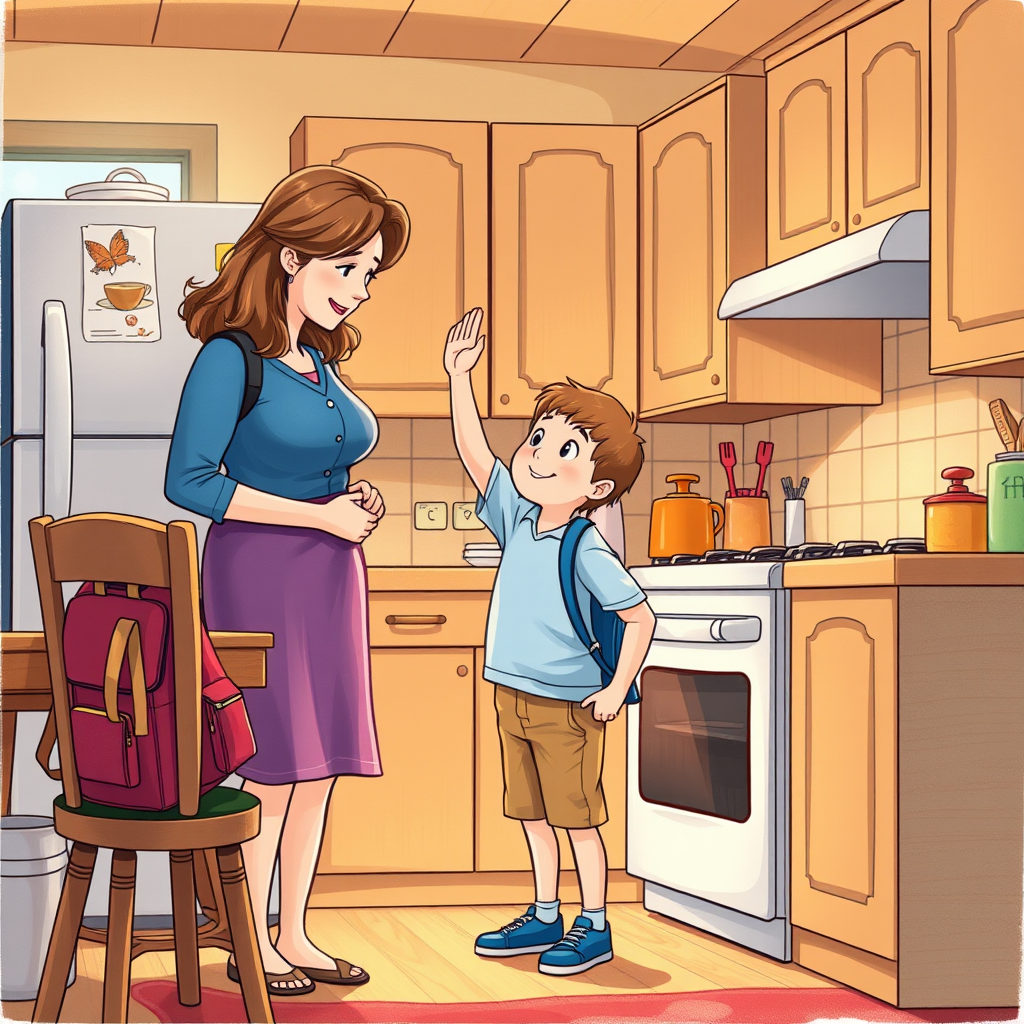
saying yes so someone can do something
I asked my dad for permission to go to the park.
More examples: You need permission to leave the classroom. • She gave me permission to use her phone. • Did you get permission from your teacher?
Common collocations: ask for permission, give permission, need permission
Word family: permit (verb), permitted
Synonyms: okay, approval, the go-ahead
Antonyms: refusal, a no
Related concepts: asking, rules, trust
Contexts: home, school, with friends
Usage note: Use 'permission' when you talk about the yes someone gives you. We often say 'ask for permission' or 'give permission'.
allow

to say yes; to let someone do something
My parents allow me to play games for one hour.
More examples: Our teacher allows us to drink water in class. • Mum does not allow phones at dinner. • The park allows dogs, but not bikes.
Common collocations: allow someone to do something, be allowed to, not allow something
Word family: allowed, allowing
Synonyms: let, permit
Antonyms: forbid, stop
Related concepts: permission, rules, trust
Contexts: home, school, public places
Usage note: Use 'allow' to talk about what is okay. 'I am allowed to...' means someone said yes.
borrow

to take something for a short time and give it back
Can I borrow your pen for a minute?
More examples: I borrowed a book from the library. • She often borrows my eraser in class. • You can borrow my bike this afternoon.
Common collocations: borrow something from someone, borrow a book, borrow money
Word family: borrowed, borrowing
Synonyms: take for a while, use for a moment
Antonyms: lend, give
Related concepts: sharing, returning, trust
Contexts: school, home, library
Usage note: Use 'borrow' when you take something. Use 'lend' when you give something to someone for a short time.
polite

speaking or acting in a nice, respectful way
It is polite to say 'please' when you ask for something.
More examples: He was polite and said thank you. • A polite question gets a better answer. • She is always polite to her teachers.
Common collocations: be polite to someone, a polite question, say it politely
Word family: politely, politeness
Synonyms: well-mannered, respectful, nice
Antonyms: rude, impolite
Related concepts: manners, respect, please and thank you
Contexts: home, school, meeting new people
Usage note: Use 'polite' to describe people and the way they speak. The opposite is 'rude'.
rule
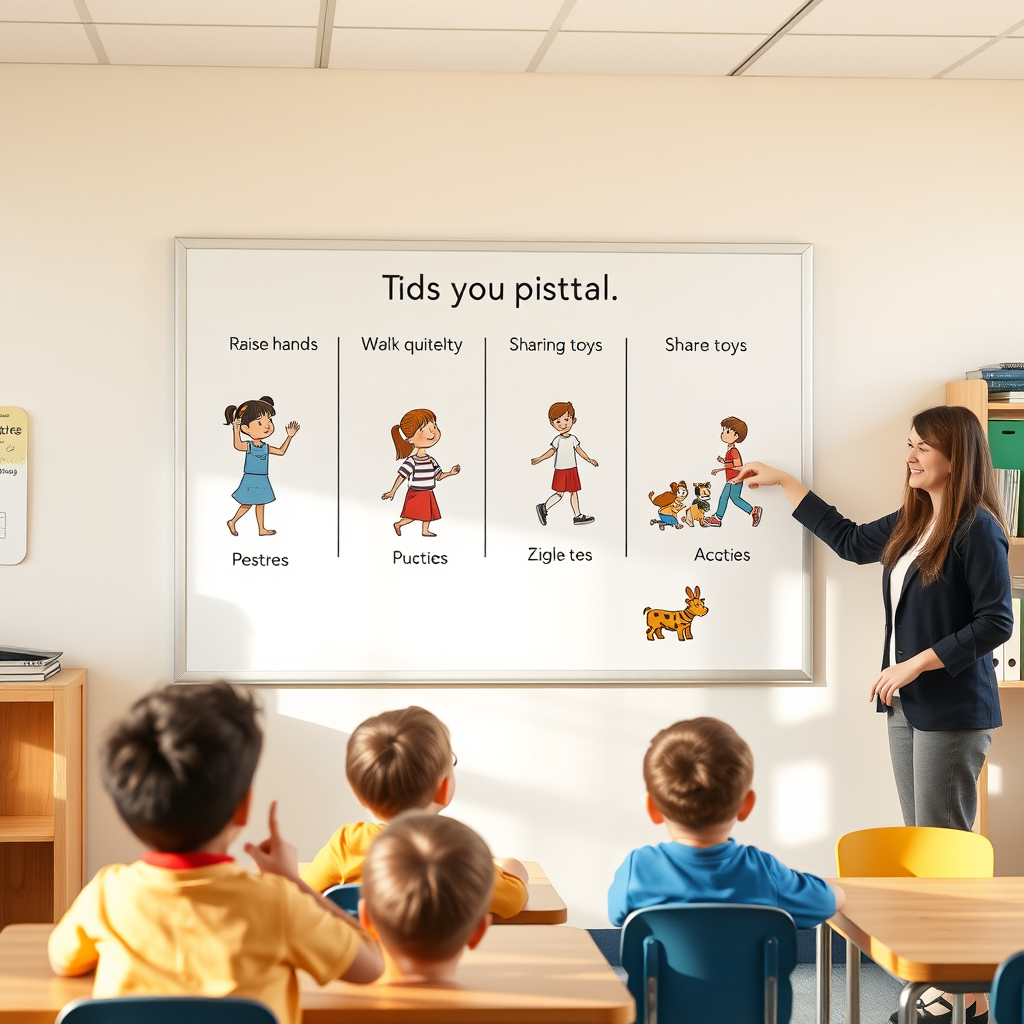
something you must or must not do
One rule in our house is: homework before games.
More examples: There is a rule: no phones in class. • We follow the rules at the swimming pool. • Breaking a rule can cause problems.
Common collocations: follow the rules, break a rule, house rules
Word family: rules, rulebook
Synonyms: law, regulation
Antonyms: freedom, choice
Related concepts: permission, school, family
Contexts: home, school, sports and games
Usage note: Use 'rule' for things you must do or must not do at home, school, or in games.
Vocabulary Check
- What does 'permission' mean?
- A game you play with friends
- Saying yes so someone can do something
- A kind of homework
- A place at school
- Which sentence uses 'borrow' correctly?
- I borrow my friend a pencil.
- Can I borrow your pencil, please?
- I borrow you my pencil yesterday.
- Borrow me your pencil now.
- What does 'allow' mean?
- To say no
- To let someone do something
- To run fast
- To study hard
- In which situation would you use the word 'rule'?
- When you talk about what you must do at home or school
- When you talk about your favourite food
- When you talk about the weather
- When you talk about a film you like
- Which sentence uses 'polite' correctly?
- He is polite; he always says please and thank you.
- He is polite; he shouts at people.
- He is polite; he never says thank you.
- He is polite; he takes things without asking.
Language Practice: Asking Nicely
Practice asking for permission, giving permission, and talking about rules.
- Asking for permission
- Emerging: Can I ___ , please? — Can I open the window, please?
- Developing: Is it okay if I ___ ? I promise I will ___. — Is it okay if I play games? I promise I will do my homework after.
- Expanding: Would it be okay if I ___ ? I will ___ first, and I promise to ___. — Would it be okay if I played outside? I will finish my homework first, and I promise to come home before dark.
- Giving and refusing permission
- Emerging: Yes, you can ___ . / No, you can't ___ . — Yes, you can play outside.
- Developing: Of course you can ___ , but please ___ first. — Of course you can play games, but please finish your homework first.
- Expanding: I'm sorry, you can't ___ because ___. But if you ___ , then maybe ___. — I'm sorry, you can't play outside because it's raining. But if you tidy your room, then maybe we can watch a film together.
- Talking about rules
- Emerging: At home, I have to ___ . — At home, I have to do my homework every day.
- Developing: At home, I am allowed to ___ , but I am not allowed to ___ . — At home, I am allowed to play games, but I am not allowed to play for more than one hour.
- Expanding: In my family, the most important rule is ___ , because ___. I think this rule is ___. — In my family, the most important rule is to finish homework before playing, because study comes first. I think this rule is fair.
Fill in the Blanks
Every family has rules. In Leo's house, one _____ is: homework before games. On Saturday, Leo wanted to play with his friend, so he asked his mum for _____. She said yes because Leo is always _____ and asks nicely. His mum also _____s him to watch TV after dinner. Leo's friend wanted to _____ a game, and Leo was happy to share.
Word bank: permission, allow, borrow, polite, rule
Sentence Unscramble
- Can / I / borrow / your / game / please / ?
- My / parents / allow / me / to / play / outside / .
- It / is / polite / to / ask / for / permission / .
Discussion Questions
At home, parents often say yes to some things and no to other things. Every family is different. Some kids can play games every day, and some can only play at the weekend.
What is one thing your parents allow you to do, and one thing they don't allow? Why do you think they say no?
Sometimes you want something very much, like a new game or a pet. Asking in the right way can help. If you shout, the answer is usually no. If you ask nicely, the answer can be yes.
If you really wanted a new game, how would you ask your parents? What would you say to make them say yes?
At school, there are many rules: raise your hand, no phones, be quiet in the library. Some rules feel fair, and some feel annoying. Teachers give permission for some things, like going to the toilet.
Which rule at your school do you think is fair, and which one is annoying? Why?
Friends borrow things from each other all the time: pens, books, games, bikes. Usually it works well, but sometimes things get lost or broken. Then it can be a problem.
Have you ever borrowed something from a friend, or lent something to a friend? What happened?
Imagine you are a parent one day. You will make the rules and decide what your children can do. It is not easy to be fair all the time.
When you are a parent, what rule will you have in your house? Will you be strict or easy? Why?
Knowledge Check
- What do you need before you do something that someone else must decide about?
- A present
- Permission
- A prize
- A problem
- True or false: 'My parents allow me to play games' means your parents say it is okay.
- True
- False
- Your friend says, 'Can I borrow your bike?' What does the friend want to do?
- Buy your bike
- Keep your bike forever
- Use your bike for a short time and give it back
- Break your bike
- True or false: Shouting 'Give me that now!' is a polite way to ask for something.
- True
- False
- Which one is a rule?
- I like pizza.
- Homework before games in our house.
- The sky is blue.
- My friend lives near me.
Free to use with your students: Free to teach, screen-share, print and share with your students, with a credit to PlanWise ESL. Please do not sell it or republish it as your own. What you can do with free lessons.