Too Tired to Think? Talking About Stress
About this lesson: This is a B1 (Intermediate) ESL lesson in the General English category. It takes about 60 minutes. It includes 5 vocabulary words, 3 phrasal verbs and expressions, a reading text, comprehension questions, discussion questions and speaking patterns. Suits one-to-one or small-group online classes. Free to open and teach with no login, and it prints as a PDF.
Print just the discussion questions
How this lesson is built
This is a complete conversation lesson built on a scientific pedagogical formula, not a generic worksheet: recall prior topic vocabulary, pre-teach the new words in depth, read in context, practise active recall with flashcards and synonyms/antonyms, build accuracy with exercises, and finish with deep discussion.
- Warm-up: Discussion questions that connect the topic to the student’s own life and recall vocabulary they already know about the subject.
- Reading: A text written for this CEFR level that uses each new word two or three times in context, giving the student something meaningful to react to.
- Key vocabulary: 5 new words, pre-taught before the reading with a definition, pronunciation guide, example sentences and a picture, plus word families, usage notes, recall flashcards and synonyms/antonyms, giving a solid grounding before reading.
- Comprehension: 5 questions that check the new words: retrieval practice, not rereading.
- Idioms and phrasal verbs: Expressions taken from the reading, each with its meaning, an example and a speaking question.
- Sentence frames: 3 speaking patterns, each at three levels of support (emerging, developing, expanding) with model answers—especially helpful scaffolding for beginners and less confident speakers.
- Gap-fill: The new words again, in a shuffled order, so the student recalls them by meaning in context.
- Sentence unscramble: Natural sentences with the new words to put back in order, reinforcing grammar and collocation.
- Discussion: 5 open questions designed to talk deeply about the subject while actively using the lesson’s target vocabulary: the heart of a conversation lesson.
- Quiz: A short retrieval check that brings every new word back once more.
Unlike a generic worksheet, the new words are taught before the reading and met again in the activities, the speaking is supported at three levels and most of the time goes on the student talking. Teachers who use PlanWise ESL also get per-student vocabulary tracking (recycling earlier words into future readings and questions), a private learner dashboard with flashcards and custom lesson creation, and a downloadable study PDF.
Warm-up Activity
Look at the pictures and talk about tired days and stressful days.
- When do you feel most tired — in the morning, after school, or at night?
- What makes you feel stressed at school or at home?
- What do you do to relax after a busy day?
- Do you sleep enough? How many hours do you usually sleep?
- If you had a completely free day, what would you do?
Reading Text: Maya's Busy Week
Read about Maya, a 13-year-old student, and her very busy week.
Maya is 13 and she loves school, but last week was very hard. She had three tests, a music concert, and a big art project. On Monday she already felt the pressure building up. Her teachers wanted everything finished at the same time.
By Wednesday, Maya was exhausted. She went to bed late every night because she was studying. In the morning, she could hardly open her eyes. Her mum said, 'You look so tired!' Maya just smiled and drank her tea.
On Thursday, things got worse. Maya felt overwhelmed because there was too much to do and not enough time. She started to worry about small things too, like forgetting her PE kit. She even cried a little after school, although she didn't want to tell anyone.
Luckily, Maya's best friend Leo noticed something was wrong. 'You don't have to do everything alone,' he said. 'Talk to your teachers.' Maya learned that talking to people helps you cope with stress. Her music teacher moved the concert practice to Friday, so Maya had one free evening.
On the weekend, Maya finally had time to unwind. She watched a film, drew in her sketchbook, and slept for ten hours! Now Maya plans her week on Sunday evenings, so she doesn't feel so stressed again. She says, 'Busy weeks happen, but you can handle them.'
Key Vocabulary
pressure

a strong feeling that you must do something
Students feel a lot of pressure before big exams.
More examples: Her parents put pressure on her to get top grades. • There is pressure on young players to win every game. • I work better without pressure.
Common collocations: feel pressure, under pressure, put pressure on someone
Word family: press, pressured
Synonyms: stress, strain
Antonyms: relaxation, ease
Related concepts: exams, expectations, deadlines
Contexts: school, sports, family
Usage note: Use it for the feeling that people or situations push you to do something. Often with 'under' or 'feel'.
exhausted

very, very tired; with no energy left
After the long walk, I was completely exhausted.
More examples: She was exhausted after staying up all night. • The team looked exhausted after the match. • Don't call him now — he's exhausted.
Common collocations: completely exhausted, feel exhausted, exhausted after
Word family: exhaust, exhausting
Synonyms: worn out, drained
Antonyms: energetic, rested
Related concepts: sleep, long days, sport
Contexts: after school, after sport, late nights
Usage note: Much stronger than 'tired'. Use it when you have no energy at all.
cope
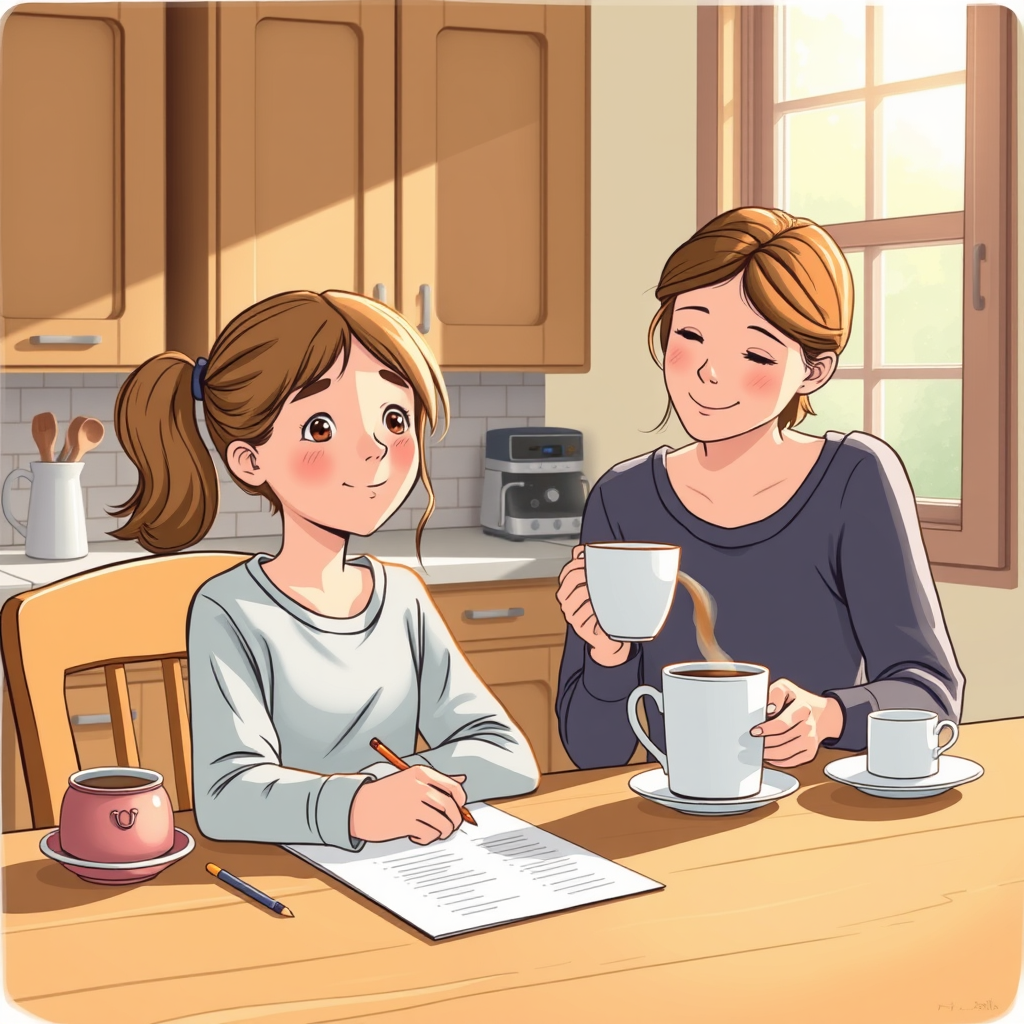
to deal with a problem successfully
She copes with stress by talking to her friends.
More examples: How do you cope with so much homework? • He finds it hard to cope when plans change. • Music helps me cope with bad days.
Common collocations: cope with stress, cope with problems, find it hard to cope
Word family: coping
Synonyms: manage, handle, deal with
Antonyms: give up, fail
Related concepts: problems, strategies, support
Contexts: school stress, family problems, big changes
Usage note: Almost always used with 'with'. It means managing something difficult, not fixing it perfectly.
overwhelmed

feeling you have too much to deal with
I felt overwhelmed when I had five tests in one week.
More examples: Don't do everything at once — you'll feel overwhelmed. • She was overwhelmed by all the messages. • He gets overwhelmed in very noisy places.
Common collocations: feel overwhelmed, get overwhelmed, overwhelmed by
Word family: overwhelm, overwhelming
Synonyms: overloaded, swamped
Antonyms: in control, calm
Related concepts: too much work, panic, deadlines
Contexts: exam time, moving house, busy weeks
Usage note: Use it when everything comes at once and your brain says 'too much!'. Often with 'feel' or 'get'.
unwind

to relax after work or stress
I unwind by listening to music after school.
More examples: She unwinds with a hot chocolate and a book. • What do you do to unwind at the weekend? • Football helps him unwind after a hard day.
Common collocations: unwind after school, unwind with music, need to unwind
Word family: wound up
Synonyms: relax, chill out, de-stress
Antonyms: stress out, tense up
Related concepts: hobbies, free time, rest
Contexts: evenings, weekends, holidays
Usage note: Use it for activities that help you relax after stress. It's informal and very common in conversation.
Vocabulary Check
- What does 'pressure' mean?
- A strong feeling that you must do something
- A type of exam
- A kind of music
- A long holiday
- Which sentence uses 'exhausted' correctly?
- I exhausted my homework yesterday.
- She was exhausted after running ten kilometres.
- The exhausted pizza was delicious.
- We exhausted to school every day.
- In which situation would you use 'cope'?
- When you choose a new hobby
- When you deal with a difficult problem
- When you buy new shoes
- When you watch a funny film
- What does 'overwhelmed' mean?
- Feeling happy and excited
- Feeling you have too much to deal with
- Feeling sleepy in the morning
- Feeling angry at a friend
- Which sentence uses 'unwind' correctly?
- I unwind by drawing after a stressful day.
- She unwinds her homework quickly.
- He unwound the test in ten minutes.
- They unwind their teacher every Monday.
Phrasal Verbs & Expressions
build up
to get bigger or stronger little by little
I could feel stress building up before the big test.
Usage note: The small word 'up' shows the feeling is growing, like water rising. · Right: stress builds up · Avoid: stress builds down
Usage note: You can split it: 'stress builds up' or 'it builds stress up' — both are fine.
hardly
almost not at all
I was so tired that I could hardly keep my eyes open in class.
Usage note: Careful: 'hardly' already means 'almost not', so don't add 'not'. · Right: I could hardly sleep · Avoid: I couldn't hardly sleep
Usage note: It usually goes before the verb: 'I hardly ever watch TV.'
get worse
to become more bad than before
My headache got worse in the afternoon, so I went home early.
Usage note: Use 'get' for changes: get worse, get better, get tired. · Right: things got worse · Avoid: things became worse and worse got
Usage note: The opposite is 'get better' — very useful for talking about how you feel.
Language Practice: Talking About Stress
Practice expressing ideas about stress, tiredness and relaxing.
- Describing feelings of stress and tiredness
- Emerging: I feel ___ when ___. — I feel exhausted when I have two tests.
- Developing: I feel ___ when ___ because ___. — I feel exhausted when I go to bed late because I watch videos.
- Expanding: When ___, I usually feel ___, because ___, so I ___. — When I have a busy week, I usually feel exhausted, because I sleep less, so I try to go to bed earlier.
- Explaining how you deal with problems
- Emerging: I cope with ___ by ___. — I cope with stress by drawing.
- Developing: When I feel ___, I cope with it by ___. — When I feel overwhelmed, I cope with it by making a list.
- Expanding: The best way to cope with ___ is ___, because ___. — The best way to cope with exam stress is to plan your week, because then you know what to do first.
- Giving opinions about relaxing and free time
- Emerging: I think ___ is a good way to unwind. — I think music is a good way to unwind.
- Developing: I think ___ is a good way to unwind because ___. — I think music is a good way to unwind because it helps me forget my problems.
- Expanding: In my opinion, ___ is better than ___ for unwinding, because ___. — In my opinion, being outside is better than watching a screen for unwinding, because fresh air helps your brain rest.
Fill in the Blanks
Last month was very busy for Daniel. He had a big science project, football practice every day, and a family trip at the weekend. At first, he felt the _____ from all sides — his coach, his teacher, and even himself. By Friday, he was completely _____ and went to bed at eight o'clock. On Saturday morning, he felt _____ because his project, his football bag and his packing were all waiting for him. His dad helped him make a plan, and that really helped him _____ with the busy weekend. On Sunday evening, Daniel finally had time to _____ — he watched his favourite show and went to sleep early.
Word bank: pressure, exhausted, cope, overwhelmed, unwind
Sentence Unscramble
- I / feel / under / a / lot / of / pressure / before / big / tests / .
- She / was / exhausted / after / the / long / football / match / .
- Music / helps / me / unwind / after / a / stressful / day / .
Discussion Questions
School can be busy: lessons, homework, tests and activities all at the same time. Some weeks feel easy, and some weeks feel impossible. Everyone has a different limit.
What part of school life gives you the most pressure — tests, homework, or something else? Why?
When we have too much to do, our brain can feel like a full suitcase that won't close. Some people make lists, some people talk to friends, and some people just go to sleep.
Tell me about a time when you felt overwhelmed. What happened, and what did you do?
After a long, tiring day, everyone relaxes in a different way. Some people play sport, some watch videos, some draw or listen to music. There is no single right answer.
What's the best way for you to unwind after a stressful day? Why does it work for you?
Sometimes friends or family notice we are stressed before we do. Maya's friend Leo helped her by simply talking to her. Helping can be as simple as listening.
If your best friend felt exhausted and stressed, what would you say or do to help them?
Some people say busy weeks are good because they teach you to plan and work hard. Others say we all need more free time to stay happy and healthy. Both sides have a point.
Do you think a busy life is good or bad for people your age? Why?
Knowledge Check
- If you are 'under pressure', you feel...
- very relaxed
- pushed to do something
- very hungry
- very sleepy
- 'Exhausted' means a little tired.
- True
- False
- Which word means 'to deal with a problem successfully'?
- unwind
- overwhelmed
- cope
- pressure
- You feel 'overwhelmed' when...
- you have too much to deal with
- you had a good sleep
- you finished all your homework
- you are on holiday
- Which activity helps you 'unwind'?
- Doing three more tests
- Arguing with your brother
- Listening to your favourite music
- Waking up at 6 a.m.
- Maya 'could hardly open her eyes'. What does 'hardly' mean?
- almost not at all
- very quickly
- with a lot of energy
- in a careful way
Free to use with your students: Free to teach, screen-share, print and share with your students, with a credit to PlanWise ESL. Please do not sell it or republish it as your own. What you can do with free lessons.