Smart Machines, Lazy Minds?
About this lesson: This is a C1 (Advanced) ESL lesson in the General English category. It takes about 60 minutes. It includes 5 vocabulary words, 4 idioms and phrasal verbs, a reading text, comprehension questions, discussion questions and speaking patterns. Suits one-to-one or small-group online classes. Free to open and teach with no login, and it prints as a PDF.
Print just the discussion questions
How this lesson is built
This is a complete conversation lesson built on a scientific pedagogical formula, not a generic worksheet: recall prior topic vocabulary, pre-teach the new words in depth, read in context, practise active recall with flashcards and synonyms/antonyms, build accuracy with exercises, and finish with deep discussion.
- Warm-up: Discussion questions that connect the topic to the student’s own life and recall vocabulary they already know about the subject.
- Reading: A text written for this CEFR level that uses each new word two or three times in context, giving the student something meaningful to react to.
- Key vocabulary: 5 new words, pre-taught before the reading with a definition, pronunciation guide, example sentences and a picture, plus word families, usage notes, recall flashcards and synonyms/antonyms, giving a solid grounding before reading.
- Comprehension: 5 questions that check the new words: retrieval practice, not rereading.
- Idioms and phrasal verbs: Expressions taken from the reading, each with its meaning, an example and a speaking question.
- Sentence frames: 3 speaking patterns, each at three levels of support (emerging, developing, expanding) with model answers—especially helpful scaffolding for beginners and less confident speakers.
- Gap-fill: The new words again, in a shuffled order, so the student recalls them by meaning in context.
- Sentence unscramble: Natural sentences with the new words to put back in order, reinforcing grammar and collocation.
- Discussion: 5 open questions designed to talk deeply about the subject while actively using the lesson’s target vocabulary: the heart of a conversation lesson.
- Quiz: A short retrieval check that brings every new word back once more.
Unlike a generic worksheet, the new words are taught before the reading and met again in the activities, the speaking is supported at three levels and most of the time goes on the student talking. Teachers who use PlanWise ESL also get per-student vocabulary tracking (recycling earlier words into future readings and questions), a private learner dashboard with flashcards and custom lesson creation, and a downloadable study PDF.
Warm-up: Thinking About Thinking
A quick chat to get you thinking about how much you rely on AI in daily life — no wrong answers, just opinions.
- When was the last time you asked an AI for help? What was it for?
- Do you remember phone numbers anymore, or has your phone taken over that job?
- If you couldn't use a search engine for a week, what would you miss most?
- Have you ever caught yourself agreeing with something online just because it sounded confident?
- Would you say technology has made you sharper or lazier? Be honest!
Reading Text: The Convenience Trap
A magazine-style article about what happens to our minds when machines do the thinking for us. Read it, then tell me what you agree and disagree with.
Last winter, a university professor set her students an unusual exam: no phones, no laptops, just a pen and their own memories. The results were sobering. Students who normally produced polished essays suddenly struggled to structure an argument. One admitted he had 'forgotten how to think on paper.' The culprit, she suspected, was cognitive offloading — the habit of handing our mental work over to machines.
There's nothing new about outsourcing effort. Socrates grumbled that writing would destroy memory, and he had a point: we no longer memorise epics. But critics argue that today's tools are different in kind, not just degree. A calculator does arithmetic; a chatbot does the thinking itself. When the machine drafts, summarises and decides, what exactly is left for us to exercise?
Neuroscientists offer a warning from biology: unused abilities tend to atrophy. Muscles weaken without resistance, and there's growing evidence that certain mental muscles — sustained attention, deep reading, the patience to sit with a hard problem — are quietly wasting away in a world of instant answers. We skim, we scroll, we ask, and the effortful part of thinking gets skipped entirely.
Others push back. They say every technology that provoked panic — novels, television, the internet — eventually became just another tool, and humans adapted. The real danger, they argue, isn't the technology but complacency: people who never question an AI's confident output, who can no longer discern between a well-supported claim and a fluent-sounding fabrication. The tool isn't the problem; the uncritical user is.
Perhaps the most honest answer is that AI is neither saviour nor saboteur — it's a crutch, and crutches are wonderful if you have a broken leg and ruinous if you forget how to walk. The question each of us has to answer is a personal one: when I reach for the machine, am I extending my abilities, or quietly surrendering them? The professor with the pen-and-paper exam would say we should find out before it's too late.
Key Vocabulary
cognitive offloading

giving your brain's work to an outside tool, like a phone or computer
Saving every password in an app is classic cognitive offloading — my brain never has to remember anything.
More examples: Researchers found that heavy GPS use is a form of cognitive offloading that weakens our sense of direction. • Honestly, my calendar app does all the work — pure cognitive offloading. • I catch myself doing cognitive offloading every time I ask my phone a question I used to know.
Common collocations: engage in cognitive offloading, a form of cognitive offloading, cognitive offloading effect
Word family: offload (verb), offloading (noun/gerund)
Synonyms: outsourcing mental effort, delegating thinking, externalizing memory
Antonyms: mental effort, memorizing, thinking for yourself
Related concepts: memory, automation, dependence on technology
Contexts: psychology research, tech journalism, education debates
Usage note: Slightly technical but increasingly common in everyday articles and podcasts about technology and psychology. Use it when discussing habits of relying on devices.
atrophy
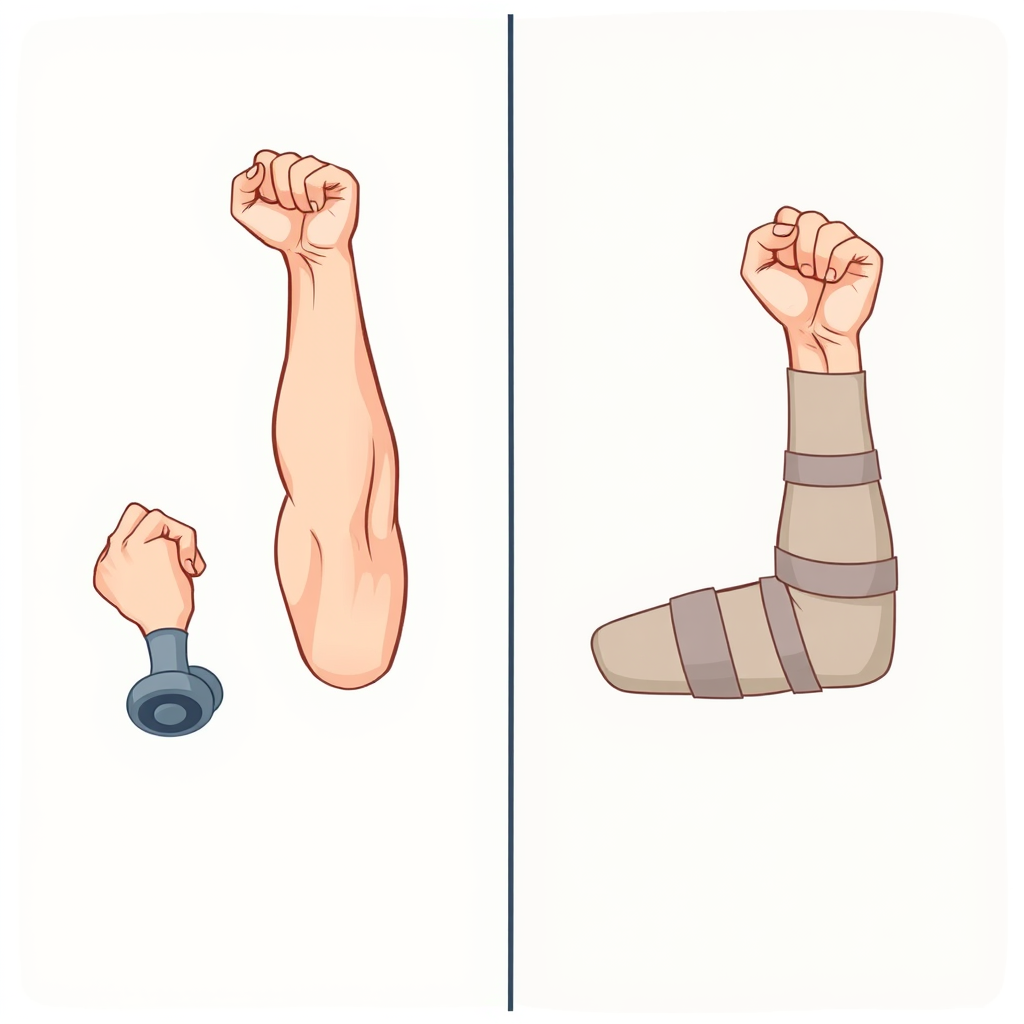
to gradually become weaker from lack of use, like an unused muscle
If you never write by hand anymore, your spelling might start to atrophy.
More examples: Doctors warn that bedridden patients' legs atrophy within weeks. • After years abroad, her Japanese began to atrophy from disuse. • Critics say our attention spans are atrophying thanks to short videos.
Common collocations: muscles atrophy, skills atrophy from disuse, suffer atrophy
Word family: atrophy (noun), atrophied (adjective)
Synonyms: waste away, weaken, deteriorate
Antonyms: strengthen, develop, flourish
Related concepts: muscle loss, neglect, disuse
Contexts: medicine, fitness, discussions of skill loss
Usage note: Originally medical, now widely used metaphorically for skills, relationships or institutions that weaken through neglect. Often paired with 'from disuse' or 'from lack of use.'
discern

to notice or recognize something that is not obvious, often with effort
It's getting harder to discern real photos from AI-generated ones.
More examples: In the dim light, I could barely discern a figure at the end of the corridor. • A good editor can discern a weak argument hidden behind elegant prose. • Can you discern any difference in tone between the two emails?
Common collocations: discern the difference, discern truth from fiction, barely discern
Word family: discernible (adjective), discerning (adjective), discernment (noun)
Synonyms: perceive, detect, make out
Antonyms: overlook, miss
Related concepts: judgment, perception, critical thinking
Contexts: media literacy, art criticism, everyday observation
Usage note: Formal but very useful for discussing judgment and perception. Often used with 'between' or 'from' when comparing two things. A 'discerning' customer or reader is a compliment.
complacent
too satisfied with how things are, so you stop being careful or trying
The team got complacent after early success and lost the final badly.
More examples: Don't get complacent just because the app has been reliable so far. • Regulators grew complacent, and the crisis took everyone by surprise. • There's a complacent assumption that technology will always fix our problems.
Common collocations: become/grow complacent, a complacent attitude, complacency about something
Word family: complacency (noun), complacently (adverb)
Synonyms: smug, self-satisfied, unworried
Antonyms: vigilant, cautious, alert
Related concepts: overconfidence, negligence, false security
Contexts: workplace safety, business, personal habits
Usage note: Always negative — it implies unjustified self-satisfaction. Common in discussions of safety, business and politics. Don't confuse with 'compliant' (obedient).
crutch
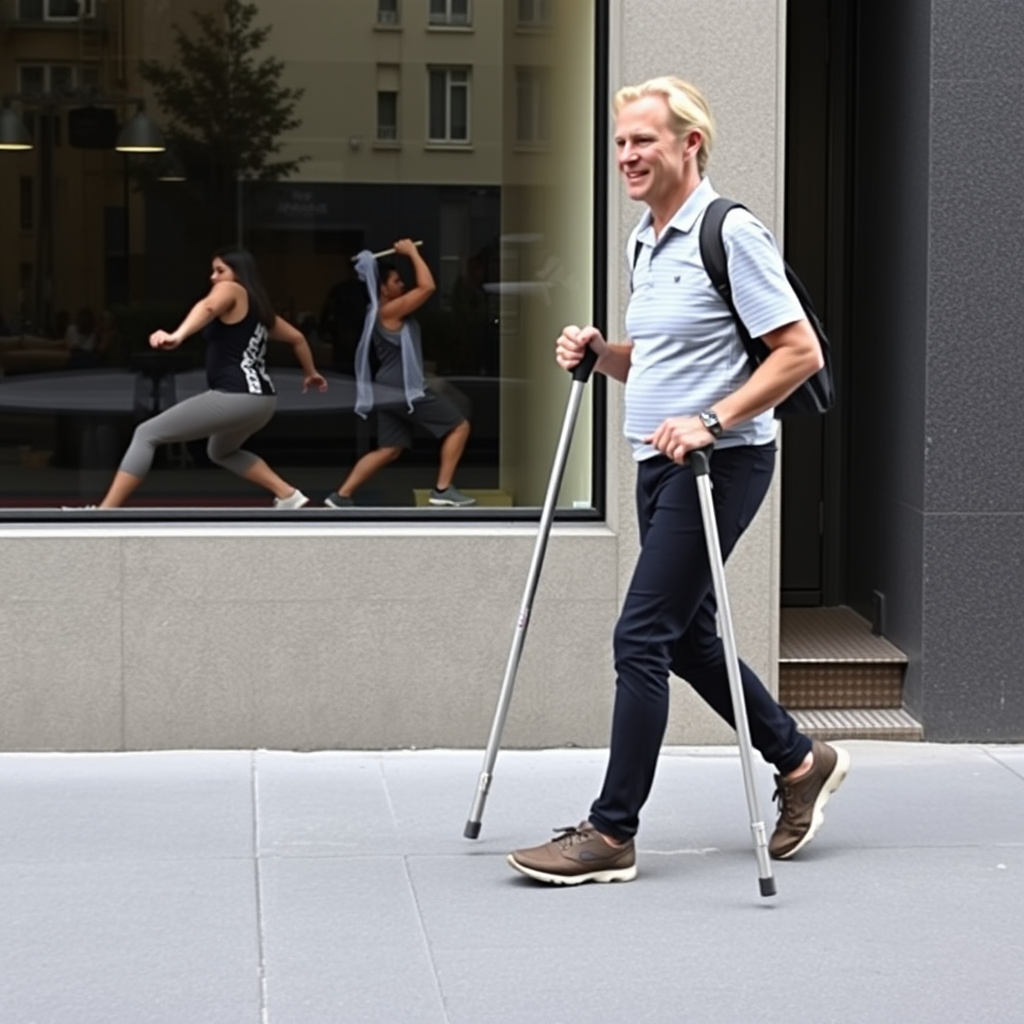
something you depend on for support, especially when you shouldn't need it
Subtitle apps became a crutch — I stopped really listening in my new language.
More examples: Coffee is my crutch; I can't start the day without it. • Some teachers see calculators as a crutch that stops kids learning mental math. • He used humour as a crutch to avoid serious conversations.
Common collocations: rely on something as a crutch, use something as a crutch, a psychological crutch
Word family: crutches (plural noun)
Synonyms: prop, support, safety blanket
Antonyms: independence, self-reliance
Related concepts: dependence, habits, avoidance
Contexts: language learning, addiction discussions, self-improvement
Usage note: Metaphorical use is very common and slightly critical — it suggests unhealthy dependence. Often used with 'rely on' or 'lean on.'
Vocabulary Check
- What does 'cognitive offloading' mean?
- Improving your memory through practice
- Giving your brain's work to an outside tool like a phone
- Sharing your thoughts with a friend
- Refusing to use technology
- Which sentence uses 'atrophy' correctly?
- Her piano skills began to atrophy after she stopped practising.
- He atrophied the exam with excellent results.
- The garden atrophied with beautiful flowers in spring.
- They atrophy their guests with warm hospitality.
- What does 'discern' mean?
- To create something new
- To ignore something deliberately
- To notice or recognize something that isn't obvious
- To repeat something exactly
- In which situation would you call someone 'complacent'?
- They double-check their work even when they're ahead.
- They stop being careful because everything has gone well so far.
- They feel nervous before a big presentation.
- They work harder than everyone else on the team.
- What does it mean if someone uses subtitles as a 'crutch'?
- They physically need support while watching TV
- Subtitles help them improve faster
- They depend on subtitles instead of developing their listening
- They only watch films with subtitles for fun
Idioms & Phrasal Verbs
push back
to argue against or resist an idea or plan
When the company announced weekend shifts, staff pushed back hard and the plan was dropped.
Usage note: The small word 'back' adds the idea of resistance — pushing against something coming at you. · Right: push back against the idea · Avoid: push the idea back
Usage note: Common in workplace talk: 'Management pushed back on the budget.' Slightly informal.
have a point
to be right about something, even partly
My sister says I check my phone too much — she has a point, honestly.
Usage note: The picture: an argument has 'points', and one of them is valid. Often used to admit someone you disagree with is partly right.
Usage note: Very common in conversation: 'OK, fair enough, you have a point there.'
reach for
to automatically take or use something you always rely on
Whenever a recipe goes wrong, I reach for my phone instead of thinking it through.
Usage note: Literally it means moving your hand towards something; figuratively it suggests a habit, almost without thinking.
Usage note: Cannot be split: 'reach for the phone', not 'reach the phone for'.
waste away
to gradually become weaker or smaller until almost nothing is left
He used to play chess every week, but his skills have wasted away since he stopped.
Usage note: The picture is of a body or muscle slowly disappearing. Often dramatic: 'he wasted away from illness'. Here it's used figuratively for skills.
Usage note: Cannot be split: 'waste away', not 'waste the skill away'.
Language Practice: Talking About AI and Thinking
Practice expressing qualified opinions, conceding points and challenging ideas about AI and our minds.
- Expressing a qualified opinion
- Emerging: To some extent, AI ___, but ___. — To some extent, AI makes us faster, but maybe not smarter.
- Developing: While I'd agree that ___, I don't think that ___. — While I'd agree that AI saves time, I don't think it replaces real understanding.
- Expanding: It's not so much that ___; the real issue is whether ___. — It's not so much that AI makes us stupid; the real issue is whether we stay curious without it.
- Conceding an opposing view
- Emerging: I take your point about ___, but ___. — I take your point about convenience, but convenience has a price.
- Developing: That's fair, although I'd argue that ___. — That's fair, although I'd argue that adaptation isn't the same as improvement.
- Expanding: Admittedly, ___ — and yet, when you look closer, ___. — Admittedly, every generation panics about new technology — and yet, when you look closer, this one thinks for us in a way no previous tool did.
- Challenging an idea
- Emerging: But isn't it true that ___? — But isn't it true that we've always offloaded memory, even to notebooks?
- Developing: I'm not convinced, because ___. — I'm not convinced, because fluent answers aren't the same as correct ones.
- Expanding: The evidence suggests ___, which rather undermines the idea that ___. — The evidence suggests our attention spans are atrophying, which rather undermines the idea that we're adapting just fine.
Fill in the Blanks
My neighbour is a piano teacher, and she has a theory about technology. She says that when we hand every task to a machine, our own abilities start to _____ — and she's seen it happen. Students who rely on apps to transcribe music by ear never develop a _____ ear of their own; they can no longer _____ a wrong note in a recording. Worse, some become _____, assuming the software is always right. She calls the apps a _____ — useful after an injury, dangerous as a permanent habit. Her solution? Ten minutes of practice with the screen switched off, every single day.
Word bank: atrophy, discerning, discern, complacent, crutch
Sentence Unscramble
- if / you / never / practise / a / skill / it / will / gradually / atrophy
- a / discerning / reader / can / easily / spot / a / weak / argument
- using / the / app / as / a / crutch / made / her / complacent / about / her / spelling
Discussion Questions
Think about the last ten years. We used to memorise routes, phone numbers, recipes and facts. Now a device holds all of it, and we retrieve it in seconds. Some people call this freedom; others call it a slow loss.
Which skills do you think you've personally lost or weakened because of technology — and does it worry you? Why or why not?
AI chatbots answer in a confident, polished tone, even when they're wrong. Studies show most people don't check the answers. The reading called this the real danger: not the tool, but the uncritical user.
Have you ever trusted an AI answer that turned out to be wrong? How good are you at discerning reliable information online?
Imagine a school where students can use AI for every assignment — essays, maths, even art. Some teachers say this prepares them for the real world; others say they'll never build their own abilities.
If you were designing a school today, how would you balance AI use against independent thinking? Where would you draw the line?
The reading compared AI to a crutch: wonderful if you have a broken leg, ruinous if you forget how to walk. The tricky part is that nobody notices the moment the crutch becomes a habit.
What's one thing in your life you'd refuse to let AI do for you, no matter how convenient it was — and what does that choice say about you?
Here's a thought experiment: suppose a new law required every AI answer to come with a warning label, like cigarettes. Would people change their behaviour, or would they just ignore the warnings?
Do you think people can be protected from over-relying on AI, or is it each person's own responsibility? What would happen if we did nothing at all?
Knowledge Check
- Which word describes a skill getting weaker because you never use it?
- Complacent
- Discern
- Atrophy
- Crutch
- True or false: calling something a 'crutch' is usually a compliment.
- True
- False
- Saving all your passwords in an app so you never memorise them is an example of:
- cognitive offloading
- discernment
- complacency
- atrophy of the hands
- If someone is 'complacent', they are:
- extremely careful
- too satisfied and not careful enough
- very skilled at noticing details
- physically weak
- True or false: a 'discerning' person accepts information quickly without questioning it.
- True
- False
- If a group of employees 'pushes back' on a new rule, what are they doing?
- They are following the rule carefully.
- They are resisting or arguing against it.
- They are moving the rule to a later date.
- They are explaining the rule to new staff.
Free to use with your students: Free to teach, screen-share, print and share with your students, with a credit to PlanWise ESL. Please do not sell it or republish it as your own. What you can do with free lessons.