Understanding Mastectomy: Health, Choices, and Recovery
About this lesson: This is a B2 (Upper Intermediate) ESL lesson in the General English category. It takes about 60 minutes. It includes 5 vocabulary words, a reading text, comprehension questions, discussion questions and speaking patterns. Suits one-to-one or small-group online classes. Free to open and teach with no login, and it prints as a PDF.
Print just the discussion questions
How this lesson is built
This is a complete conversation lesson built on a scientific pedagogical formula, not a generic worksheet: recall prior topic vocabulary, pre-teach the new words in depth, read in context, practise active recall with flashcards and synonyms/antonyms, build accuracy with exercises, and finish with deep discussion.
- Warm-up: Discussion questions that connect the topic to the student’s own life and recall vocabulary they already know about the subject.
- Reading: A text written for this CEFR level that uses each new word two or three times in context, giving the student something meaningful to react to.
- Key vocabulary: 5 new words, pre-taught before the reading with a definition, pronunciation guide, example sentences and a picture, plus word families, usage notes, recall flashcards and synonyms/antonyms, giving a solid grounding before reading.
- Comprehension: 5 questions that check the new words: retrieval practice, not rereading.
- Sentence frames: 3 speaking patterns, each at three levels of support (emerging, developing, expanding) with model answers—especially helpful scaffolding for beginners and less confident speakers.
- Gap-fill: The new words again, in a shuffled order, so the student recalls them by meaning in context.
- Sentence unscramble: Natural sentences with the new words to put back in order, reinforcing grammar and collocation.
- Discussion: 5 open questions designed to talk deeply about the subject while actively using the lesson’s target vocabulary: the heart of a conversation lesson.
- Quiz: A short retrieval check that brings every new word back once more.
Unlike a generic worksheet, the new words are taught before the reading and met again in the activities, the speaking is supported at three levels and most of the time goes on the student talking. Teachers who use PlanWise ESL also get per-student vocabulary tracking (recycling earlier words into future readings and questions), a private learner dashboard with flashcards and custom lesson creation, and a downloadable study PDF.
Warm-up Activity
Discuss health, medical decisions, and recovery to prepare for the topic of mastectomy.
- How do people in your country usually talk about serious illnesses?
- What difficult medical decisions have you or someone you know had to make?
- Why do you think some people prefer not to discuss breast cancer openly?
- What does 'recovering' from an illness mean besides physical healing?
- How can friends and family support someone facing major surgery?
Reading Text: Making Informed Choices
Read about mastectomy, the choices patients face, and different perspectives on recovery.
A mastectomy is an operation to remove one or both breasts, usually after a cancer diagnosis. For many patients, hearing the diagnosis is the hardest moment, because it forces them to consider major surgery. However, doctors today present several treatment options, and patients are encouraged to participate actively in decisions about their own bodies.
Some women choose a double mastectomy even when only one breast is affected. They argue that this reduces the risk of cancer returning. Others prefer less invasive treatment, believing that preserving healthy tissue improves quality of life. Consequently, medical teams must explain the evidence clearly so patients can weigh the benefits against the drawbacks.
After surgery, many patients decide to reconstruct the breast using implants or their own tissue. This process can take months and often requires several operations. Meanwhile, other women choose external prosthetic forms, which fit inside a bra and require no further surgery. Neither choice is better; both reflect personal values and circumstances.
Recovery involves far more than physical healing. Patients frequently report emotional challenges, including anxiety about body image and fears about the future. Nevertheless, research shows that strong support networks greatly improve outcomes. Family, friends, and patient communities all contribute to building the resilience needed to move forward.
Attitudes toward mastectomy vary widely across cultures. In some societies, breast cancer remains a taboo subject, which can delay diagnosis and treatment. In others, public awareness campaigns encourage early screening and open conversation. Ultimately, greater openness helps patients make informed choices and reminds us that medicine treats people, not just diseases.
Key Vocabulary
mastectomy
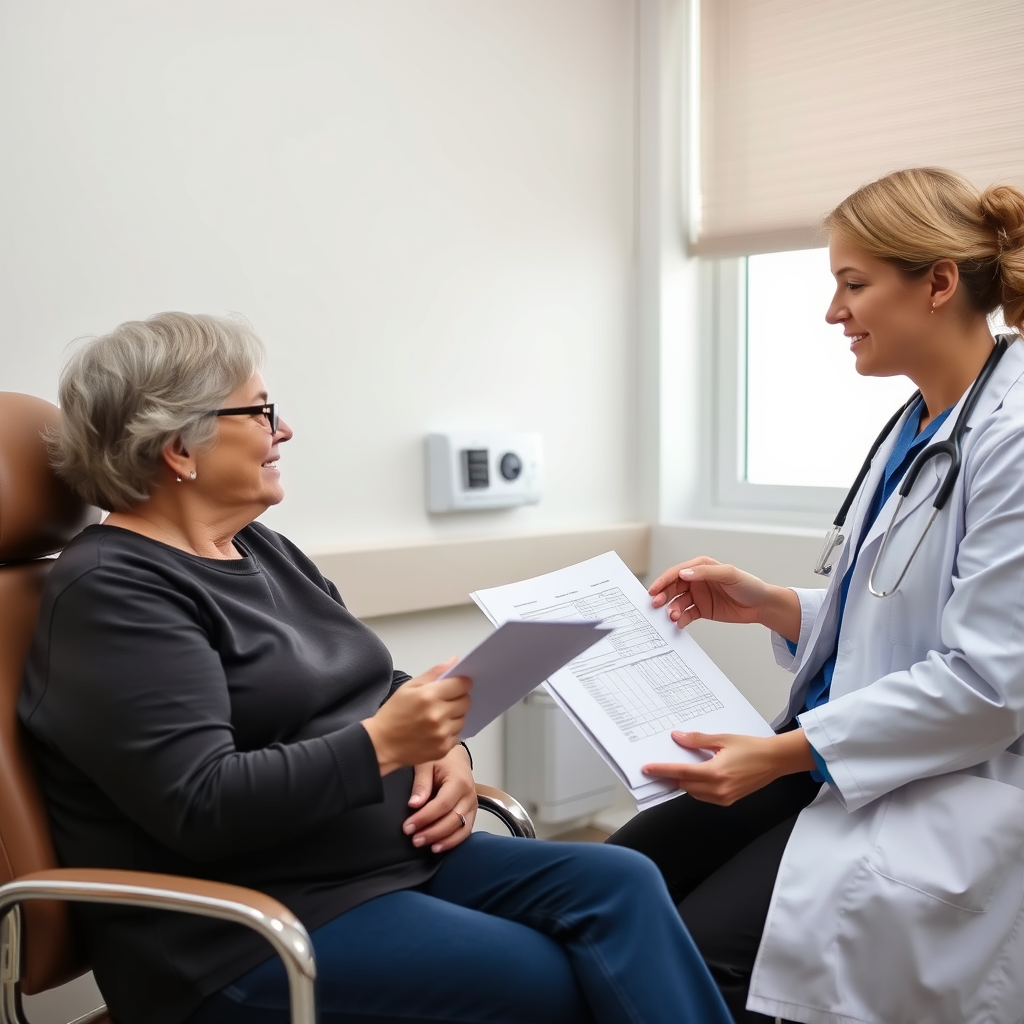
an operation to remove a person's breast
After her mastectomy, she joined a support group for patients.
More examples: The surgeon explained what a mastectomy involves. • A double mastectomy removes both breasts. • He researched mastectomy options before the operation.
Common collocations: undergo a mastectomy, double mastectomy, recover from a mastectomy
Word family: mastectomies (plural), breast surgery (related term)
Synonyms: breast removal surgery, surgical breast removal
Antonyms: breast reconstruction, organ preservation
Related concepts: breast cancer, surgery, oncology
Contexts: hospitals, health news, support groups
Usage note: A formal medical term used in hospitals, news, and health discussions. Always treat the topic with sensitivity.
diagnosis

the identification of an illness by examining its signs
An early diagnosis greatly increases the chances of successful treatment.
More examples: The diagnosis came as a shock to the whole family. • Doctors use scans to confirm a diagnosis. • She received her diagnosis on a Tuesday morning.
Common collocations: receive a diagnosis, early diagnosis, confirm a diagnosis
Word family: diagnose (verb), diagnostic (adjective)
Synonyms: identification, determination, assessment
Antonyms: misdiagnosis, uncertainty
Related concepts: symptoms, screening, treatment
Contexts: medicine, hospitals, health insurance
Usage note: Common in medical and everyday contexts. Often followed by 'of' plus the illness, e.g., 'a diagnosis of cancer'.
reconstruct

to build something again after it has been damaged or removed
Surgeons can reconstruct the breast using the patient's own tissue.
More examples: It took three operations to reconstruct the damaged area. • The city plans to reconstruct the old bridge. • Doctors reconstructed her shoulder after the accident.
Common collocations: reconstruct a breast, reconstructive surgery, surgically reconstruct
Word family: reconstruction (noun), reconstructive (adjective)
Synonyms: rebuild, restore, remake
Antonyms: destroy, demolish, dismantle
Related concepts: surgery, implants, healing
Contexts: medicine, architecture, engineering
Usage note: Used for physical rebuilding (buildings, body parts) and also for recreating events or ideas, e.g., 'reconstruct the timeline'.
prosthetic
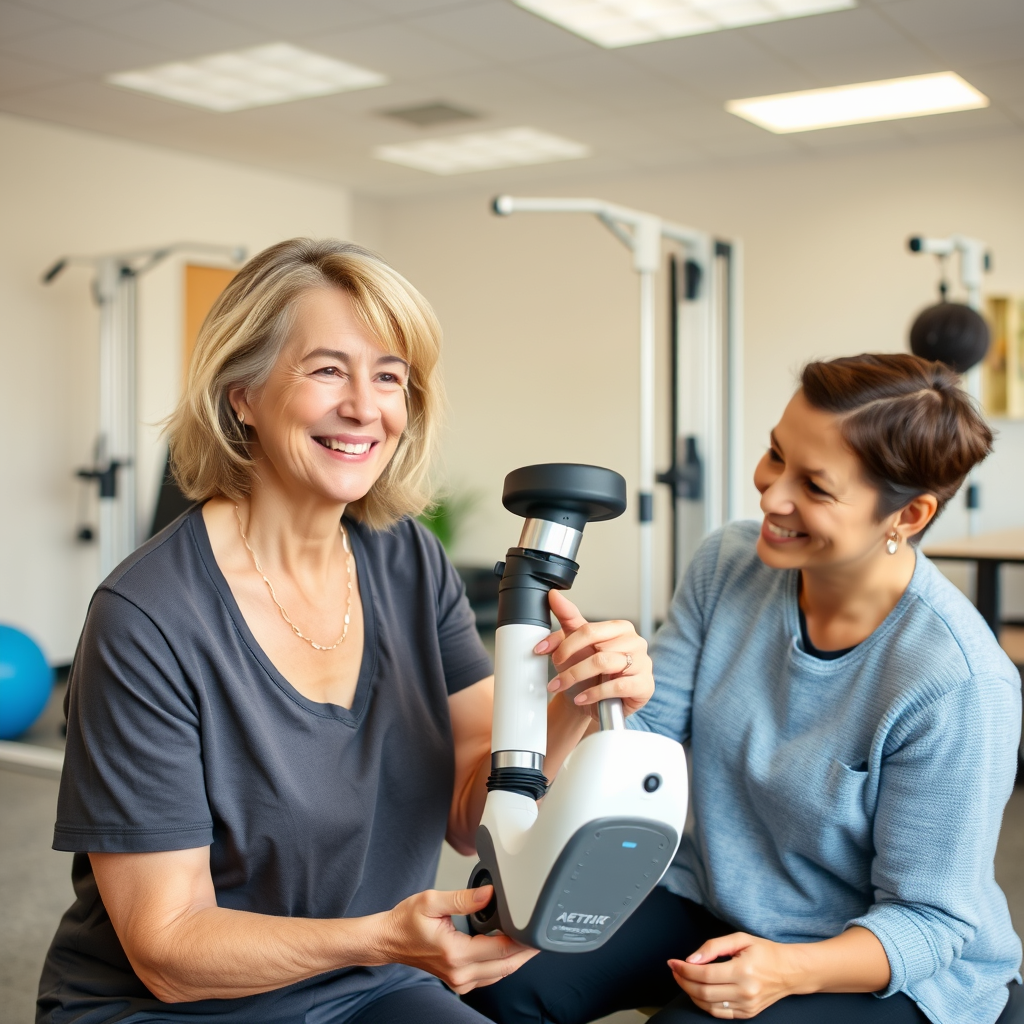
describing an artificial device that replaces a missing body part
She was fitted with a lightweight prosthetic limb after the accident.
More examples: A prosthetic breast form can be worn inside a regular bra. • Modern prosthetic legs allow people to run and swim. • The clinic provides prosthetic devices free of charge.
Common collocations: prosthetic limb, prosthetic device, wear a prosthesis
Word family: prosthesis (noun, plural: prostheses), prosthetics (field of study)
Synonyms: artificial, synthetic, replacement
Antonyms: natural, biological, original
Related concepts: disability, rehabilitation, technology
Contexts: medicine, sports, rehabilitation clinics
Usage note: The adjective describes the device; the noun 'prosthesis' names it. Note the irregular plural 'prostheses'.
resilience

the ability to recover quickly from difficulties
Her resilience helped her cope with the challenges of treatment.
More examples: Communities showed great resilience after the disaster. • Children often display surprising resilience. • Resilience can be developed through practice and support.
Common collocations: show resilience, remarkable resilience, build resilience
Word family: resilient (adjective), resiliently (adverb)
Synonyms: toughness, strength, adaptability
Antonyms: fragility, vulnerability
Related concepts: recovery, mental health, coping
Contexts: psychology, education, workplace training
Usage note: A positive, abstract noun used in psychology, education, and news. Often paired with verbs like 'show', 'demonstrate', or 'build'.
Vocabulary Check
- What does 'diagnosis' mean?
- A type of medicine that cures illness
- The identification of an illness by examining its signs
- A hospital room where patients recover
- A plan for exercising after surgery
- Which sentence uses 'reconstruct' correctly?
- She reconstructed her feelings before the meeting.
- The surgeons reconstructed the breast using tissue from her back.
- He reconstructed his keys because he lost them.
- They reconstructed the meeting until everyone arrived.
- In which situation would you use the word 'prosthetic'?
- Describing a natural fruit grown on a farm
- Describing an artificial leg worn after an amputation
- Describing a medicine taken twice daily
- Describing a hospital waiting area
- What does 'resilience' mean?
- The ability to recover quickly from difficulties
- A medical test done in a laboratory
- A feeling of sadness after bad news
- A type of physical exercise
- Which sentence uses 'mastectomy' correctly?
- The doctor recommended a mastectomy to remove the affected breast.
- She took a mastectomy pill every morning.
- The mastectomy was a kind of blood test.
- He bought a mastectomy at the pharmacy.
Language Practice for Mastectomy
Practice expressing and evaluating ideas about medical choices and recovery.
- Comparing contrasting viewpoints
- Emerging: Some people choose ___, but other people choose ___. — Some people choose reconstruction, but other people choose a prosthetic form.
- Developing: While some patients prefer ___, others believe that ___. — While some patients prefer reconstruction, others believe that a prosthetic is simpler and safer.
- Expanding: Whereas some argue that ___ because ___, others maintain that ___, which suggests that ___. — Whereas some argue that reconstruction restores confidence because it feels more natural, others maintain that avoiding further surgery protects their health, which suggests that values differ from person to person.
- Discussing hypothetical situations
- Emerging: If my friend had this illness, I would ___. — If my friend had this illness, I would visit her often.
- Developing: If a close friend received a difficult diagnosis, I would ___ and I would also ___. — If a close friend received a difficult diagnosis, I would accompany her to appointments and I would also help her find reliable information.
- Expanding: If a friend were facing a mastectomy, I would ___ because ___, and I would advise them to ___. — If a friend were facing a mastectomy, I would offer steady emotional support because recovery takes months, and I would advise them to ask the medical team detailed questions.
- Evaluating importance and drawing conclusions
- Emerging: I think ___ is the most important thing for patients. — I think support from family is the most important thing for patients.
- Developing: What matters most for patients is ___, because ___. — What matters most for patients is early diagnosis, because treatment works better when cancer is found sooner.
- Expanding: What seems most important is ___, although it could be argued that ___, so on balance I would say that ___. — What seems most important is early screening, although it could be argued that emotional support matters just as much, so on balance I would say that both systems and communities must work together.
Fill in the Blanks
After receiving her _____, Maria spent weeks learning about her options. Her doctor explained that she could _____ the breast after the operation, or she could wear a _____ form instead. Although the news was frightening, Maria faced it with remarkable _____, supported by her family and a local patient group. In the end, she decided that a _____ was the safest choice for her situation, and she felt confident about her decision.
Word bank: diagnosis, reconstruct, prosthetic, resilience, mastectomy
Sentence Unscramble
- the / surgeon / explained / how / to / reconstruct / the / breast / carefully
- an / early / diagnosis / often / leads / to / better / treatment / outcomes
- her / resilience / helped / her / recover / after / the / mastectomy
Discussion Questions
When patients hear a cancer diagnosis, they often face a flood of information and difficult decisions very quickly. Some want every detail about treatment options, while others prefer to trust their doctors completely. Research suggests that patients who understand their choices tend to feel more satisfied with the outcome, even when the treatment is hard.
How much should patients be involved in decisions about their own treatment? Should doctors ever make decisions for them?
After a mastectomy, women face personal choices about reconstruction, prosthetic forms, or neither. These decisions are shaped by culture, age, finances, and personal values. In some countries reconstruction is freely available, while in others patients must pay, which affects who can choose it.
Do you think breast reconstruction is a medical need or a personal choice? Should governments pay for it?
In many societies, breast cancer was once a taboo subject that people avoided mentioning. Over recent decades, awareness campaigns, charity runs, and public figures sharing their stories have changed this. However, attitudes still vary greatly between generations and cultures, and silence can delay diagnosis.
Why do you think some illnesses remain taboo in certain cultures? How can communities overcome this silence?
Recovery from mastectomy involves physical healing, but also emotional adjustment. Many patients describe changes in body image and confidence. Support from family, friends, and patient communities plays a huge role, and psychologists note that resilience can grow over time with the right support.
What role should emotional support play in medical treatment? Can hospitals really provide it, or must it come from communities?
Some women with a family history of breast cancer choose preventive mastectomy before any illness appears, as one famous actress did publicly. This sparked global debate: is removing healthy tissue wise prevention, or an extreme response to fear? Genetic testing makes such choices more common every year.
Would you consider preventive surgery if genetic tests showed a high risk of a serious disease? Why or why not?
Knowledge Check
- What is a mastectomy?
- A type of cancer screening test
- A medicine that shrinks tumors
- An operation to remove a breast
- A device that replaces a limb
- True or false: 'Reconstruct' means to destroy something completely.
- True
- False
- Which word describes an artificial device that replaces a missing body part?
- Prosthetic
- Resilience
- Diagnosis
- Reconstructive
- True or false: An early diagnosis usually improves the chances of successful treatment.
- True
- False
- A patient who copes well with hardship and recovers quickly shows...
- fragility
- resilience
- reluctance
- resistance
Free to use with your students: Free to teach, screen-share, print and share with your students, with a credit to PlanWise ESL. Please do not sell it or republish it as your own. What you can do with free lessons.