Travelling: Why We Go and What We Get Out of It
About this lesson: This is a B2 (Upper Intermediate) ESL lesson in the General English category. It takes about 60 minutes. It includes 5 vocabulary words, 4 idioms and phrasal verbs, a reading text, comprehension questions, discussion questions and speaking patterns. Suits one-to-one or small-group online classes. Free to open and teach with no login, and it prints as a PDF.
Print just the discussion questions
How this lesson is built
This is a complete conversation lesson built on a scientific pedagogical formula, not a generic worksheet: recall prior topic vocabulary, pre-teach the new words in depth, read in context, practise active recall with flashcards and synonyms/antonyms, build accuracy with exercises, and finish with deep discussion.
- Warm-up: Discussion questions that connect the topic to the student’s own life and recall vocabulary they already know about the subject.
- Reading: A text written for this CEFR level that uses each new word two or three times in context, giving the student something meaningful to react to.
- Key vocabulary: 5 new words, pre-taught before the reading with a definition, pronunciation guide, example sentences and a picture, plus word families, usage notes, recall flashcards and synonyms/antonyms, giving a solid grounding before reading.
- Comprehension: 5 questions that check the new words: retrieval practice, not rereading.
- Idioms and phrasal verbs: Expressions taken from the reading, each with its meaning, an example and a speaking question.
- Sentence frames: 3 speaking patterns, each at three levels of support (emerging, developing, expanding) with model answers—especially helpful scaffolding for beginners and less confident speakers.
- Gap-fill: The new words again, in a shuffled order, so the student recalls them by meaning in context.
- Sentence unscramble: Natural sentences with the new words to put back in order, reinforcing grammar and collocation.
- Discussion: 5 open questions designed to talk deeply about the subject while actively using the lesson’s target vocabulary: the heart of a conversation lesson.
- Quiz: A short retrieval check that brings every new word back once more.
Unlike a generic worksheet, the new words are taught before the reading and met again in the activities, the speaking is supported at three levels and most of the time goes on the student talking. Teachers who use PlanWise ESL also get per-student vocabulary tracking (recycling earlier words into future readings and questions), a private learner dashboard with flashcards and custom lesson creation, and a downloadable study PDF.
Warm-up Activity
Look at the questions and talk about your travel experiences and habits.
- What's the best trip you've ever taken? What made it so good?
- Do you prefer planning everything before a trip, or deciding as you go?
- What's one place you'd love to visit but haven't yet? Why there?
- Do you get nervous before travelling, or does it not bother you at all?
- Would you rather travel somewhere comfortable and familiar, or somewhere completely new?
Reading Text: The Way We Travel Now
A short article about how people travel today, and why some travellers are changing their habits.
For many people, travel used to mean one thing: a plan. You wrote an itinerary, you followed it, and you came home with the same photos as everyone else. But something is changing. More and more travellers say they want surprises, not schedules, and they're willing to give up comfort to find them.
Take Marta, a 29-year-old nurse from Poland. Last summer she threw away her carefully planned itinerary after two days and took a slow train into the mountains instead. 'I had a kind of wanderlust I couldn't explain,' she says. 'I just wanted to go where the road went.' She ended up staying a week in a village she can't even find on a map now.
Not everyone is romantic about this, of course. Travelling off the beaten track has real downsides: bad roads, no wifi, and the occasional stomach problem. Some travellers argue that a bit of hassle is the price you pay for something genuine. Others say life is too short, and a good hotel with a pool is genuine enough for them.
There's also the physical cost. Long flights across time zones leave many people with terrible jet lag, losing the first two days of their holiday to tiredness and broken sleep. Doctors suggest sunlight and patience, but most travellers just push through it and hope for the best.
So what is travel really for? Some say it's about escape; others say it's about learning who you are when everything familiar disappears. Maybe the honest answer is that it's different for everyone. The only thing most travellers agree on is this: the trips that go wrong often become the best stories.
Key Vocabulary
itinerary
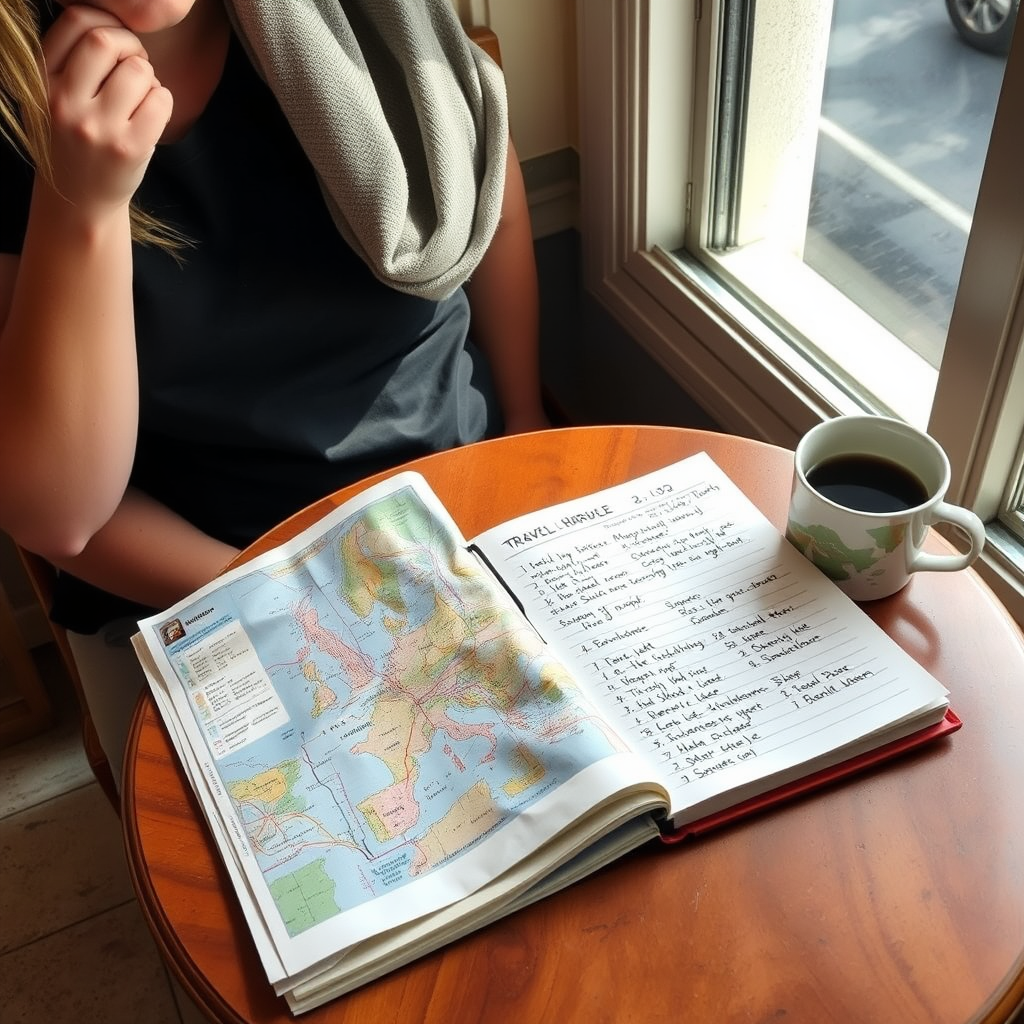
a plan of a journey, listing places and times
Our itinerary includes three days in Rome and two in Florence.
More examples: The travel agent sent us a detailed itinerary by email. • I don't really follow an itinerary; I just see where the day takes me. • My personal rule: plan half the trip and leave the rest open.
Common collocations: follow an itinerary, a packed itinerary, stick to the itinerary
Word family: itinerant (adj), travel plan (noun)
Synonyms: schedule, travel plan, route
Antonyms: improvisation, spontaneity
Related concepts: planning, tourism, timetable
Contexts: holidays, business trips, travel agencies
Usage note: Common in travel and business contexts. Often used with 'plan', 'follow' or 'stick to'. Slightly formal but very useful.
wanderlust

a strong desire to travel and explore the world
Her wanderlust started when she backpacked around Asia at nineteen.
More examples: Scrolling through travel photos always gives me wanderlust. • He gave up his job because of wanderlust and cycled across South America. • I get a serious case of wanderlust every spring.
Common collocations: a sense of wanderlust, feed your wanderlust, suffer from wanderlust
Word family: wander (verb), wanderer (noun)
Synonyms: restlessness, itch to travel, love of travel
Antonyms: homesickness, contentment
Related concepts: adventure, exploration, freedom
Contexts: travel blogs, personal dreams, life decisions
Usage note: A positive, slightly poetic word. Often used with 'a sense of' or 'a case of'. Very common in social media and travel writing.
jet lag

tiredness caused by flying across several time zones
I had awful jet lag for three days after flying home from Japan.
More examples: Jet lag always hits me harder flying east than flying west. • She slept through most of her first day in New York because of jet lag. • A trick against jet lag: switch your watch to the new time on the plane.
Common collocations: suffer from jet lag, bad jet lag, get over jet lag
Word family: jet-lagged (adj), lag (noun)
Synonyms: time zone tiredness, exhaustion
Antonyms: being well rested, alertness
Related concepts: time zones, long flights, sleep
Contexts: long-haul flights, holidays, business travel
Usage note: Uncountable. Use 'suffer from', 'have' or 'get over'. The adjective form 'jet-lagged' is very common in speech.
off the beaten track
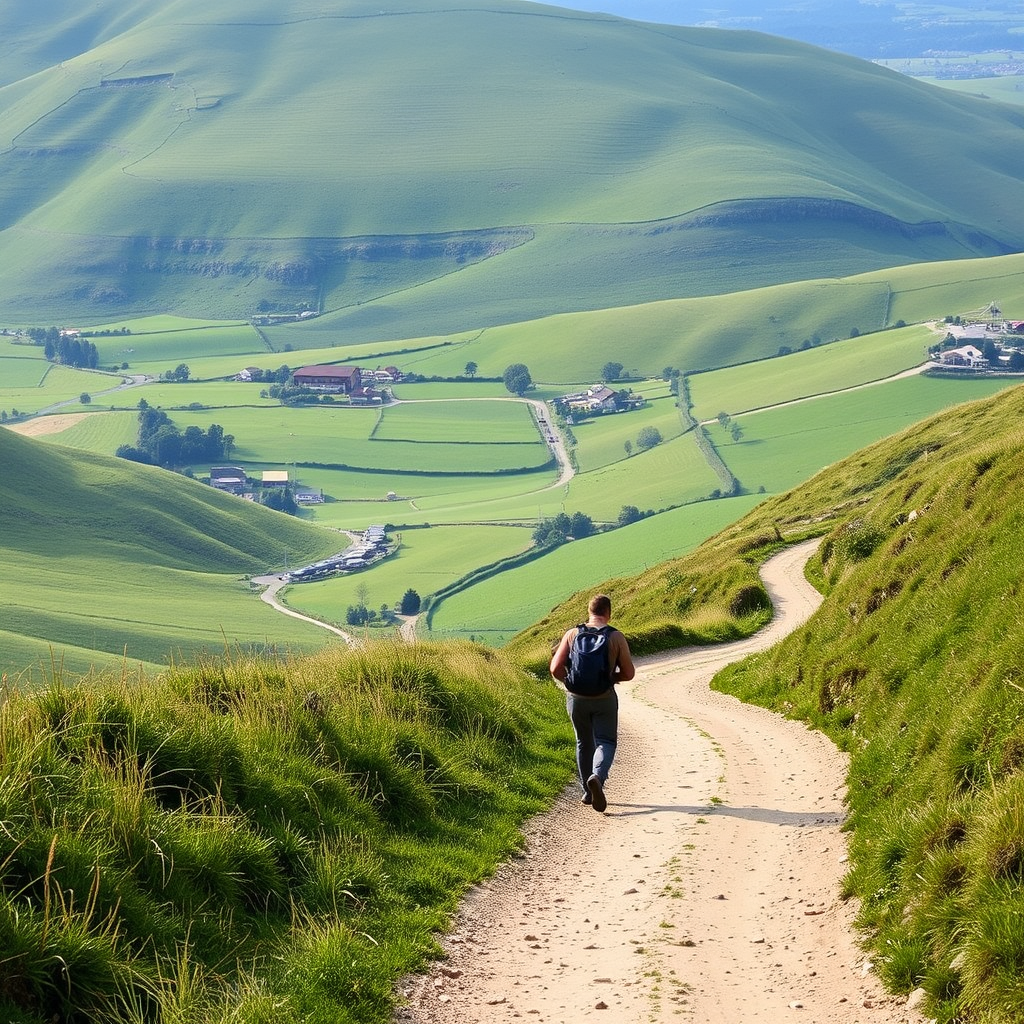
far from the places most tourists visit
The island is completely off the beaten track; we saw almost no other tourists.
More examples: If you want somewhere off the beaten track, try the north of the country. • Their village restaurant is a bit off the beaten track but worth the drive. • We prefer places off the beaten track, even if they're harder to reach.
Common collocations: go off the beaten track, somewhere off the beaten track, get off the beaten track
Word family: beaten track (noun phrase), hidden gem (noun phrase)
Synonyms: remote, little-known, undiscovered
Antonyms: touristy, mainstream, popular
Related concepts: adventure travel, hidden gems, authenticity
Contexts: travel recommendations, hiking, rural tourism
Usage note: Fixed idiom, always with 'the'. Often used with 'go' or 'get'. Can describe places or even ideas.
hassle

trouble, difficulty or annoying effort
Getting a visa was such a hassle that we changed our destination.
More examples: Flying with young kids is a lot of hassle, but it's worth it. • It's not worth the hassle; just take a taxi. • Airport security is always a hassle at busy times.
Common collocations: a lot of hassle, not worth the hassle, save yourself the hassle
Word family: hassle (verb), hassle-free (adj)
Synonyms: trouble, bother, fuss
Antonyms: ease, convenience
Related concepts: paperwork, queues, delays
Contexts: airports, daily life, complaints
Usage note: Informal but extremely common in speech. Usually uncountable. Great for complaining politely about small problems.
Vocabulary Check
- What does 'itinerary' mean?
- A kind of suitcase
- A plan of a journey with places and times
- A ticket for a train
- A travel photo album
- Which sentence uses 'wanderlust' correctly?
- I caught wanderlust at the airport security check.
- Her wanderlust made her quit her job and travel for a year.
- The wanderlust at the hotel was very comfortable.
- We booked wanderlust for two nights in Paris.
- In which situation would you use 'jet lag'?
- You missed your bus in your own city.
- You feel exhausted after flying from Asia to Europe.
- You lost your luggage at the beach.
- You're afraid of heights on a mountain.
- What does 'off the beaten track' describe?
- A place most tourists don't visit
- A road under construction
- A very expensive hotel
- A walking tour with a guide
- Which sentence uses 'hassle' correctly?
- The hassle of the hotel room was beautiful.
- Renewing my passport was a real hassle; it took three months.
- I hassle a lot of water when I travel.
- The hassle flew at six in the morning.
Idioms & Phrasal Verbs
end up
to finally be or do something, often by accident
We got lost and ended up in a tiny fishing village.
Usage note: 'Up' adds the idea of a final result, not a direction. · Right: We ended up staying a week. · Avoid: We ended to stay a week.
Usage note: It is followed by -ing or a place, not by 'to'. · Right: ended up spending everything · Avoid: ended up to spend everything
throw away
to get rid of something; here, to abandon a plan
After one bad review, he threw away the whole recipe idea.
Usage note: It splits: 'threw her plan away' and 'threw away her plan' are both fine.
Usage note: You can use it for plans and ideas, not just rubbish. · Right: throw away the plan · Avoid: throw the plan to the bin
push through
to continue despite feeling tired or finding it hard
I was exhausted, but I pushed through and finished the hike.
Usage note: 'Through' gives the picture of going through pain or difficulty to the other side. · Right: push through the tiredness · Avoid: push the tiredness through
life is too short
don't waste time on things that don't matter to you
Life is too short to spend your holiday doing things you hate.
Usage note: The picture: life is a very short journey, so use it well.
Usage note: Usually followed by 'to + verb': life is too short to worry about everything.
Language Practice: Talking About Travel
Practice expressing your travel opinions, comparing choices and imagining trips.
- Comparing two travel styles
- Emerging: I prefer ___ to ___ because ___. — I prefer planned trips to surprises because I feel calmer.
- Developing: Some people like ___, whereas I'd rather ___ because ___. — Some people like a packed itinerary, whereas I'd rather leave days empty because plans stress me out.
- Expanding: While ___ works well for some travellers, I find ___ more rewarding, mainly because ___. — While a strict itinerary works well for short trips, I find travelling without one more rewarding, mainly because the best moments are never planned.
- Weighing pros and cons
- Emerging: The good thing is ___, but the bad thing is ___. — The good thing is saving money, but the bad thing is less comfort.
- Developing: On the one hand ___, but on the other hand ___, so I'd say ___. — On the one hand going off the beaten track is exciting, but on the other hand it's a hassle to organize, so I'd say do it once a year.
- Expanding: Although ___ is a real downside, I'd still choose ___ because, in the long run, ___. — Although the hassle of visas and connections is real, I'd still choose the remote route because, in the long run, those trips make the best memories.
- Imagining a hypothetical trip
- Emerging: If I could go anywhere, I would go to ___. — If I could go anywhere, I would go to Iceland.
- Developing: If I had a month off and no budget limits, I would ___ and I'd probably ___. — If I had a month off and no budget limits, I would travel across South America by train and I'd probably learn some Spanish first.
- Expanding: If I ___ (past simple), I would ___ , and if that went well, I might even ___. — If I won a year of free travel, I would start in Japan, and if that went well, I might even extend it to a round-the-world trip.
Fill in the Blanks
Last year my sister and I finally gave in to our _____ and booked a trip to a small region that is completely _____. We had a simple _____: two nights in the capital, then a bus into the hills. The journey was a real _____ — the bus broke down twice — and by the time we arrived we were so tired it felt like _____, even though we hadn't crossed any time zones. Still, we agreed it was one of the best trips we'd ever taken.
Word bank: itinerary, wanderlust, jet lag, off the beaten track, hassle
Sentence Unscramble
- my / wanderlust / usually / starts / in / the / middle / of / winter
- we / threw / away / the / itinerary / and / followed / the / coast / instead
- the / hassle / of / two / connecting / flights / wasn't / worth / it
Discussion Questions
Some travellers write a detailed itinerary before they leave, booking every hotel and train. Others buy a one-way ticket and figure it out on the way. Both styles can lead to great trips — and to disasters.
Which traveller are you more like, the planner or the improviser? Has that style ever gone wrong for you?
Tourism brings money to small towns, but it can also change them: prices go up, old shops close, and streets fill with visitors taking photos. Some places have even started limiting tourist numbers.
Do you think tourism does more good or more harm to local communities? What about places you know?
Imagine you have one month of holiday, a reasonable budget, and no obligations. You could do one long, slow trip, or split the month into three short breaks to different places.
If you had a whole month free, would you take one long trip or several short ones? Where would you go first?
Going off the beaten track often means no good hotels, no familiar food and no easy transport. But travellers who do it often say those trips changed how they see the world.
Would you trade comfort for adventure? What's the most uncomfortable situation you'd accept for a genuine experience?
Some people say the point of travel is to relax and escape everyday stress. Others say it should challenge you — new languages, new foods, getting lost on purpose. There's no single right answer.
When you travel, are you looking for relaxation or challenge? Do you think that says something about your personality?
Knowledge Check
- If someone 'sticks to the itinerary', what do they do?
- They change their plans constantly
- They follow their travel plan
- They cancel their trip
- They travel without a ticket
- True or false? 'Wanderlust' usually describes a negative feeling.
- True
- False
- Which problem is 'jet lag' connected to?
- Losing your luggage
- Crossing time zones by plane
- Bad weather at the beach
- Expensive hotels
- A friend says: 'That village is really off the beaten track.' What do they mean?
- The village is very easy to reach
- The village is full of tourists
- The village is hard to reach and few people visit
- The village has no roads at all
- Which sentence shows the most natural use of 'hassle'?
- The hassle was delicious at the restaurant.
- Dealing with lost luggage is such a hassle.
- She hassled three countries last summer.
- We watched the hassle from the plane window.
- Marta planned everything, but she ended up in a mountain village. What does that mean?
- She stayed there in the end, without planning it.
- She finished her trip there by choice.
- She wanted to leave immediately.
- She failed to arrive there.
Free to use with your students: Free to teach, screen-share, print and share with your students, with a credit to PlanWise ESL. Please do not sell it or republish it as your own. What you can do with free lessons.