Likes, Lives and Self-Esteem: Social Media and Who We Are
About this lesson: This is a B2 (Upper Intermediate) ESL lesson in the General English category. It takes about 60 minutes. It includes 5 vocabulary words, 4 idioms and phrasal verbs, a reading text, comprehension questions, discussion questions and speaking patterns. Suits one-to-one or small-group online classes. Free to open and teach with no login, and it prints as a PDF.
Print just the discussion questions
How this lesson is built
This is a complete conversation lesson built on a scientific pedagogical formula, not a generic worksheet: recall prior topic vocabulary, pre-teach the new words in depth, read in context, practise active recall with flashcards and synonyms/antonyms, build accuracy with exercises, and finish with deep discussion.
- Warm-up: Discussion questions that connect the topic to the student’s own life and recall vocabulary they already know about the subject.
- Reading: A text written for this CEFR level that uses each new word two or three times in context, giving the student something meaningful to react to.
- Key vocabulary: 5 new words, pre-taught before the reading with a definition, pronunciation guide, example sentences and a picture, plus word families, usage notes, recall flashcards and synonyms/antonyms, giving a solid grounding before reading.
- Comprehension: 5 questions that check the new words: retrieval practice, not rereading.
- Idioms and phrasal verbs: Expressions taken from the reading, each with its meaning, an example and a speaking question.
- Sentence frames: 3 speaking patterns, each at three levels of support (emerging, developing, expanding) with model answers—especially helpful scaffolding for beginners and less confident speakers.
- Gap-fill: The new words again, in a shuffled order, so the student recalls them by meaning in context.
- Sentence unscramble: Natural sentences with the new words to put back in order, reinforcing grammar and collocation.
- Discussion: 5 open questions designed to talk deeply about the subject while actively using the lesson’s target vocabulary: the heart of a conversation lesson.
- Quiz: A short retrieval check that brings every new word back once more.
Unlike a generic worksheet, the new words are taught before the reading and met again in the activities, the speaking is supported at three levels and most of the time goes on the student talking. Teachers who use PlanWise ESL also get per-student vocabulary tracking (recycling earlier words into future readings and questions), a private learner dashboard with flashcards and custom lesson creation, and a downloadable study PDF.
Warm-up: Screens and Selves
A quick chat about your own social media habits before we look at the big questions.
- Which apps do you use most, and honestly, how many hours a day?
- Have you ever taken a break from social media? What happened?
- Do you post things to share them, or to get a reaction?
- Whose posts make you feel good about your life? Whose make you feel worse?
- If social media disappeared tomorrow, what would you miss most?
Reading Text: The Mirror in Our Pocket
A short magazine feature about how social media shapes the way we see ourselves.
Maya checks her phone the moment she wakes up. Before breakfast, she has already looked at forty photos of other people's lives. She says it feels like holding a mirror that only shows her what she lacks. 'I know it's not healthy,' she laughs, 'but I'm addicted. I tell myself I'll stop scrolling, and then an hour has gone.'
Maya is not alone. Psychologists say many young people use likes and comments as a form of validation - proof that they matter. The problem, they argue, is that this kind of approval is never enough. Each post brings a small lift, but the feeling fades fast, so we go back for more. It is a cycle that can quietly lower our self-esteem.
Not everyone agrees, though. Some researchers point out that social media can build confidence too. Teenagers find communities they could never meet in their small towns. A teenager who loves drawing, for example, can share art with thousands of people and get honest feedback. For them, the screen is a door, not a mirror.
There is also the question of what we actually see online. Most people curate their profiles carefully. They post the holiday, not the argument; the promotion, not the stress. When we compare our ordinary days with other people's highlights, we are comparing our full lives with a show. Influencers make this worse, because their whole job is to look perfect.
Some countries have started to act. A few governments are debating a minimum age for social media, saying young teenagers cannot judge these pressures yet. Critics reply that a ban simply pushes kids onto secret accounts. Maya's view is simpler: 'Nobody forced me to download the app. But maybe I needed someone to ask me why.'
Key Vocabulary
validation

approval from others that makes you feel your feelings or choices are right
She posts her achievements online because she wants some validation from her friends.
More examples: Getting validation from strangers online never lasts long. • He doesn't need validation from anyone - he knows the project is good. • I think we all look for a bit of validation when we share news.
Common collocations: seek validation, crave validation, external validation
Word family: validate (verb), validated (adjective)
Synonyms: approval, recognition, acceptance
Antonyms: rejection, disapproval
Related concepts: praise, confidence, attention
Contexts: social media, relationships, the workplace
Usage note: Often used about emotional approval from other people. Common in discussions about social media, parenting and relationships. 'Seek validation' and 'crave validation' are the most natural phrases.
self-esteem
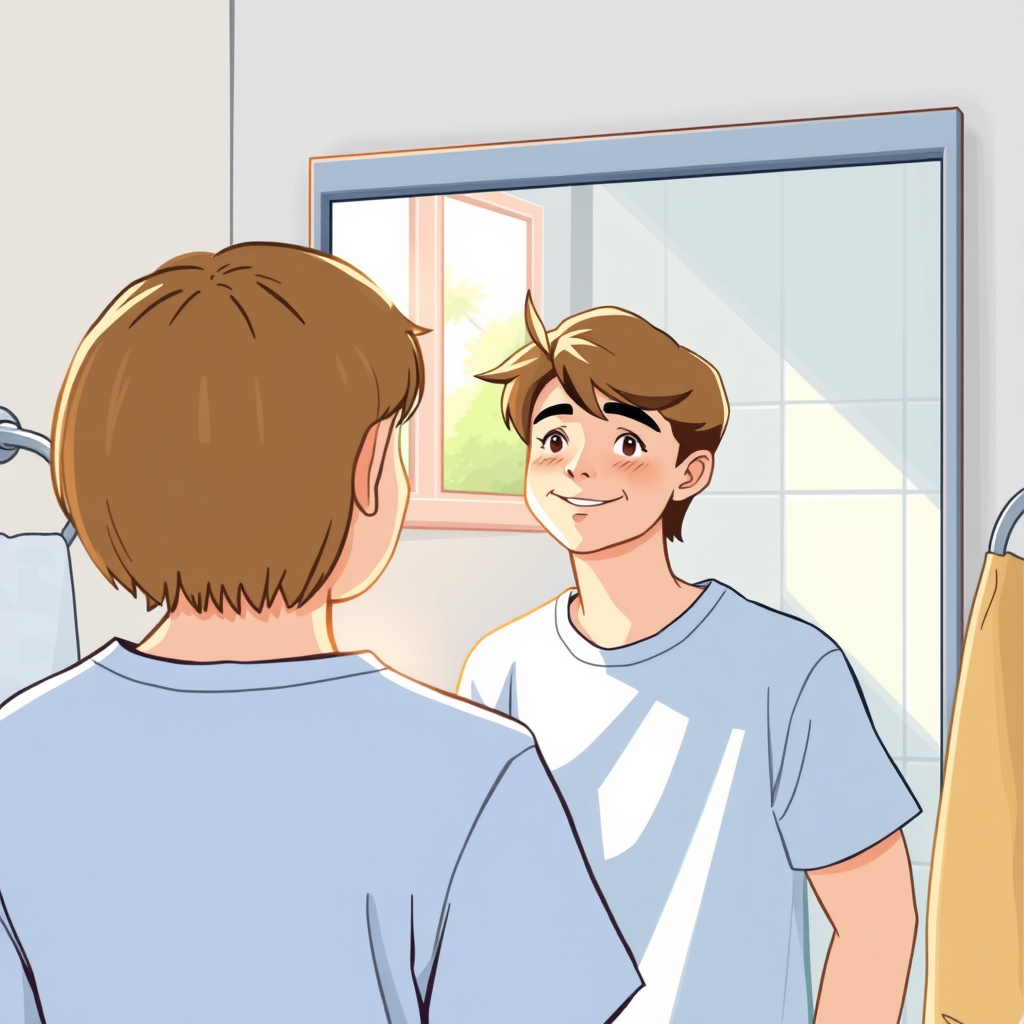
how much you like and respect yourself, your sense of your own worth
Comparing yourself to influencers all day can damage your self-esteem.
More examples: Praise from a good teacher can really build a child's self-esteem. • His self-esteem dropped after months of job hunting. • Exercise is not just about fitness - it does a lot for my self-esteem.
Common collocations: low self-esteem, boost self-esteem, damage self-esteem
Word family: esteem (noun/verb)
Synonyms: self-worth, self-respect, confidence
Antonyms: insecurity, self-doubt
Related concepts: identity, body image, mental health
Contexts: psychology, education, social media
Usage note: Usually used with 'low', 'high', 'boost' or 'damage'. It is the normal everyday word for self-worth in psychology and conversation - not formal or technical.
addicted
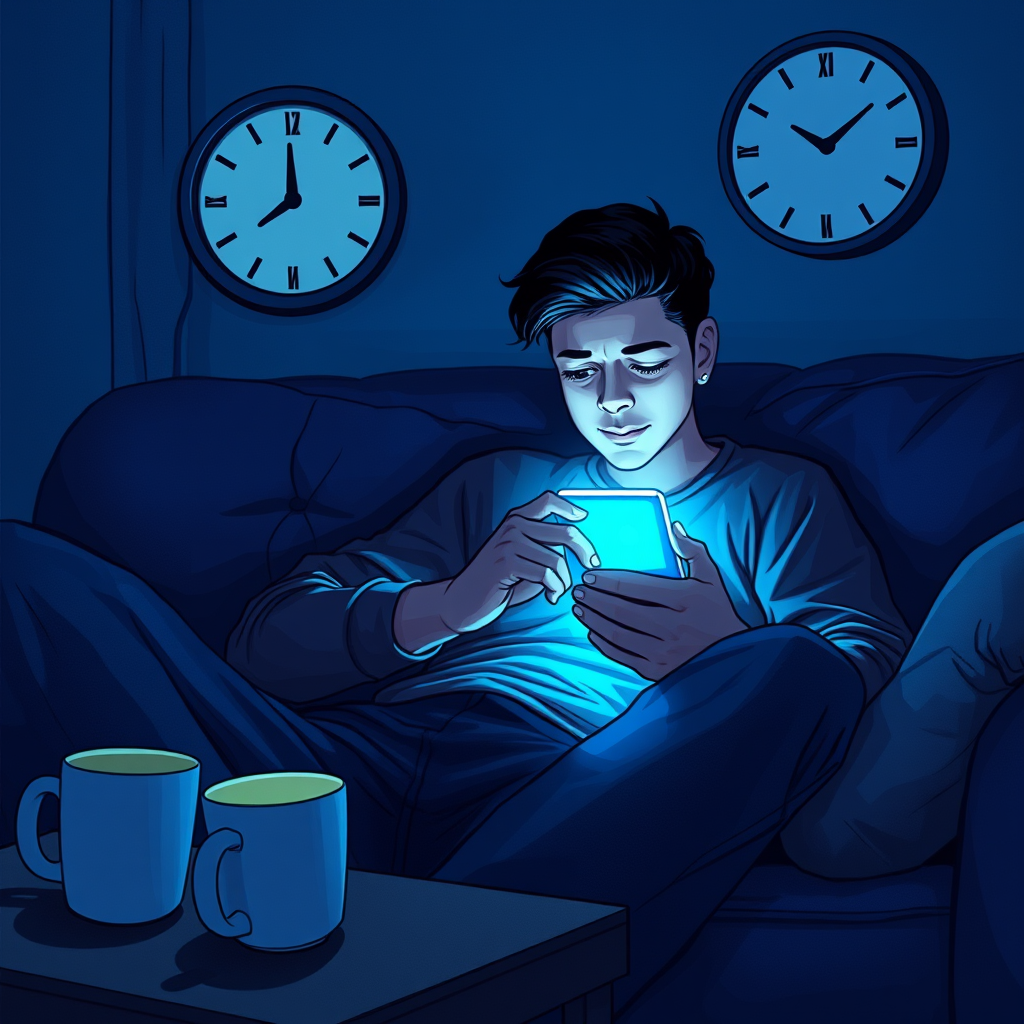
unable to stop doing or using something because you need it
I'm honestly addicted to checking my phone every five minutes.
More examples: Millions of people say they are addicted to short videos. • He got addicted to online games as a teenager. • She's not really addicted - she just checks it out of habit.
Common collocations: addicted to, phone addiction, seriously addicted
Word family: addiction (noun), addict (noun)
Synonyms: hooked, dependent, obsessed
Antonyms: indifferent, uninterested
Related concepts: habit, compulsion, willpower
Contexts: technology, health, gaming
Usage note: Almost always followed by 'to'. Originally about drugs, but now completely normal for phones, games, sugar and series. 'Hooked' is a softer, more casual alternative.
influencer
a person with many online followers who affects what people buy or think
That influencer gets paid to recommend skincare products to two million followers.
More examples: Some influencers earn more than famous actors. • My cousin wants to be a travel influencer when she finishes school. • Brands pay influencers because people trust them more than adverts.
Common collocations: social media influencer, follow an influencer, influencer marketing
Word family: influence (noun/verb), influential (adjective)
Synonyms: content creator, vlogger, blogger
Antonyms: follower, audience
Related concepts: advertising, fame, personal brand
Contexts: marketing, social media, celebrity culture
Usage note: A modern word, neutral in itself but often used critically when talking about fake lifestyles or advertising that isn't labelled as ads.
curate
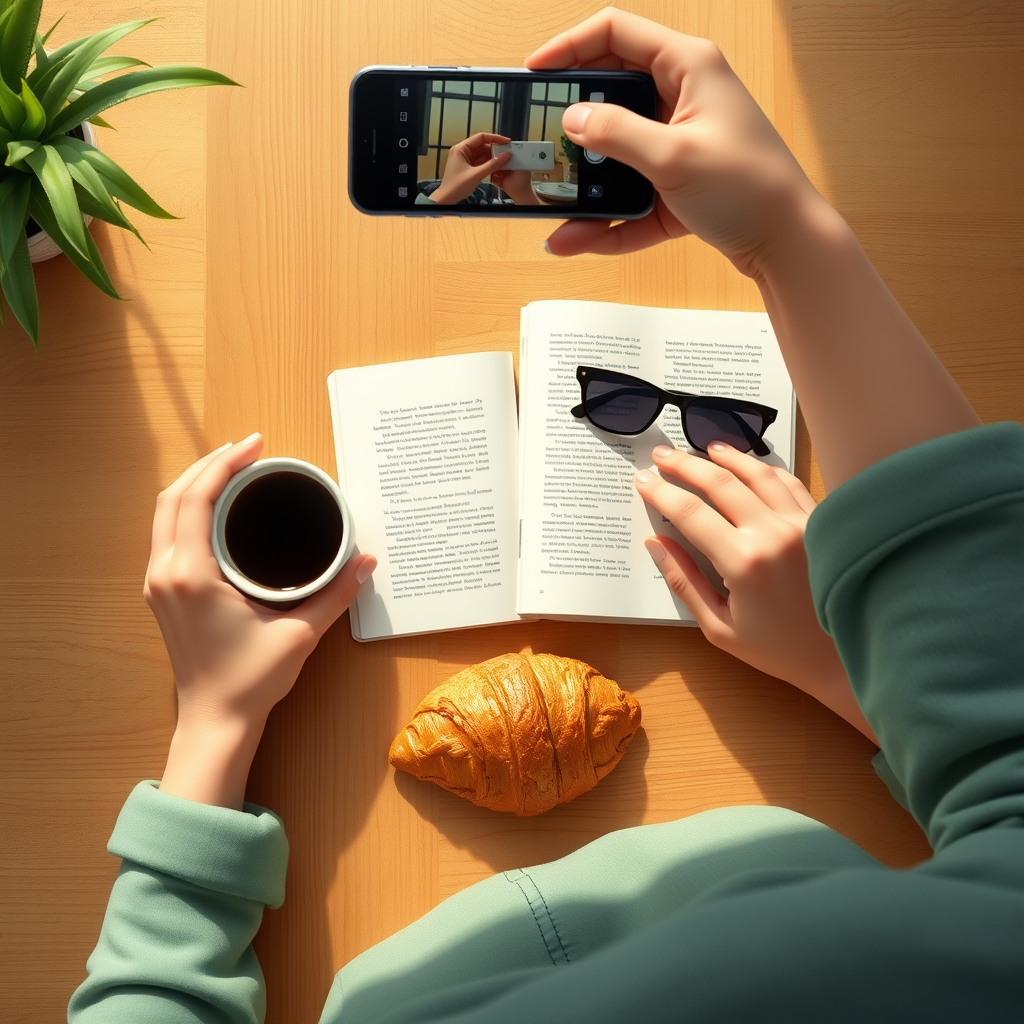
to choose and arrange things carefully to create a particular image
People curate their profiles so followers only see the best moments.
More examples: She curates her feed so it looks like a perfect life. • He carefully curates his playlist for every mood. • Nobody curates their failures - we only post the wins.
Common collocations: curate a feed, carefully curated, curate an image
Word family: curated (adjective), curation (noun)
Synonyms: select, arrange, present
Antonyms: dump, scatter
Related concepts: image, highlight reel, authenticity
Contexts: social media, museums, music
Usage note: Originally about museums choosing art, but now very common for social media profiles and playlists. Often suggests the result is a little artificial or too perfect.
Vocabulary Check
- What does 'validation' mean?
- A document that proves your age
- Approval from others that makes you feel accepted
- A type of online advertisement
- A rule about using phones
- Which sentence uses 'self-esteem' correctly?
- She boosted her self-esteem by checking her ex's profile daily.
- Low self-esteem means you feel good about yourself.
- His self-esteem suffered after constant comparison with influencers.
- Self-esteem is the number of followers you have.
- In which situation would you say someone is 'addicted'?
- They check their phone once a day.
- They want to stop scrolling but find it impossible.
- They prefer reading books to watching videos.
- They deleted an app they never used.
- What does an 'influencer' do?
- They block adverts on social media.
- They work for the government to set app rules.
- They affect what their followers buy and think.
- They only post private family photos.
- If someone 'curates' their profile, what are they doing?
- Deleting their account every week
- Carefully choosing what to show to create a certain image
- Sharing everything about their life honestly
- Following as many people as possible
Idioms & Phrasal Verbs
go back for more
return to get or do something again because you liked it
That app is so fun I always go back for more, even when I'm tired.
Usage note: 'More' here means 'another amount of the same thing' - it's fixed in the phrase. · Right: go back for more · Avoid: go back for the more
Usage note: Often used for things that are hard to resist, like food, games or attention.
push onto
force someone to move or change to something else
Banning phones at school just pushes teenagers onto hidden apps.
Usage note: The small word 'onto' shows where people end up - a new place, app or habit. · Right: push someone onto something · Avoid: push someone on something
Usage note: You can split it: 'pushes kids onto' = 'pushes onto kids' is less natural here, keep the order.
show off
try to make people notice how good you or your things are
He only posts photos of his expensive car - he's clearly showing off.
Usage note: You can split it: 'show off his car' or 'show his car off' are both fine. · Right: show off his new phone · Avoid: show his new phone off to showing
Usage note: It sounds negative - people don't usually call themselves a show-off.
keep up with
stay as informed or as busy as everyone else
I stopped trying to keep up with the news on every app - it was exhausting.
Usage note: The picture is running behind someone and matching their speed - online, it means matching what everyone else sees and does.
Usage note: Common in the phrase 'keep up with the latest trends'.
Language Practice: Talking About Social Media
Practice expressing your opinions about social media, attention and identity.
- Comparing different views
- Emerging: Some people say ___, but I think ___ because ___. — Some people say social media is just fun, but I think it changes how we feel because everyone compares themselves.
- Developing: While it's true that ___, I'd argue that ___, since ___. — While it's true that social media connects people, I'd argue that it also creates pressure, since we only see everyone's highlights.
- Expanding: I can see why people believe ___, but when you look at ___, it seems more likely that ___. — I can see why people believe social media builds communities, but when you look at how much time we lose to scrolling, it seems more likely that the costs are bigger.
- Weighing pros and cons
- Emerging: The good thing about ___ is ___, but the bad thing is ___. — The good thing about social media is staying in touch, but the bad thing is wasting hours.
- Developing: On the one hand, ___ could ___; on the other hand, it might ___. — On the one hand, an age limit could protect younger teens; on the other hand, it might just push them onto secret accounts.
- Expanding: The main advantage of ___ is that ___, although I suppose the downside is that ___, so overall I'd say ___. — The main advantage of social media is that it connects people across the world, although I suppose the downside is that we compare our real lives to fake ones, so overall I'd say we need better habits, not bans.
- Imagining hypothetical situations
- Emerging: If I ___, I would ___. — If I lost my phone for a week, I would miss my group chats.
- Developing: If I ___, I would ___, because ___. — If I deleted all my social media, I would feel free at first, because I check it far too much.
- Expanding: If I ___, I would probably ___, and I think that would ___. — If I stopped posting for a month, I would probably notice who actually cares about me, and I think that would be a useful lesson.
Fill in the Blanks
Most of us know someone who seems _____ to their phone, scrolling for hours without noticing the time. Part of the problem is that every like gives us a little _____, a small sign that people approve of us, and we want more. At the same time, we only see _____ highlights of other people's lives, never the boring or difficult moments, and comparing our real life to that show can damage our _____. Even _____s, who seem to live perfect lives, often admit the pressure behind the camera is huge.
Word bank: validation, self-esteem, addicted, influencer, curated
Sentence Unscramble
- many / teenagers / seek / validation / from / likes / and / comments / online
- she / is / addicted / to / checking / her / notifications / every / few / minutes
- influencers / curate / their / feeds / to / show / only / the / best / moments
Discussion Questions
Maya checks her phone before breakfast and feels worse afterwards. Many of us do something similar without thinking. Some researchers call this an addiction; others say it's just a habit we could break any time. The difference matters, because addictions need treatment, but habits just need new routines.
Do you think you're addicted to your phone, or is it just a habit? What would prove it one way or the other?
When you post a photo and the likes arrive quickly, it feels good - like proof that people enjoy your company. Psychologists say this is a form of validation, and that relying on it can be risky, because your mood ends up in strangers' hands.
How much do likes and comments actually affect your mood? Have you ever deleted a post because it didn't get enough attention?
Influencers earn money by looking happy, beautiful and successful. Their followers often forget that every photo is chosen, edited and sometimes paid for. Some people say this is just modern advertising; others say it quietly damages young people's self-esteem.
Do influencers have a responsibility to show their real lives, or is it up to followers to remember it's a show?
Imagine an app with no like counts, no follower numbers and no view totals. You could only post and comment. Some designers have tried this, and users often say they feel calmer - but they also say the app feels empty without the feedback.
If you could remove one feature from every social media app, what would it be, and what do you think would change?
Some governments are debating a minimum age for social media, often around thirteen to sixteen. Supporters say young teenagers can't handle the pressure on their self-esteem. Critics say a ban just pushes kids onto secret accounts, and that learning to use these apps safely is a skill like crossing the road.
Should there be a legal age limit for social media, or should it be up to parents? What age would you choose, and why?
Knowledge Check
- Which word means 'approval from others that makes you feel accepted'?
- self-esteem
- validation
- curation
- influence
- 'Addicted' is almost always followed by the word 'to'.
- True
- False
- What does 'curate' originally refer to?
- Choosing art for a museum
- Editing photos with a filter
- Blocking unwanted followers
- Counting likes on a post
- Which phrase is a natural collocation with 'self-esteem'?
- make self-esteem
- take self-esteem
- boost self-esteem
- put self-esteem
- An influencer's main power comes from their ability to affect what followers think and buy.
- True
- False
- If a ban 'pushes kids onto secret accounts', what happens to the kids?
- They stop using social media completely
- They start using social media in a hidden way
- They ask their parents for permission
- They delete all their accounts
Free to use with your students: Free to teach, screen-share, print and share with your students, with a credit to PlanWise ESL. Please do not sell it or republish it as your own. What you can do with free lessons.