Health, Medicine and Exercise
About this lesson: This is a B2 (Upper Intermediate) ESL lesson in the General English category. It takes about 60 minutes. It includes 5 vocabulary words, 4 idioms and phrasal verbs, a reading text, comprehension questions, discussion questions and speaking patterns. Suits one-to-one or small-group online classes. Free to open and teach with no login, and it prints as a PDF.
Print just the discussion questions
How this lesson is built
This is a complete conversation lesson built on a scientific pedagogical formula, not a generic worksheet: recall prior topic vocabulary, pre-teach the new words in depth, read in context, practise active recall with flashcards and synonyms/antonyms, build accuracy with exercises, and finish with deep discussion.
- Warm-up: Discussion questions that connect the topic to the student’s own life and recall vocabulary they already know about the subject.
- Reading: A text written for this CEFR level that uses each new word two or three times in context, giving the student something meaningful to react to.
- Key vocabulary: 5 new words, pre-taught before the reading with a definition, pronunciation guide, example sentences and a picture, plus word families, usage notes, recall flashcards and synonyms/antonyms, giving a solid grounding before reading.
- Comprehension: 5 questions that check the new words: retrieval practice, not rereading.
- Idioms and phrasal verbs: Expressions taken from the reading, each with its meaning, an example and a speaking question.
- Sentence frames: 3 speaking patterns, each at three levels of support (emerging, developing, expanding) with model answers—especially helpful scaffolding for beginners and less confident speakers.
- Gap-fill: The new words again, in a shuffled order, so the student recalls them by meaning in context.
- Sentence unscramble: Natural sentences with the new words to put back in order, reinforcing grammar and collocation.
- Discussion: 5 open questions designed to talk deeply about the subject while actively using the lesson’s target vocabulary: the heart of a conversation lesson.
- Quiz: A short retrieval check that brings every new word back once more.
Unlike a generic worksheet, the new words are taught before the reading and met again in the activities, the speaking is supported at three levels and most of the time goes on the student talking. Teachers who use PlanWise ESL also get per-student vocabulary tracking (recycling earlier words into future readings and questions), a private learner dashboard with flashcards and custom lesson creation, and a downloadable study PDF.
Warm-up: Your Health Habits
Let's start by talking about your own health habits and how you feel about them.
- How do you feel about your health these days - good, bad, or somewhere in between?
- Do you exercise regularly? What kind of exercise do you enjoy, if any?
- When you get sick, what do you usually do first - rest, take medicine, or search online for answers?
- Do you know anyone who is very careful about their health? What do they do?
- If you could change one thing about your lifestyle to be healthier, what would it be?
Reading Text: The Office Worker Who Changed Everything
A short story about someone who decided to take their health seriously - and what happened next.
Marta was 34 and worked long hours at a desk. Like many people with office jobs, her life had become completely sedentary. She drove to work, sat for eight hours, then watched TV in the evening. She felt tired all the time, but she told herself it was normal for someone with a busy job.
Everything changed when her doctor found high blood pressure during a routine check. It wasn't serious yet, but he warned her it could become a chronic problem if she ignored it. 'You don't need medicine right now,' he said. 'You need to move your body and sleep better.'
Marta started small. She walked for twenty minutes at lunch instead of scrolling on her phone. To her surprise, it gave her energy a real boost. Within a month, she was sleeping more deeply and waking up before her alarm. Her mood improved too, and her friends noticed she seemed calmer.
Not everything worked, though. She tried a popular online remedy for headaches - drinking special tea - and it did nothing at all. Her doctor laughed kindly and said most quick fixes online are just marketing. Real change, he explained, comes from boring daily habits, not miracle cures.
A year later, Marta's blood pressure was normal and she had more energy than at 25. She says the biggest surprise wasn't physical. 'My whole sense of well-being changed,' she says. 'I thought exercise was about looking good. Actually, it's about feeling okay in your own life.'
Key Vocabulary
sedentary

spending a lot of time sitting down and not moving much
A sedentary job can be bad for your back and your heart.
More examples: Doctors say a sedentary lifestyle is as dangerous as smoking. • I've become quite sedentary since I started working from home. • My sedentary evenings on the sofa are my guilty pleasure.
Common collocations: a sedentary lifestyle, a sedentary job, lead a sedentary life
Word family: sedentarily (adverb), sedentary lifestyle (common phrase)
Synonyms: inactive, desk-bound, sit-all-day
Antonyms: active, energetic, on-the-go
Related concepts: office work, back pain, screen time
Contexts: doctor's advice, health articles, fitness apps
Usage note: Use it to describe jobs, lifestyles or habits that involve sitting. It often appears in health advice and news about modern life.
boost

to make something increase or improve
A short walk can boost your energy better than coffee.
More examples: Exercise boosts your mood almost immediately. • Vitamin C is said to boost the immune system. • Getting praise from her boss boosted her confidence.
Common collocations: boost your energy, boost the immune system, boost confidence
Word family: boost (noun), booster (noun)
Synonyms: improve, increase, lift
Antonyms: reduce, weaken, lower
Related concepts: energy, mood, immune system
Contexts: fitness, advertising, motivation talks
Usage note: Very common in health, business and sports talk. Often used with energy, mood, confidence, sales or the immune system.
remedy

a treatment or way to fix a health problem or bad situation
Honey and lemon is a classic home remedy for a sore throat.
More examples: My grandmother had a remedy for every illness. • There's no simple remedy for stress - you have to change your habits. • The pharmacy sells natural remedies for coughs and colds.
Common collocations: a home remedy, a natural remedy, a remedy for a cold
Word family: remedial (adjective), remedies (plural)
Synonyms: cure, treatment, fix
Antonyms: problem, cause, illness
Related concepts: home medicine, grandmother's advice, herbal tea
Contexts: family traditions, pharmacies, health blogs
Usage note: Often used for traditional or home treatments. Also used for non-medical problems: 'a remedy for loneliness'.
chronic
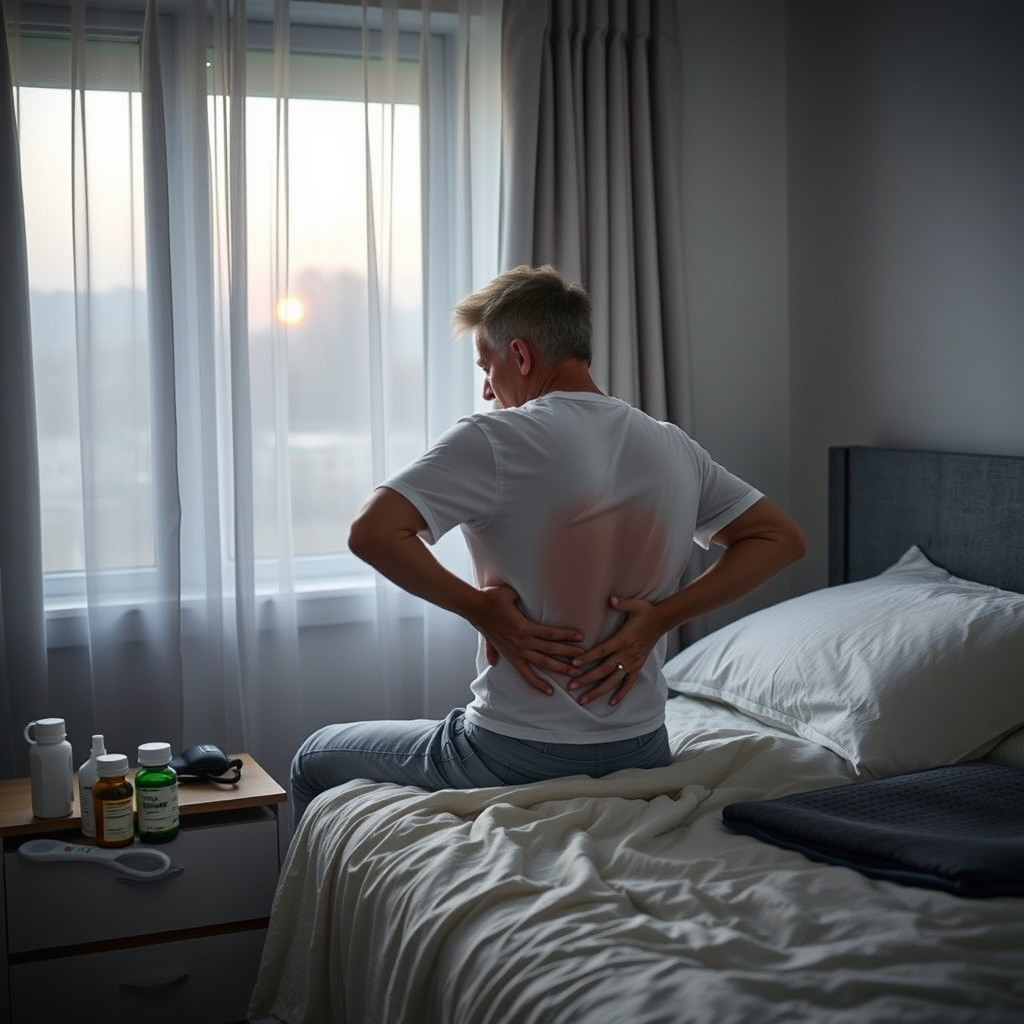
lasting a long time or coming back again and again
He has chronic back pain that never fully goes away.
More examples: Chronic stress can damage your heart over the years. • Millions of people live with chronic conditions like diabetes. • Lack of sleep leads to chronic tiredness.
Common collocations: chronic pain, a chronic illness, chronic stress
Word family: chronically (adverb), chronic illness (common phrase)
Synonyms: long-term, lasting, persistent
Antonyms: acute, short-term, temporary
Related concepts: back pain, diabetes, stress
Contexts: doctor visits, medical news, insurance forms
Usage note: Mainly used with health problems that last months or years. The opposite of 'acute', which means sudden and short.
well-being

a general state of feeling healthy, comfortable and happy
Good sleep is essential for your physical and mental well-being.
More examples: Companies now offer yoga classes to support employee well-being. • She moved to the countryside for her family's well-being. • Spending time in nature improves your sense of well-being.
Common collocations: physical well-being, mental well-being, a sense of well-being
Word family: well (adverb), being (noun)
Synonyms: happiness, health, comfort
Antonyms: misery, suffering, distress
Related concepts: mental health, work-life balance, self-care
Contexts: workplaces, wellness apps, government reports
Usage note: A slightly formal but very common word in news, work and health talk. It covers both body and mind together.
Vocabulary Check
- What does 'sedentary' mean?
- Doing a lot of physical exercise
- Spending a lot of time sitting down
- Eating unhealthy food
- Working very long hours
- Which sentence uses 'boost' correctly?
- The rain boosted our plans for the picnic.
- A good night's sleep can boost your concentration.
- She boosted the door open with her foot.
- He boosted his medicine because he felt better.
- In which situation would you use the word 'remedy'?
- Choosing a new phone at a shop
- Your grandmother suggesting tea with honey for a cough
- Booking a flight for your holiday
- Buying new shoes for running
- What does 'chronic' mean when describing an illness?
- It is extremely dangerous
- It only affects children
- It lasts a long time or keeps coming back
- It spreads quickly to other people
- Which sentence uses 'well-being' correctly?
- She took a day off to protect her well-being.
- The doctor gave him a well-being for his cough.
- His well-being ran three kilometres this morning.
- I need to buy some well-being at the pharmacy.
Idioms & Phrasal Verbs
wake up
to stop sleeping
I wake up around seven every morning without an alarm.
Usage note: Can be split with a person or thing: 'The noise **woke** me **up**.' · Right: The noise woke me up. · Avoid: The noise woke up me.
Usage note: Don't confuse 'wake up' (stop sleeping) with 'get up' (leave the bed).
quick fix
a fast, easy solution that doesn't last
There's no quick fix for getting fit - you have to keep going.
Usage note: The picture is simple: a 'fix' repairs something, and 'quick' suggests it's too easy to be real.
Usage note: Often used in the negative: 'There's no quick fix.'
work out
to exercise, especially at a gym
I try to work out twice a week, even if it's just for thirty minutes.
Usage note: Can be split: 'I **work** it **out** at the gym' sounds odd here; usually keep it together when it means exercise.
Usage note: Also means 'to have a good result': 'Everything worked out fine.' The context tells you which meaning.
feel under the weather
to feel slightly ill or not quite right
I was feeling under the weather yesterday, so I stayed home and rested.
Usage note: The picture: bad weather above you makes you feel low. It's for small illness, not serious disease.
Usage note: Very common and informal - perfect for small talk about health.
Language Practice: Talking About Health
Practice expressing ideas about health, habits and lifestyle choices.
- Comparing different views on health
- Emerging: Some people say ___, but I think ___. — Some people say medicine is always the answer, but I think rest often works better.
- Developing: While some people believe ___, I would argue that ___ because ___. — While some people believe you need a gym to get fit, I would argue that walking is enough because it's free and easy to keep up.
- Expanding: Although ___ makes sense in some ways, I tend to think ___, especially when it comes to ___. — Although quick remedies make sense in some ways, I tend to think slow changes last longer, especially when it comes to weight and fitness.
- Weighing pros and cons of health choices
- Emerging: The good thing about ___ is ___. The bad thing is ___. — The good thing about running is it's free. The bad thing is it's hard on your knees.
- Developing: The main advantage of ___ is ___, but on the other hand, ___. — The main advantage of exercising in the morning is it boosts your energy all day, but on the other hand, it's hard to wake up early.
- Expanding: If I had to choose between ___ and ___, I'd probably go for ___, because although ___, it's worth it in the long run. — If I had to choose between a gym and running outside, I'd probably go for running outside, because although the weather can be a problem, it's worth it in the long run.
- Imagining health situations and hypotheticals
- Emerging: If I ___, I would ___. — If I had chronic back pain, I would see a doctor.
- Developing: If I ___, I would probably ___, because ___. — If I had chronic headaches, I would probably change my screen habits first, because that's often the real cause.
- Expanding: If I ___, I'd ___ first, and if that didn't work, I'd ___, since ___. — If I kept getting sick, I'd improve my sleep first, and if that didn't work, I'd get a full check-up, since tiredness can hide bigger problems.
Fill in the Blanks
Doctors keep warning us that modern life is bad for our health. Many of us have _____ jobs, sitting at a desk all day, and this can lead to _____ problems like back pain and high blood pressure. The good news is that small changes can _____ your health quickly - even a ten-minute walk makes a difference. Some people prefer a natural _____, like herbal tea or honey, before trying medicine. In the end, most experts agree that daily habits matter more than anything else for our long-term _____.
Word bank: sedentary, chronic, boost, remedy, well-being
Sentence Unscramble
- a / sedentary / lifestyle / can / cause / serious / health / problems
- she / tried / a / home / remedy / for / her / sore / throat
- regular / exercise / boosts / your / mood / and / well-being
Discussion Questions
Many of us spend most of the day sitting - at a desk, in the car, on the sofa. Doctors say this kind of sedentary life is one of the biggest health risks of our time, even for people who exercise. Some offices now have standing desks and walking meetings to fight it.
How sedentary is your daily life, honestly? What's one small change you could actually make?
Almost every family has a home remedy - special soup, herbal tea, a strange trick passed down from a grandparent. Some of them really work; others are just comfort in a cup. Scientists often test these old cures, and a few turn out to be surprisingly effective.
What's a home remedy from your family or country? Do you believe it actually works?
Some health problems appear suddenly and go away quickly. Others, like back pain, stress or high blood pressure, become chronic and stay for years. People handle these two kinds of problems very differently - and some ignore chronic issues until they get serious.
Do you think people take chronic health problems seriously enough? Have you ever ignored a health issue for too long?
Exercise is often sold as the answer to everything - better sleep, better mood, a longer life. But gyms cost money, time is short, and not everyone enjoys it. Some people find that walking, dancing or gardening boost their well-being just as much as a serious workout.
Do you need intense exercise to be healthy, or are small daily movements enough? What works for you?
Imagine you feel tired and stressed for months. You could see a doctor, try to sleep more, change your diet, start exercising, or just push through and hope it passes. Everyone has a different instinct when their body sends warning signs.
If you felt exhausted and stressed for months, what would you do first - and why?
Knowledge Check
- Which word describes a job where you sit all day?
- Chronic
- Sedentary
- Remedy
- Boost
- True or false: a 'chronic' illness is one that comes and goes within a few days.
- True
- False
- Which of these can you 'boost'?
- Your energy
- Your chair
- Your illness
- Your tiredness
- Honey and lemon for a sore throat is an example of a ___.
- chronic
- sedentary
- remedy
- well-being
- True or false: 'well-being' only refers to physical health.
- True
- False
- Your friend says: 'I tried a quick fix for my back pain, but it didn't help.' What does 'quick fix' mean?
- A fast repair by a mechanic
- An easy solution that doesn't last
- A very short exercise routine
- A medicine that works quickly
Free to use with your students: Free to teach, screen-share, print and share with your students, with a credit to PlanWise ESL. Please do not sell it or republish it as your own. What you can do with free lessons.