Handling Customer Complaints Calmly in English
About this lesson: This is a B1 (Intermediate) ESL lesson in the Workplace Communication category. It takes about 60 minutes. It includes 5 vocabulary words, 3 phrasal verbs and expressions, a reading text, comprehension questions, discussion questions and speaking patterns. Suits one-to-one or small-group online classes. Free to open and teach with no login, and it prints as a PDF.
Print just the discussion questions
How this lesson is built
This is a complete conversation lesson built on a scientific pedagogical formula, not a generic worksheet: recall prior topic vocabulary, pre-teach the new words in depth, read in context, practise active recall with flashcards and synonyms/antonyms, build accuracy with exercises, and finish with deep discussion.
- Warm-up: Discussion questions that connect the topic to the student’s own life and recall vocabulary they already know about the subject.
- Reading: A text written for this CEFR level that uses each new word two or three times in context, giving the student something meaningful to react to.
- Key vocabulary: 5 new words, pre-taught before the reading with a definition, pronunciation guide, example sentences and a picture, plus word families, usage notes, recall flashcards and synonyms/antonyms, giving a solid grounding before reading.
- Comprehension: 5 questions that check the new words: retrieval practice, not rereading.
- Idioms and phrasal verbs: Expressions taken from the reading, each with its meaning, an example and a speaking question.
- Sentence frames: 3 speaking patterns, each at three levels of support (emerging, developing, expanding) with model answers—especially helpful scaffolding for beginners and less confident speakers.
- Gap-fill: The new words again, in a shuffled order, so the student recalls them by meaning in context.
- Sentence unscramble: Natural sentences with the new words to put back in order, reinforcing grammar and collocation.
- Discussion: 5 open questions designed to talk deeply about the subject while actively using the lesson’s target vocabulary: the heart of a conversation lesson.
- Quiz: A short retrieval check that brings every new word back once more.
Unlike a generic worksheet, the new words are taught before the reading and met again in the activities, the speaking is supported at three levels and most of the time goes on the student talking. Teachers who use PlanWise ESL also get per-student vocabulary tracking (recycling earlier words into future readings and questions), a private learner dashboard with flashcards and custom lesson creation, and a downloadable study PDF.
Warm-up Activity
Think about a time when something went wrong with a product or service, and how you felt about it.
- Have you ever complained about something you bought? What happened?
- When someone complains to you, how do you usually feel?
- Do you think it's easy to stay calm when someone is angry at you? Why?
- What makes a complaint easier to handle?
- Do you prefer to complain in person, by phone, or in writing? Why?
Reading Text: A Bad Pizza, A Good Response
Read about a small problem at a restaurant and how one worker handled it well.
Last Friday, Maria ordered a pizza from a restaurant near her home. The pizza arrived cold, and it was the wrong order. She felt frustrated because she had waited almost an hour. She decided to call the restaurant and make a complaint.
When she called, a young man named Tom answered. Maria was angry and spoke very fast. However, Tom stayed calm and was patient with her. He listened to everything without interrupting. He said, 'I understand why you are frustrated. That is not okay.'
Then Tom did something important. He apologized clearly and honestly. He said, 'I am sorry for the mistake. It was our fault.' He did not make excuses or blame the delivery driver. Maria felt surprised, because many people find it hard to apologize.
Next, Tom tried to resolve the problem quickly. He offered to send a new pizza for free, and he gave her a discount for her next order. He also promised to check the order system so it would not happen again. The whole call took only five minutes.
At the end, Maria's frustration had disappeared. She wrote a positive review online the next day. She said that although the first pizza was bad, the complaint was handled so well that she would order again. A calm response can turn an angry customer into a happy one.
Key Vocabulary
complaint

a statement that you are not happy about something
She made a complaint about the cold pizza.
More examples: The hotel received a complaint about the noise. • I have no complaints - the service was great. • Writing a complaint is easier than saying it face to face.
Common collocations: make a complaint, file a complaint, deal with a complaint
Word family: complain (verb), complaining (gerund)
Synonyms: protest, objection, grievance
Antonyms: praise, compliment
Related concepts: customer service, feedback, refund
Contexts: restaurants, hotels, online shopping
Usage note: Use 'make a complaint' or 'file a complaint'. The verb is 'complain about something'.
apologize

to say sorry for something you did wrong
Tom apologized for the mistake with the order.
More examples: I apologized for arriving late. • He apologized to the customer and offered a refund. • She apologized for the long wait.
Common collocations: apologize for, apologize to someone, make an apology
Word family: apology (noun), apologetic (adjective)
Synonyms: say sorry, express regret, make amends
Antonyms: blame, defend
Related concepts: politeness, mistakes, forgiveness
Contexts: customer service, friendships, workplace
Usage note: Pattern: apologize TO someone FOR something. Very common in customer service.
patient
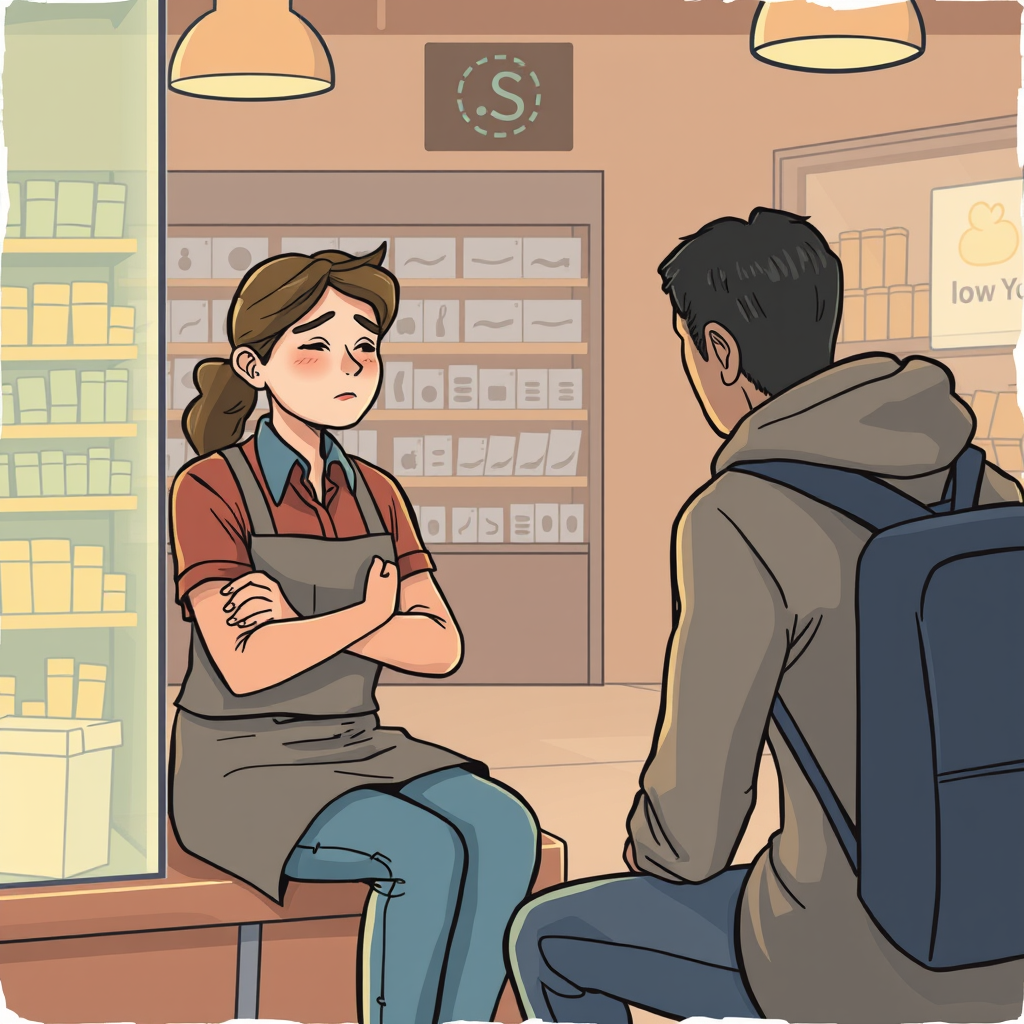
able to stay calm and not get angry when things are slow or difficult
Tom was patient and listened to the whole story.
More examples: Please be patient - the bus is coming soon. • Good teachers are patient with their students. • She stayed patient even when the line was very long.
Common collocations: be patient with someone, lose patience, run out of patience
Word family: patience (noun), patiently (adverb), impatient (adjective)
Synonyms: calm, tolerant, understanding
Antonyms: impatient, irritable
Related concepts: self-control, listening, waiting
Contexts: customer service, teaching, queues
Usage note: Note: 'patient' also means a person at a hospital, but here it means calm and tolerant.
resolve
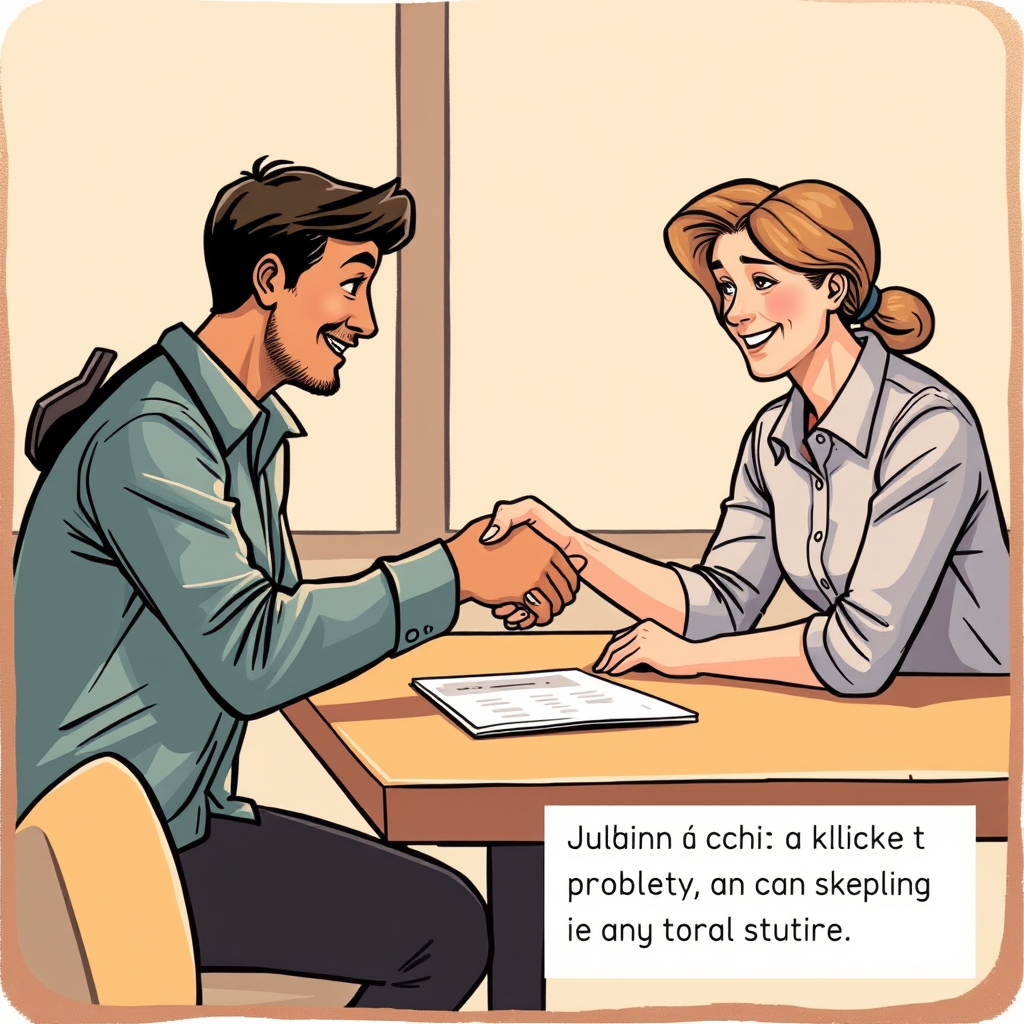
to find an answer to a problem or end a disagreement
Tom tried to resolve the problem quickly.
More examples: We resolved the issue with a free replacement. • The manager resolved the disagreement between two workers. • It took two days to resolve the technical problem.
Common collocations: resolve a problem, resolve an issue, resolve a conflict
Word family: resolution (noun), resolved (adjective)
Synonyms: solve, settle, fix
Antonyms: ignore, worsen
Related concepts: solutions, negotiation, agreement
Contexts: workplace, customer service, family disagreements
Usage note: Formal but common at work. 'Solve' is similar but 'resolve' is often used for conflicts and complaints.
frustrated

feeling annoyed because things are not going the way you want
Maria felt frustrated because she waited an hour.
More examples: I get frustrated when my internet is slow. • He was frustrated with the confusing instructions. • Customers often feel frustrated when nobody listens.
Common collocations: feel frustrated, get frustrated with, frustrated about
Word family: frustrate (verb), frustration (noun), frustrating (adjective)
Synonyms: annoyed, irritated, upset
Antonyms: satisfied, calm
Related concepts: emotions, stress, waiting
Contexts: customer service, technology, daily life
Usage note: People are frustrated; situations are frustrating. Very useful for describing feelings.
Vocabulary Check
- What does 'complaint' mean?
- A statement that you are not happy about something
- A way to say thank you
- A type of food order
- A plan for the future
- Which sentence uses 'apologize' correctly?
- I apologize you for the delay.
- I apologized to her for being late.
- I apologized for to her.
- I apologize the mistake.
- In which situation would you use 'patient'?
- When you win a prize
- When you wait calmly in a long queue
- When you run very fast
- When you cook dinner
- What does 'resolve' mean?
- To start a new problem
- To forget about something
- To find an answer to a problem
- To feel angry
- Which sentence uses 'frustrated' correctly?
- The slow internet is frustrated.
- I felt frustrated when the app stopped working.
- I frustrated to the shop.
- She is a frustrated person to meet.
Phrasal Verbs & Expressions
turn into
to change and become something different
A small problem can turn into a big one if you ignore it.
Usage note: The small word 'into' shows the new thing it becomes: turn X into Y. · Right: turn the problem into a chance · Avoid: turn the problem to a chance
Usage note: You can split it: 'The evening turned into a party.'
it's not your fault
you did not cause the problem; it is not your mistake
Don't worry about the delay — it's not your fault.
Usage note: Use 'my fault', 'his fault', 'our fault' — never 'fault of you'. · Right: It's my fault. · Avoid: It's fault of me.
Usage note: People say 'It's not your fault' to make someone feel better.
stay calm
to not get angry or nervous when things go wrong
I try to stay calm when my internet stops working.
Usage note: 'Stay' means the feeling does not change — you were calm before and you continue to be calm.
Usage note: Informal and friendly: 'Keep cool' means the same thing.
Language Practice: Talking About Complaints
Practice expressing ideas about complaints and staying calm.
- Describing feelings in difficult situations
- Emerging: I felt ___ because ___. — I felt frustrated because the pizza was cold.
- Developing: When ___, I felt ___ because ___. — When the delivery was late, I felt frustrated because I was very hungry.
- Expanding: When ___, I felt ___, so I decided to ___. — When the delivery arrived an hour late, I felt frustrated, so I decided to call the restaurant.
- Apologizing and responding to complaints
- Emerging: I'm sorry for ___. — I'm sorry for the mistake.
- Developing: I apologize for ___. It was our fault, and I will ___. — I apologize for the wrong order. It was our fault, and I will send a new one today.
- Expanding: I understand why you feel ___, and I apologize for ___. To resolve this, I can ___. — I understand why you feel frustrated, and I apologize for the wrong order. To resolve this, I can send a free replacement right away.
- Giving opinions about handling problems
- Emerging: I think it's better to ___ because ___. — I think it's better to stay calm because shouting doesn't help.
- Developing: If you ___, the customer will probably ___. — If you stay patient, the customer will probably calm down.
- Expanding: In my opinion, the best way to ___ is to ___, because ___. — In my opinion, the best way to handle a complaint is to listen first, because people calm down when they feel heard.
Fill in the Blanks
Last week, I received a _____ from a customer at my shop. She was _____ because her coffee was cold. I stayed _____ and listened to her carefully. Then I _____ for the mistake and offered a free drink. In the end, I was happy that I could _____ the problem so quickly.
Word bank: complaint, frustrated, patient, apologized, resolve
Sentence Unscramble
- the / customer / made / a / complaint / about / the / service
- he / apologized / for / the / long / wait
- stay / patient / and / try / to / resolve / the / problem
Discussion Questions
Imagine you order food online and it arrives late and cold. You are hungry and a little annoyed. You have to decide what to do next. Some people call immediately, some write a message, and some just say nothing.
What would you do in this situation? Would you make a complaint or stay quiet? Why?
Think about the last time someone was angry with you - maybe at work, at home, or with a friend. Staying calm in that moment is not easy. Some people stay quiet, some explain themselves, and some get angry back.
How do you usually react when someone is angry with you? Is it easy for you to stay patient? Why or why not?
In the reading, Tom apologized immediately and did not make excuses. Some people think a quick apology is the best response. Others think you should first find out exactly what happened before saying sorry.
Do you think it's better to apologize quickly or to check the facts first? Why?
Some jobs involve talking to unhappy people every day, like hotel reception, call centers, or teaching. Doing this work needs a special kind of calm. Some people are naturally good at it, and others learn it over time.
Do you think staying calm with difficult people is something you can learn, or is it part of your personality? Why?
In the story, Maria was so happy with Tom's response that she wrote a positive review. A good complaint experience can actually make a customer more loyal than if nothing went wrong. Companies know this and train their staff carefully.
Do you agree that a well-handled complaint can make a customer happier than good service with no problems? Why or why not?
Knowledge Check
- Which word means 'to say sorry for something you did wrong'?
- Resolve
- Apologize
- Complain
- Frustrate
- True or false: 'frustrated' describes a situation, and 'frustrating' describes a person's feeling.
- True
- False
- Which phrase is correct?
- make a complaint
- do a complaint
- give a complaint
- take a complaint
- If you 'resolve' a problem, what happens?
- The problem gets bigger
- You forget about the problem
- The problem is fixed or settled
- You start a new problem
- True or false: being 'patient' means getting angry quickly when things are slow.
- True
- False
- Tom said 'It was our fault.' What does that mean?
- The delivery driver caused the problem.
- The restaurant caused the problem.
- Maria caused the problem.
- Nobody knows who caused the problem.
Free to use with your students: Free to teach, screen-share, print and share with your students, with a credit to PlanWise ESL. Please do not sell it or republish it as your own. What you can do with free lessons.