Remote Work vs. Working in an Office
About this lesson: This is a B1 (Intermediate) ESL lesson in the Business English category. It takes about 60 minutes. It includes 5 vocabulary words, 3 phrasal verbs and expressions, a reading text, comprehension questions, discussion questions and speaking patterns. Suits one-to-one or small-group online classes. Free to open and teach with no login, and it prints as a PDF.
Print just the discussion questions
How this lesson is built
This is a complete conversation lesson built on a scientific pedagogical formula, not a generic worksheet: recall prior topic vocabulary, pre-teach the new words in depth, read in context, practise active recall with flashcards and synonyms/antonyms, build accuracy with exercises, and finish with deep discussion.
- Warm-up: Discussion questions that connect the topic to the student’s own life and recall vocabulary they already know about the subject.
- Reading: A text written for this CEFR level that uses each new word two or three times in context, giving the student something meaningful to react to.
- Key vocabulary: 5 new words, pre-taught before the reading with a definition, pronunciation guide, example sentences and a picture, plus word families, usage notes, recall flashcards and synonyms/antonyms, giving a solid grounding before reading.
- Comprehension: 5 questions that check the new words: retrieval practice, not rereading.
- Idioms and phrasal verbs: Expressions taken from the reading, each with its meaning, an example and a speaking question.
- Sentence frames: 3 speaking patterns, each at three levels of support (emerging, developing, expanding) with model answers—especially helpful scaffolding for beginners and less confident speakers.
- Gap-fill: The new words again, in a shuffled order, so the student recalls them by meaning in context.
- Sentence unscramble: Natural sentences with the new words to put back in order, reinforcing grammar and collocation.
- Discussion: 5 open questions designed to talk deeply about the subject while actively using the lesson’s target vocabulary: the heart of a conversation lesson.
- Quiz: A short retrieval check that brings every new word back once more.
Unlike a generic worksheet, the new words are taught before the reading and met again in the activities, the speaking is supported at three levels and most of the time goes on the student talking. Teachers who use PlanWise ESL also get per-student vocabulary tracking (recycling earlier words into future readings and questions), a private learner dashboard with flashcards and custom lesson creation, and a downloadable study PDF.
Warm-up: Your Working Day
Look at the pictures of a home office and a busy office. Talk about your own working or studying day.
- Do you work or study from home sometimes? How is it?
- What does your morning look like before work or school?
- Do you know anyone who works from home? What do they say about it?
- What do you like and dislike about your usual workplace or classroom?
- If you could choose, would you stay at home or go out to work today? Why?
Reading Text: Two Workers, Two Choices
Read about Sara and Tom. They work at the same company, but they work in very different ways.
Sara and Tom work for the same company, but their days are very different. Sara works from home three days a week. Tom goes into the office every day. Last month, their manager asked them how they feel about their working style.
Sara loves working from home because she doesn't have to commute. Her old journey to the office took ninety minutes every morning. Now she uses that time to cook a good breakfast and start work early. She also says her hours are more flexible, so she can go to the doctor or meet a friend in the afternoon.
However, Sara says home has one big problem: distraction. Her phone, the fridge and the TV are all close by. Some days she checks her phone too often and her productivity goes down. She has to work hard to stay focused.
Tom's life is different. He enjoys the office because he can collaborate with his team face to face. When there is a problem, they solve it together in ten minutes. He also likes talking to people at lunch. However, his commute makes him tired, and he sometimes arrives home late.
In the end, they both agree on one thing: the best way to work depends on the person. Sara needs quiet time to do her best work, but Tom needs people around him. Their company now lets everyone choose, and both of them are happy with that.
Key Vocabulary
commute
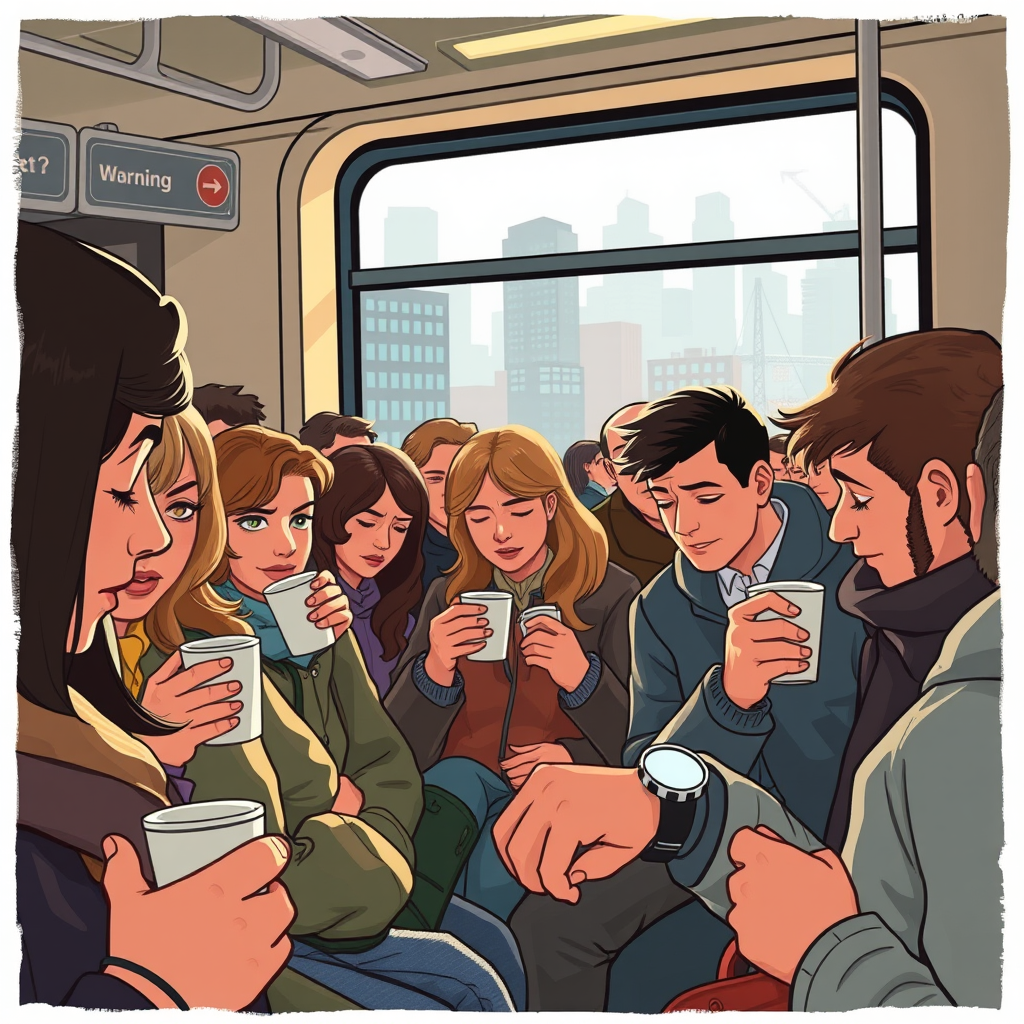
the journey between your home and your work
My commute takes forty minutes by train.
More examples: She has a long commute, so she listens to podcasts on the way. • I moved closer to the city to make my commute shorter. • My commute is only ten minutes on foot now.
Common collocations: a long commute, a daily commute, cut your commute
Word family: commute (verb), commuter (noun)
Synonyms: journey, trip to work, daily travel
Antonyms: working from home, staying in
Related concepts: traffic, public transport, rush hour
Contexts: daily routine, city life, choosing where to live
Usage note: Use it for the regular journey to work or school, not for holidays or one-off trips. It works as both a noun and a verb.
flexible

able to change easily to fit different situations
My job has flexible hours, so I can start at eight or nine.
More examples: Working from home is more flexible than office work. • A flexible schedule helps parents with young children. • The company is flexible about where you work.
Common collocations: flexible hours, a flexible schedule, flexible working
Word family: flexibility (noun), flexibly (adverb)
Synonyms: adaptable, not fixed, open to change
Antonyms: fixed, strict, rigid
Related concepts: working hours, freedom, remote work
Contexts: jobs, schedules, rules and plans
Usage note: Often used about time, plans and rules. We say something is flexible, or someone is flexible about something.
distraction

something that stops you from focusing on your work
My phone is a big distraction when I study at home.
More examples: The TV in the next room was a distraction all afternoon. • Noise from the street is a common distraction in city offices. • I turn off notifications to avoid distraction.
Common collocations: a big distraction, avoid distraction, a source of distraction
Word family: distract (verb), distracted (adjective)
Synonyms: interruption, something that takes your attention
Antonyms: focus, concentration
Related concepts: concentration, phones, noise
Contexts: studying, working from home, open-plan offices
Usage note: Often used with 'avoid' or 'a big/main distraction'. The person is distracted; the thing is a distraction.
productivity
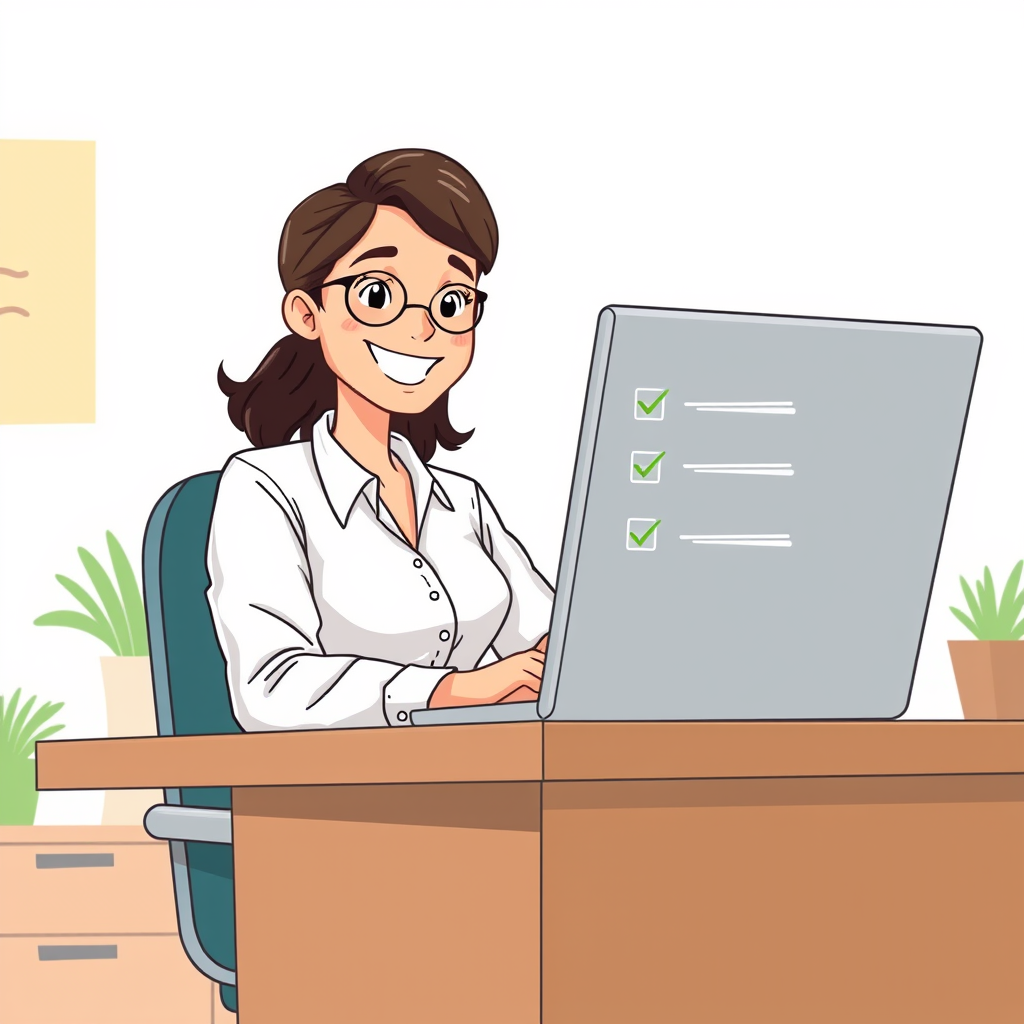
how much work you get done in a period of time
Coffee in the morning improves my productivity.
More examples: Many managers worry that remote work lowers productivity. • Her productivity is highest in the early morning. • A tidy desk can improve your productivity.
Common collocations: increase productivity, low productivity, productivity goes down
Word family: productive (adjective), produce (verb)
Synonyms: output, how much you get done, efficiency
Antonyms: laziness, slow progress
Related concepts: focus, deadlines, work habits
Contexts: performance reviews, remote work debates, studying
Usage note: Often used in work talk. We say productivity goes up or down, or something improves or lowers productivity.
collaborate
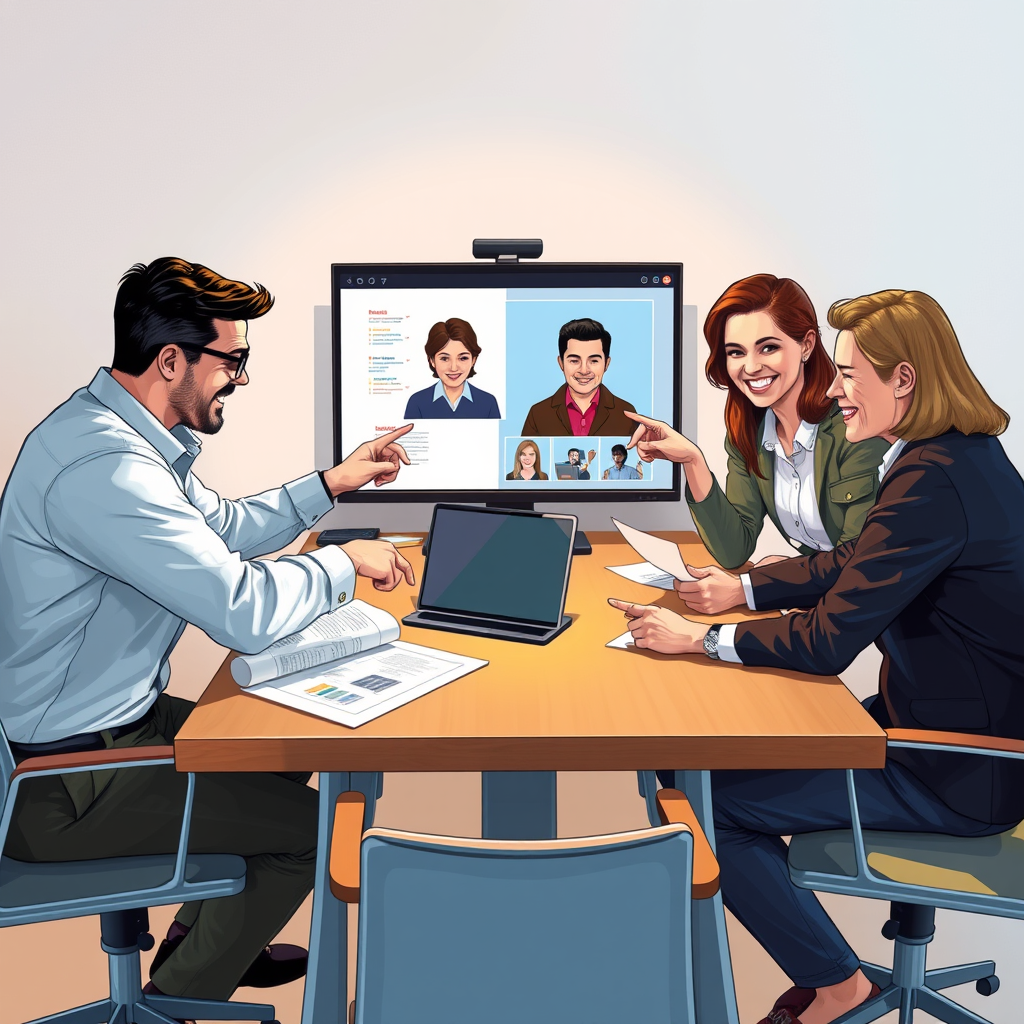
to work together with other people on something
The two teams collaborate on a new project every year.
More examples: It is easier to collaborate when you sit in the same room. • Designers and writers collaborate on the website. • We collaborate using video calls and shared documents.
Common collocations: collaborate with a team, collaborate on a project, close collaboration
Word family: collaboration (noun), collaborative (adjective)
Synonyms: work together, team up, cooperate
Antonyms: work alone, work separately
Related concepts: teamwork, meetings, shared projects
Contexts: offices, school projects, online teams
Usage note: Use 'collaborate with' a person or team, and 'collaborate on' a task or project.
Vocabulary Check
- What does 'commute' mean?
- A break at work
- The journey between home and work
- A type of computer
- A work meeting
- Which sentence uses 'flexible' correctly?
- The flexible soup was delicious.
- My flexible hours let me start work late on Fridays.
- He bought a flexible at the shop.
- She felt flexible about the weather.
- In which situation would you use 'distraction'?
- When you finish a big project
- When your phone keeps stopping you from working
- When you get a new job
- When you go on holiday
- What does 'productivity' mean?
- How much work you get done
- How much money you earn
- How long you sleep
- How many friends you have
- Which sentence uses 'collaborate' correctly?
- I collaborate my lunch at noon.
- She collaborates with her team on the new design.
- He collaborated a car to work.
- They collaborate the office every morning.
Phrasal Verbs & Expressions
check (something)
to look at something quickly, like your phone
I check my phone about twenty times a day.
Usage note: You can split it: check your phone, check it. · Right: I check my messages. · Avoid: I check of my messages.
stay focused
to keep working on one thing without stopping
I drink coffee to stay focused in the afternoon.
Usage note: Very common at work: stay focused, stay calm, stay positive.
face to face
in person, in the same room as someone
It's easier to say bad news face to face than by email.
Usage note: The picture: your face and their face, looking at each other. · Right: face to face · Avoid: face-by-face
Language Practice: Talking About Work Styles
Practice expressing ideas about remote work and office work.
- Giving an opinion with a reason
- Emerging: I think ___ because ___. — I think remote work is good because I save time.
- Developing: I prefer ___ because ___, and it also ___. — I prefer working from home because I don't commute, and it also saves money.
- Expanding: For me, ___ works better because ___, although I can see that ___. — For me, remote work works better because my commute was exhausting, although I can see that some people need an office to stay focused.
- Talking about cause and effect
- Emerging: When I ___, I ___. — When I work at home, I feel relaxed.
- Developing: When I ___, my productivity ___, so I ___. — When I work at home, my productivity goes down, so I take short breaks.
- Expanding: When I ___, I find it hard to ___, so now I ___ to avoid ___. — When I work from home, I find it hard to stop in the evening, so now I set a clear finish time to avoid burnout.
- Comparing two options
- Emerging: ___ is ___ than ___. — Home is quieter than the office.
- Developing: Working from home is ___ than the office because ___, but ___. — Working from home is cheaper than the office because I don't commute, but it can be lonely.
- Expanding: ___ suits people who ___, whereas ___ suits people who ___. — Remote work suits people who need quiet and focus, whereas office work suits people who get energy from others.
Fill in the Blanks
Mina started a new job last month. Her company lets her work from home, so she has no _____ at all. Her hours are _____, which is great because she can pick up her son from school. However, working at home is not always easy. Her neighbours' dog is a big _____, and some days she gets very little done. To fix this, she made a quiet corner for work, and her _____ quickly improved. Twice a week she goes to the office to _____ with her team, and she really enjoys those days.
Word bank: commute, flexible, distraction, productivity, collaborate
Sentence Unscramble
- my / commute / to / the / office / takes / an / hour
- a / noisy / room / is / a / big / distraction / when / you / study
- we / collaborate / with / another / team / on / this / project
Discussion Questions
Some people spend an hour or more travelling to work every day. Others walk from the kitchen to their desk in one minute. That journey can change how the whole day feels.
Would you rather have a short commute or a bigger home far from work? Why?
At home, the fridge, the TV and your phone are always close. In an office, colleagues may stop by your desk to chat. Every workplace has something that pulls your attention away.
What is your biggest distraction when you need to focus, and how do you deal with it?
Some jobs let people choose when they start and finish work. Others have fixed hours, like nine to five. Both styles have fans and critics.
Do you prefer flexible hours or a fixed routine? What works best for you?
In an office, you can turn to a colleague and solve a problem in five minutes. Online, you might wait hours for a reply. But video calls also let teams work together across countries.
When do you work best with other people - face to face or online? Tell me about a time you collaborated on something.
Some managers worry that people at home do less work. Others say workers at home actually get more done because there are fewer interruptions. The truth may be different for everyone.
Do you think people work better at home or in an office? Where is your productivity highest?
Knowledge Check
- Sara's journey to the office took ninety minutes. This journey is her ___.
- distraction
- productivity
- commute
- collaboration
- True or false? 'Flexible hours' means your start and finish times can change.
- True
- False
- If your productivity goes down, it means you ___.
- get more work done
- get less work done
- earn more money
- take more holidays
- Which word means 'to work together with other people'?
- commute
- distract
- collaborate
- produce
- True or false? A distraction is something that helps you focus better.
- True
- False
- If you talk to someone face to face, where are you?
- On a video call
- In the same room
- On the phone
- In different cities
Free to use with your students: Free to teach, screen-share, print and share with your students, with a credit to PlanWise ESL. Please do not sell it or republish it as your own. What you can do with free lessons.