The Importance of Customer Service
About this lesson: This is a C1 (Advanced) ESL lesson in the General English category. It takes about 60 minutes. It includes 5 vocabulary words, 4 idioms and phrasal verbs, a reading text, comprehension questions, discussion questions and speaking patterns. Suits one-to-one or small-group online classes. Free to open and teach with no login, and it prints as a PDF.
Print just the discussion questions
How this lesson is built
This is a complete conversation lesson built on a scientific pedagogical formula, not a generic worksheet: recall prior topic vocabulary, pre-teach the new words in depth, read in context, practise active recall with flashcards and synonyms/antonyms, build accuracy with exercises, and finish with deep discussion.
- Warm-up: Discussion questions that connect the topic to the student’s own life and recall vocabulary they already know about the subject.
- Reading: A text written for this CEFR level that uses each new word two or three times in context, giving the student something meaningful to react to.
- Key vocabulary: 5 new words, pre-taught before the reading with a definition, pronunciation guide, example sentences and a picture, plus word families, usage notes, recall flashcards and synonyms/antonyms, giving a solid grounding before reading.
- Comprehension: 5 questions that check the new words: retrieval practice, not rereading.
- Idioms and phrasal verbs: Expressions taken from the reading, each with its meaning, an example and a speaking question.
- Sentence frames: 3 speaking patterns, each at three levels of support (emerging, developing, expanding) with model answers—especially helpful scaffolding for beginners and less confident speakers.
- Gap-fill: The new words again, in a shuffled order, so the student recalls them by meaning in context.
- Sentence unscramble: Natural sentences with the new words to put back in order, reinforcing grammar and collocation.
- Discussion: 5 open questions designed to talk deeply about the subject while actively using the lesson’s target vocabulary: the heart of a conversation lesson.
- Quiz: A short retrieval check that brings every new word back once more.
Unlike a generic worksheet, the new words are taught before the reading and met again in the activities, the speaking is supported at three levels and most of the time goes on the student talking. Teachers who use PlanWise ESL also get per-student vocabulary tracking (recycling earlier words into future readings and questions), a private learner dashboard with flashcards and custom lesson creation, and a downloadable study PDF.
Warm-up Activity
Think about the best and worst customer service you've ever experienced before we dive into the topic.
- Can you remember a time when a company really went the extra mile for you? What happened?
- And the opposite — what's the worst service experience you've had?
- When you get bad service, do you complain, or do you just quietly never go back?
- Do you think people complain more or less than they used to, now that everything is online?
- If you ran a business, what's the one thing you'd insist on when it comes to how customers are treated?
Reading Text: The Death of the Complaint Booth
A short magazine-style piece about how customer service has changed — and why some companies still get it brilliantly right.
There's a hotel in Singapore where the concierge once flew a guest's forgotten suit across the country overnight. Stories like that don't happen by accident. They happen when a company decides, from the top down, that service is the product — and when staff are trusted to go the extra mile without filling in a form first.
Contrast that with the modern reality most of us know: the chatbot that loops endlessly, the agent who reads from a script, the polite-sounding email that essentially tells you to get lost. Companies have become experts at fobbing customers off — acknowledging the complaint while quietly doing nothing about it. The tone is courteous; the outcome is useless.
And yet the economics are brutally simple. Research consistently shows that keeping an existing customer costs a fraction of winning a new one, and that goodwill built through one well-handled problem can outlast years of smooth, forgettable transactions. A customer whose disaster was fixed quickly often becomes more loyal than one who never had a problem at all — the so-called service recovery paradox.
Word of mouth has also changed shape. It used to be neighbours gossiping over the fence; now it's a one-star review read by ten thousand strangers before breakfast. A single careless interaction can undo an entire marketing budget, which is why savvy firms treat every phone call as a public performance, not a private nuisance.
Perhaps the real question isn't whether customer service matters — clearly it does — but why so many companies still treat it as a cost to be minimised rather than an asset to be cultivated. The hotels and airlines that people genuinely love tend to be the ones that empower their staff, apologise like they mean it, and remember that behind every ticket number is a human being with a story.
Key Vocabulary
go the extra mile

To make more effort than is expected or required to help someone.
The waiter went the extra mile and drove our lost wallet to our hotel.
More examples: Good teachers go the extra mile for struggling students. • She always goes the extra mile — she even stayed late to fix my laptop. • I try to go the extra mile for my clients; it's why they keep coming back.
Common collocations: go the extra mile for a customer, be willing to go the extra mile, always go the extra mile
Word family: mile, extra
Synonyms: make a special effort, go above and beyond, bend over backwards
Antonyms: do the bare minimum, cut corners
Related concepts: dedication, customer loyalty, above and beyond
Contexts: hospitality, retail, workplace praise
Usage note: Very common in work and service contexts. Often used with 'for someone'. Slightly informal but fine in professional settings.
courteous

Polite and respectful in a formal, well-mannered way.
The staff were courteous even though the customer was shouting at them.
More examples: He sent a courteous reply declining the offer. • The check-in staff were courteous but completely unhelpful. • A courteous email can defuse an angry complaint.
Common collocations: courteous staff, a courteous reply, remain courteous under pressure
Word family: courtesy (noun), courteously (adverb)
Synonyms: polite, well-mannered, gracious
Antonyms: rude, discourteous
Related concepts: etiquette, professionalism, manners
Contexts: customer service, business emails, hospitality
Usage note: More formal than 'polite'. Often used about staff, letters, and official communication. Note the useful contrast: someone can be courteous yet unhelpful.
fob off
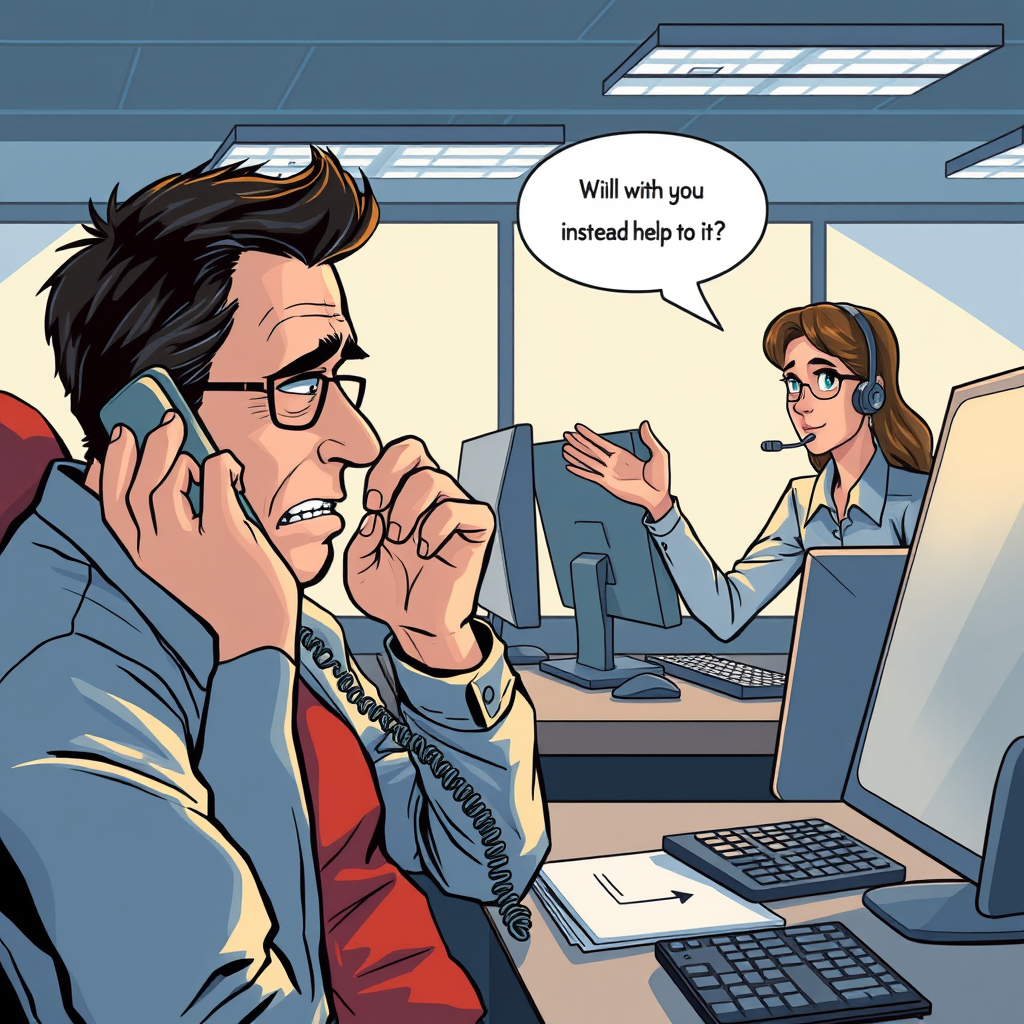
To give someone an unconvincing excuse or answer to avoid dealing with their problem.
They fobbed me off with 'someone will call you back' — nobody ever did.
More examples: Don't let them fob you off; ask to speak to the manager. • The airline fobbed passengers off with vouchers instead of refunds. • I felt fobbed off by the generic apology email.
Common collocations: fob someone off with an excuse, feel fobbed off, refuse to be fobbed off
Word family: fob someone off with something
Synonyms: brush off, palm off, give the runaround
Antonyms: address the issue, take responsibility
Related concepts: complaints, excuses, bureaucracy
Contexts: customer complaints, consumer rights, everyday frustration
Usage note: Informal but very common in complaints. Usually expresses the customer's frustration — companies rarely describe their own behaviour this way.
goodwill

A friendly, positive feeling towards a person or company, built up over time.
The free upgrade earned the airline a lot of goodwill.
More examples: Years of goodwill vanished after one scandal. • As a gesture of goodwill, they refunded the full amount. • Small kindnesses from staff build real goodwill with customers.
Common collocations: a gesture of goodwill, build goodwill, earn goodwill
Word family: good (adjective), will (noun)
Synonyms: trust, rapport, favourable feeling
Antonyms: resentment, hostility
Related concepts: loyalty, reputation, compensation
Contexts: business relations, negotiation, customer retention
Usage note: Common in business and diplomacy. 'As a gesture of goodwill' is a set phrase companies use when compensating customers. Uncountable.
word of mouth

Information about a business passed from person to person in conversation, rather than by advertising.
Most of her clients come through word of mouth, not ads.
More examples: The restaurant became popular purely by word of mouth. • Bad news travels fast by word of mouth these days. • Online reviews are basically word of mouth at scale.
Common collocations: spread by word of mouth, through word of mouth, word-of-mouth recommendations
Word family: mouth (noun)
Synonyms: personal recommendation, gossip, the grapevine
Antonyms: advertising, official promotion
Related concepts: reviews, reputation, viral marketing
Contexts: small business, restaurants, social media
Usage note: Always uncountable — 'a word of mouth' is wrong. Very common with the verbs 'spread', 'travel' and the prepositions 'by' and 'through'.
Vocabulary Check
- What does 'go the extra mile' mean?
- To travel a long distance for work
- To make more effort than expected to help someone
- To walk instead of driving
- To finish a task exactly on time
- Which sentence uses 'courteous' correctly?
- The courteous rain ruined our picnic.
- He was courteous to the waiter, thanking her warmly.
- I bought a courteous new phone yesterday.
- The weather turned courteous in the afternoon.
- In which situation would you say you were 'fobbed off'?
- A shop refunded you immediately and apologised
- A company kept giving you vague excuses and never fixed the problem
- You received a generous gift from a business
- A friend invited you to a party
- What is 'goodwill'?
- A legal contract between two companies
- A type of discount coupon
- A positive, friendly feeling towards someone built over time
- An advertising campaign
- What does 'word of mouth' mean?
- A formal written review in a newspaper
- People recommending something to each other in conversation
- A company's official slogan
- Speaking loudly in public
Idioms & Phrasal Verbs
get lost
a rude way to tell someone to go away
After three ignored emails, I felt the company was basically telling me to get lost.
Usage note: Very informal and a bit rude between people — the text uses it jokingly about a company's attitude. · Right: telling me to get lost · Avoid: telling to get lost
Usage note: You can soften it: 'they basically told me to get lost' sounds like complaining, not insulting someone face to face.
ring true
seem honest or believable, based on your own experience
His claim that 'the customer comes first' doesn't really ring true after how they treated me.
Usage note: The picture is of a bell: a true statement makes a clear, clean ring, a false one sounds dull. · Right: it rings true · Avoid: it rings truly
Usage note: Usually used with 'doesn't' or 'did that ring true?' when you're doubting something.
read from a script
say prepared words mechanically, without really listening or thinking
I could tell the support agent was just reading from a script — she didn't react to anything I actually said.
Usage note: Often used about call centres, politicians and anyone who sounds robotic. · Right: reading from a script · Avoid: reading of a script
Usage note: You can also say someone is 'on autopilot' — a close cousin.
on the spot
immediately, at that moment and place, without delay
The manager upgraded our room on the spot after we complained about the noise.
Usage note: Two common meanings: 'immediately' (solve a problem on the spot) and 'under pressure' (put someone on the spot = make them answer a hard question). · Right: on the spot · Avoid: in the spot
Usage note: Note the second meaning when you discuss giving staff power to fix problems on the spot — it also puts them on the spot!
Language Practice: Talking About Service
Practice expressing opinions, complaining politely, and conceding points about customer service.
- Qualifying an opinion about service quality
- Emerging: For me, good service is all about ___. — For me, good service is all about speed.
- Developing: It's not so much ___ as ___, in my experience. — It's not so much the price as the attitude of the staff that keeps me coming back.
- Expanding: I'd go so far as to say that ___, although I accept that ___. — I'd go so far as to say that one great apology is worth ten adverts, although I accept that marketing still brings people through the door.
- Complaining and demanding fair treatment
- Emerging: I'd like ___ sorted out, please. — I'd like a full refund sorted out, please.
- Developing: I appreciate that, but I'd rather not be fobbed off with ___ — what I need is ___. — I appreciate that, but I'd rather not be fobbed off with a voucher — what I need is a proper refund.
- Expanding: I've been more than patient, but if this isn't resolved by ___, I'll have no choice but to ___. — I've been more than patient, but if this isn't resolved by Monday, I'll have no choice but to take my business elsewhere.
- Conceding and challenging an idea
- Emerging: I see the point about ___, but ___. — I see the point about saving money, but customers remember how they were treated.
- Developing: Fair enough, ___ — that said, ___. — Fair enough, automation does handle simple requests well — that said, it collapses the moment something unusual happens.
- Expanding: Up to a point, yes — but doesn't that ignore ___? — Up to a point, yes — but doesn't that ignore the fact that one viral complaint can undo a whole ad campaign?
Fill in the Blanks
When Priya's airline lost her luggage before her sister's wedding, she braced herself for the usual runaround. Instead, the agent listened properly, stayed perfectly _____ despite the chaos around her, and refused to _____ Priya off with a form and a shrug. Within hours, a courier was racing a borrowed outfit to the venue — a genuine case of going the _____ mile. The airline's gesture earned it enormous _____, and Priya has been recommending it to friends ever since. That kind of loyalty can't be bought with advertising; it spreads by _____, one grateful story at a time.
Word bank: courteous, fob, extra, goodwill, mouth
Sentence Unscramble
- the / staff / were / courteous / but / completely / useless / when / it / came / to / actually / solving / the / problem
- they / fobbed / me / off / with / vouchers / instead / of / the / refund / i / was / owed
- a / single / gesture / of / goodwill / can / spread / by / word / of / mouth / faster / than / any / advert
Discussion Questions
Some companies empower staff to solve problems on the spot — refund it, replace it, apologise properly. Others force employees to check with three managers before offering anything. The first kind produces legendary stories; the second produces endless hold music.
Would you trust an ordinary employee with the power to fix any customer problem on the spot? Where would you draw the line, and why?
Companies increasingly use chatbots and automated phone menus to handle complaints. They're cheap, available around the clock, and never lose their temper — but anyone who's been trapped in a loop with a robot knows the special rage it produces.
Do you think automation will eventually kill good customer service, or can the two coexist? Have you ever been genuinely helped by a chatbot?
There's a well-documented phenomenon called the service recovery paradox: customers whose problem was handled brilliantly often end up more loyal than those who never had a problem at all. In other words, a disaster can be a golden opportunity — if you catch it.
Does that ring true in your own experience? Have you ever become more loyal to a company after they fixed something they'd got wrong?
In some cultures, complaining loudly is normal and even expected; in others, people would rather suffer in silence than make a scene. This shapes not only how customers behave, but how companies design their service in the first place.
How do people in your country typically handle bad service — complain, grumble quietly, or just walk away? Do you fit that pattern yourself?
Imagine a world where every review, every complaint and every compliment is instantly public and permanently searchable — where a company's entire service history is one click away for any potential customer. Some argue this would force everyone to behave; others say it just makes companies defensive.
If everything a business did were permanently public, would customer service get better or just more fake? Which would you rather deal with?
Knowledge Check
- If a company 'fobs you off', what are they doing?
- Giving you generous compensation
- Giving you weak excuses instead of real help
- Offering you a job
- Sending you a written apology
- True or false: 'word of mouth' can be counted, as in 'three word of mouths'.
- True
- False
- Which phrase means 'a kind action meant to repair a relationship with a customer'?
- A gesture of goodwill
- A word of mouth
- Going the extra distance
- A courteous complaint
- True or false: someone can be courteous and still unhelpful.
- True
- False
- What does 'go the extra mile' imply?
- Doing only what your job description says
- Travelling for business
- Making an effort beyond what is expected
- Finishing work early
- If a complaint 'rings true' for you, what does that mean?
- It's written in official language
- It sounds believable and matches your experience
- It makes you angry
- It was resolved very quickly
Free to use with your students: Free to teach, screen-share, print and share with your students, with a credit to PlanWise ESL. Please do not sell it or republish it as your own. What you can do with free lessons.