How AI Is Changing the Workplace
About this lesson: This is a C1 (Advanced) ESL lesson in the General English category. It takes about 60 minutes. It includes 5 vocabulary words, 4 idioms and phrasal verbs, a reading text, comprehension questions, discussion questions and speaking patterns. Suits one-to-one or small-group online classes. Free to open and teach with no login, and it prints as a PDF.
Print just the discussion questions
How this lesson is built
This is a complete conversation lesson built on a scientific pedagogical formula, not a generic worksheet: recall prior topic vocabulary, pre-teach the new words in depth, read in context, practise active recall with flashcards and synonyms/antonyms, build accuracy with exercises, and finish with deep discussion.
- Warm-up: Discussion questions that connect the topic to the student’s own life and recall vocabulary they already know about the subject.
- Reading: A text written for this CEFR level that uses each new word two or three times in context, giving the student something meaningful to react to.
- Key vocabulary: 5 new words, pre-taught before the reading with a definition, pronunciation guide, example sentences and a picture, plus word families, usage notes, recall flashcards and synonyms/antonyms, giving a solid grounding before reading.
- Comprehension: 5 questions that check the new words: retrieval practice, not rereading.
- Idioms and phrasal verbs: Expressions taken from the reading, each with its meaning, an example and a speaking question.
- Sentence frames: 3 speaking patterns, each at three levels of support (emerging, developing, expanding) with model answers—especially helpful scaffolding for beginners and less confident speakers.
- Gap-fill: The new words again, in a shuffled order, so the student recalls them by meaning in context.
- Sentence unscramble: Natural sentences with the new words to put back in order, reinforcing grammar and collocation.
- Discussion: 5 open questions designed to talk deeply about the subject while actively using the lesson’s target vocabulary: the heart of a conversation lesson.
- Quiz: A short retrieval check that brings every new word back once more.
Unlike a generic worksheet, the new words are taught before the reading and met again in the activities, the speaking is supported at three levels and most of the time goes on the student talking. Teachers who use PlanWise ESL also get per-student vocabulary tracking (recycling earlier words into future readings and questions), a private learner dashboard with flashcards and custom lesson creation, and a downloadable study PDF.
Warm-up Activity
Quick chat about your own experience with AI at work before we dig into the reading.
- Have you used an AI tool at work or in your studies? What did you make of it?
- Which jobs around you already look different because of technology?
- Would you trust an AI to do part of your job better than you do?
- If your company offered you an AI assistant tomorrow, what would you want it to take off your plate first?
- Do you think people worry too much, or not enough, about AI taking jobs?
Reading Text: The Office, Rewritten
A short magazine-style piece on what AI is actually doing to jobs, beyond the headlines.
When the first wave of AI tools arrived at a mid-sized insurance firm in Manchester, the managers promised efficiency and the staff braced for the worst. Within six months, two departments had been made redundant, and the word on everyone's lips was not 'innovation' but 'survival'. Yet the story that unfolded afterwards was far messier, and far more interesting, than the headlines suggested.
What actually happened was that AI absorbed the drudgery: the endless form-filling, the copy-paste reporting, the queries that used to eat whole afternoons. Rather than replacing people wholesale, the software streamlined processes that everyone privately despised. One claims handler admitted she'd spent half her career doing tasks a machine now finished in minutes, and her relief was almost embarrassing to witness.
But relief is not the whole picture. The firm quickly realised that employees whose routine work had evaporated needed to upskill, and fast. It poured money into training: data literacy, client communication, judgement calls that no algorithm could make. Those who retrained thrived; those who quietly hoped the whole thing would blow over found their roles drifting towards obsolete.
There was a human cost, too. Morale dipped sharply in the months after the layoffs, and no amount of free coffee or town-hall meetings fixed it. People weren't just frightened of losing their jobs; they felt the implicit bargain of working life, effort in exchange for security, had been rewritten without their consent.
The lesson from Manchester, if there is one, is that AI rarely arrives as a clean swap for human labour. It reshapes jobs piecemeal, deleting some tasks and inflating others, and leaves organisations to improvise the rest. The companies that handle that well, economists argue, will be the ones that treat retraining not as charity but as core strategy.
Key Vocabulary
redundant

Having lost your job because the employer no longer needs your role
After the merger, half the accounting team was made redundant.
More examples: The new system made his entire department redundant overnight. • She got a decent payout when she was made redundant last spring. • I'd rather retrain now than wait to be made redundant.
Common collocations: be made redundant, voluntary redundancy, redundancy package
Word family: redundancy (noun), redundancies (plural noun)
Synonyms: laid off, let go, dismissed
Antonyms: hired, employed, retained
Related concepts: layoffs, downsizing, severance pay
Contexts: company restructuring, economic downturns, automation
Usage note: Chiefly British English. Note the passive 'be made redundant' — it's the standard way to say it. Don't confuse with the technical meaning of 'unnecessary repetition'.
streamline

To make a process simpler and more efficient by removing unnecessary steps
The new software streamlined the whole booking process.
More examples: We need to streamline communication between the two teams. • The government promised to streamline the visa application process. • They streamlined operations and cut costs by a third.
Common collocations: streamline a process, streamline operations, streamlined workflow
Word family: streamlined (adjective), streamlining (noun)
Synonyms: simplify, optimise, rationalise
Antonyms: complicate, bureaucratise
Related concepts: efficiency, automation, lean management
Contexts: business processes, government services, manufacturing
Usage note: Almost always positive in business contexts — it implies improvement, not just cutting. Often used with 'process', 'operations', 'procedures'.
upskill

To learn new skills so you can do a better or more advanced job
The company paid for staff to upskill in data analysis.
More examples: If you want to stay relevant, you have to keep upskilling. • She upskilled by taking evening courses in project management. • Employers now expect workers to upskill throughout their careers.
Common collocations: upskill the workforce, upskilling programmes, opportunity to upskill
Word family: upskilling (noun), reskill (verb), reskilling (noun)
Synonyms: retrain, develop skills, improve qualifications
Antonyms: stagnate, coast
Related concepts: lifelong learning, professional development, career change
Contexts: corporate training, online courses, career advice
Usage note: Modern business jargon that has become everyday speech. Very common in HR and news about the future of work. Often reflexive in feel: people upskill themselves.
obsolete
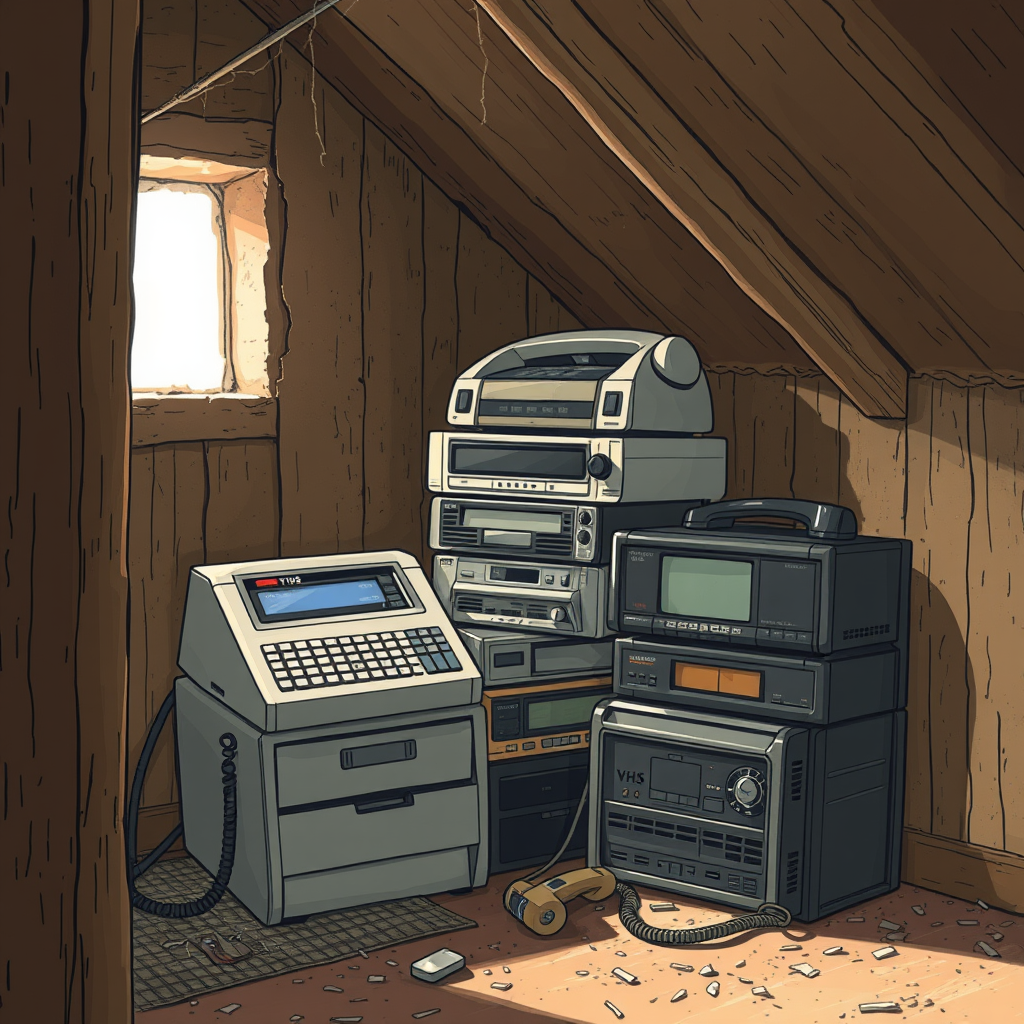
No longer used or needed because something newer has replaced it
Typewriter repair skills became obsolete decades ago.
More examples: That printer model is already obsolete; no one stocks the ink. • Whole professions risk becoming obsolete within a generation. • The law was rendered obsolete by the new constitution.
Common collocations: become obsolete, render something obsolete, technologically obsolete
Word family: obsolescence (noun), obsolescent (adjective)
Synonyms: outdated, antiquated, defunct
Antonyms: current, cutting-edge, state-of-the-art
Related concepts: planned obsolescence, disruption, technological change
Contexts: technology, law, job markets
Usage note: Stronger than 'old-fashioned' — it implies something is functionally dead, not just unfashionable. Common with technology, laws, skills and equipment.
morale

The confidence, enthusiasm and team spirit of a group of people
The constant reorganisations have destroyed staff morale.
More examples: A pay rise did wonders for team morale. • Morale was at rock bottom after the third round of layoffs. • Good managers know morale can't be fixed with pizza alone.
Common collocations: boost morale, staff morale, morale is low / at rock bottom
Word family: moral (adjective), morale-boosting (adjective)
Synonyms: team spirit, esprit de corps, motivation
Antonyms: demoralisation, apathy
Related concepts: job satisfaction, burnout, company culture
Contexts: workplaces, military, sports teams
Usage note: Uncountable. Typical verbs: boost, lift, damage, destroy, sap. Often discussed in workplaces, armies and sports teams.
Vocabulary Check
- What does 'streamline' mean?
- To make a process simpler and more efficient
- To make a process longer and more careful
- To copy a process from another company
- To check a process for legal problems
- In which situation would you use 'redundant'?
- You got a promotion and a pay rise
- You lost your job because your role no longer exists
- You decided to quit and travel the world
- You were moved to a different office
- What does 'upskill' mean?
- To work longer hours for the same pay
- To apply for a job at a higher level
- To learn new skills to do a better or more advanced job
- To train someone junior to replace you
- Which sentence uses 'obsolete' correctly?
- She felt obsolete after her successful presentation.
- The old filing system became obsolete once everything moved to the cloud.
- He was obsolete to hear that the meeting was cancelled.
- They obsolete the project last Friday.
- What does 'morale' mean?
- The rules of conduct in a workplace
- The confidence and enthusiasm of a group
- The salary level of employees
- The moral standards of a manager
Idioms & Phrasal Verbs
brace for something
prepare yourself for something bad that is coming
We're bracing for a busy week — three clients are visiting the office.
Usage note: Usually not split: you brace for trouble, you don't 'brace trouble for'. Often followed by 'the worst' or 'impact'.
blow over
a problem or scandal gradually becomes forgotten without big consequences
He hoped the argument with his boss would just blow over, but it followed him for months.
Usage note: The picture is a storm passing over you without doing damage. Only used for troubles, never for good things.
the word on everyone's lips
the topic everyone is talking about right now
AI has been on everyone's lips since the new tools launched.
Usage note: The image: people keep whispering the same word, so it's literally on their lips. Usually one topic at a time.
draw the line
set a limit on what you will accept or do
I don't mind AI helping with emails, but I draw the line at it writing personal messages for me.
Usage note: Almost always used with 'at': you draw the line AT something. The image is drawing a line you refuse to cross.
Language Practice: Talking About Work and Change
Practice expressing opinions, conceding points and making predictions about AI and the future of work.
- Qualifying an opinion about AI at work
- Emerging: I'd say AI is useful, but ___. — I'd say AI is useful, but it makes mistakes with nuance.
- Developing: By and large, AI streamlines ___, though it's worth remembering that ___. — By and large, AI streamlines the boring admin, though it's worth remembering that someone has to check its output.
- Expanding: It's not so much that AI will replace us as that it will ___, which means ___. — It's not so much that AI will replace us as that it will reshape our tasks, which means the people who adapt fastest will be fine.
- Conceding a point before disagreeing
- Emerging: I see the point about ___, but ___. — I see the point about job losses, but new jobs always appear.
- Developing: Granted, ___ may well ___, yet I still think ___. — Granted, automation may well eliminate some roles, yet I still think human judgement will stay essential.
- Expanding: While I take the point that ___, it cuts both ways: ___. — While I take the point that AI handles volume better, it cuts both ways: it also creates demand for people who can supervise it.
- Making predictions about the future of work
- Emerging: In ten years, I think ___ will ___. — In ten years, I think most offices will use AI daily.
- Developing: I'd bet that within a decade, ___ will have ___, especially in ___. — I'd bet that within a decade, routine admin will have vanished, especially in banking and insurance.
- Expanding: If ___ keeps accelerating, we could well see ___, though whether that's a good thing is another matter. — If adoption keeps accelerating, we could well see four-day weeks funded by productivity gains, though whether that's a good thing is another matter.
Fill in the Blanks
When the logistics company rolled out its new AI system, managers promised it would _____ everything from scheduling to invoicing. Within months, forty warehouse staff had been made _____, and _____ among those who remained hit rock bottom. The company's response was to _____ its remaining employees, offering courses in data analysis and customer relations. Those who embraced the training found their roles transformed; those who didn't watched their skills drift towards _____.
Word bank: redundant, streamline, upskill, obsolete, morale
Sentence Unscramble
- half / the / team / was / made / redundant / after / the / automation / project
- she / upskilled / quickly / so / her / role / wouldn't / become / obsolete
- the / new / software / streamlined / our / workflow / and / did / wonders / for / morale
Discussion Questions
In the reading, the insurance firm made two departments redundant but retrained everyone else. Some employees thrived after retraining; others drifted towards obsolescence. The difference, apparently, was how quickly they adapted.
Do you think people whose jobs are automated deserve retraining at their company's expense, or is it up to them? What would you do in their position?
The reading mentions that morale collapsed after the layoffs, even among people who kept their jobs. Psychologists call this 'survivor syndrome' — the guilt and anxiety of those left behind after cutbacks.
Have you ever worked somewhere after a round of layoffs or big changes? How did it feel, and what did management do — or fail to do — about it?
Some economists argue that AI won't destroy jobs overall, just delete the boring parts — the form-filling, the copy-paste, the endless reports. Others say that's exactly the work junior people learn from, so the career ladder's bottom rung is disappearing.
If AI takes over all the entry-level tasks, how will young people ever learn their profession? Is this a real problem or an overreaction?
Imagine your government announced that within ten years, AI would handle most administrative work in your country, and every displaced worker would be offered free retraining. Sounds generous — but retraining for what, exactly, when nobody knows which jobs will still exist?
What jobs do you think will still be safe in twenty years, and what makes them safe? Would you steer a young person towards one of them today?
There's a growing market for 'human-made' — products and services marketed precisely because no AI was involved, from handmade furniture to human-only customer support. Some people will pay extra just to know a person was behind it.
Would you pay more for something specifically because a human, not an AI, made or delivered it? Where would you draw the line?
Knowledge Check
- Which phrase correctly completes this sentence: 'After the restructuring, twenty staff members were ___.'
- made redundant
- made obsolete
- made morale
- made upskill
- True or false? 'Upskilling' and 'reskilling' mean exactly the same thing.
- True
- False
- Which word best fits: 'The constant changes have really ___ staff ___.'
- streamlined / process
- damaged / morale
- upskilled / obsolete
- redundant / morale
- True or false? If something is 'obsolete', it is simply old-fashioned but still perfectly usable.
- True
- False
- Which sentence uses 'streamline' naturally?
- We streamlined the meeting by adding three more agenda items.
- The new portal streamlined our invoicing from five steps down to two.
- She streamlined her coffee with extra milk.
- The storm streamlined the roof last night.
- If someone hopes a problem will 'blow over', what do they want?
- They want to solve it immediately with a big plan
- They want it to fade away on its own without trouble
- They want to warn everyone about it
- They want it to become a bigger deal
Free to use with your students: Free to teach, screen-share, print and share with your students, with a credit to PlanWise ESL. Please do not sell it or republish it as your own. What you can do with free lessons.