Working Together Across Time Zones
About this lesson: This is a B2 (Upper Intermediate) ESL lesson in the General English category. It takes about 60 minutes. It includes 5 vocabulary words, 4 idioms and phrasal verbs, a reading text, comprehension questions, discussion questions and speaking patterns. Suits one-to-one or small-group online classes. Free to open and teach with no login, and it prints as a PDF.
Print just the discussion questions
How this lesson is built
This is a complete conversation lesson built on a scientific pedagogical formula, not a generic worksheet: recall prior topic vocabulary, pre-teach the new words in depth, read in context, practise active recall with flashcards and synonyms/antonyms, build accuracy with exercises, and finish with deep discussion.
- Warm-up: Discussion questions that connect the topic to the student’s own life and recall vocabulary they already know about the subject.
- Reading: A text written for this CEFR level that uses each new word two or three times in context, giving the student something meaningful to react to.
- Key vocabulary: 5 new words, pre-taught before the reading with a definition, pronunciation guide, example sentences and a picture, plus word families, usage notes, recall flashcards and synonyms/antonyms, giving a solid grounding before reading.
- Comprehension: 5 questions that check the new words: retrieval practice, not rereading.
- Idioms and phrasal verbs: Expressions taken from the reading, each with its meaning, an example and a speaking question.
- Sentence frames: 3 speaking patterns, each at three levels of support (emerging, developing, expanding) with model answers—especially helpful scaffolding for beginners and less confident speakers.
- Gap-fill: The new words again, in a shuffled order, so the student recalls them by meaning in context.
- Sentence unscramble: Natural sentences with the new words to put back in order, reinforcing grammar and collocation.
- Discussion: 5 open questions designed to talk deeply about the subject while actively using the lesson’s target vocabulary: the heart of a conversation lesson.
- Quiz: A short retrieval check that brings every new word back once more.
Unlike a generic worksheet, the new words are taught before the reading and met again in the activities, the speaking is supported at three levels and most of the time goes on the student talking. Teachers who use PlanWise ESL also get per-student vocabulary tracking (recycling earlier words into future readings and questions), a private learner dashboard with flashcards and custom lesson creation, and a downloadable study PDF.
Warm-up Activity
Talk about your own experience with time zones, remote work and working with people in different places.
- Have you ever worked with someone in a different country or time zone? What was it like?
- Do you prefer working from home or going into an office? Why?
- What time of day do you do your best work?
- Have you ever had an online meeting at a strange hour? Tell me about it.
- If you could work from anywhere in the world, where would you choose?
Reading Text: One Team, Five Time Zones
A short article about a company whose team members live all over the world. Read it, then tell me what you think.
When Maria joined a software company in Lisbon, she expected an ordinary office job. Instead, she found herself on a team of twelve people spread across five time zones. Her designer lived in Brazil, her manager in Japan, and her two closest colleagues in Poland and Canada. There was no office to go to at all.
At first, the biggest problem was simple: finding a time to talk. Maria's morning was her manager's evening, and her Canadian colleague was often asleep when she sent messages. The team had to coordinate everything carefully, planning calls days in advance and writing down decisions so nobody missed them.
Slowly, the team found ways to make it work. They discovered that their schedules overlapped for about two hours each day, so they protected that time for important conversations. Outside those hours, people worked independently and shared updates in writing. It felt strange at first, but it soon became normal.
There were real benefits too. Because the company was flexible about when people worked, Maria could go to the gym in the morning and start at ten. Her Brazilian colleague could pick up her children from school every day. Nobody counted hours; they focused on results instead.
Of course, it wasn't perfect. Some people struggled to juggle calls with family life, and the workload sometimes felt heavier when a deadline was near. Maria admits she missed casual office chat. Still, after a year, she says she would never go back to a nine-to-five job in one place.
Key Vocabulary
coordinate
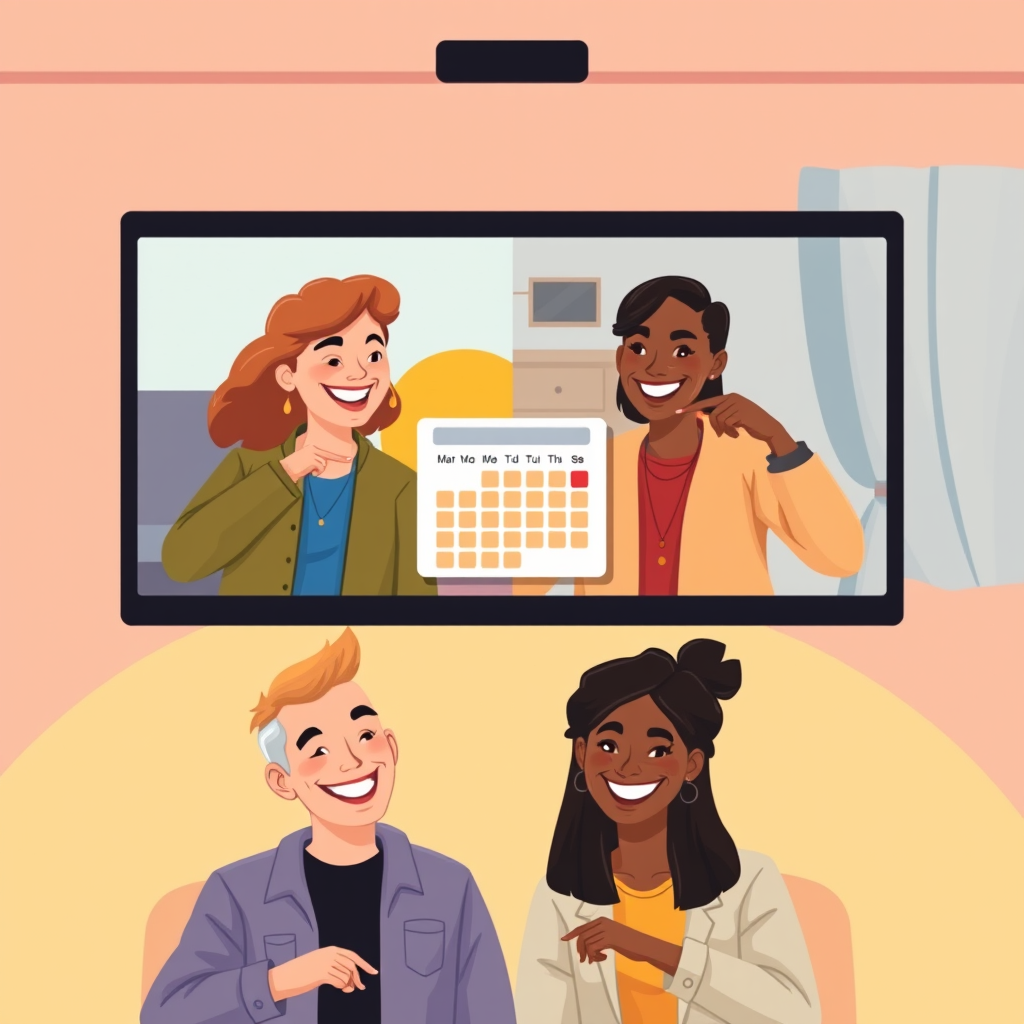
to organize people or activities so they work well together
We need to coordinate our schedules so we can all meet on Friday.
More examples: The event was coordinated by a team of five volunteers. • Can you coordinate with the design department about the new logo? • I coordinated the project schedule between three different offices.
Common collocations: coordinate schedules, coordinate efforts, closely coordinate
Word family: coordination (noun), coordinated (adjective), coordinator (noun)
Synonyms: organize, arrange, synchronize
Antonyms: disorganize, confuse
Related concepts: teamwork, planning, scheduling
Contexts: work projects, events, travel plans
Usage note: Use it when people or plans need to be organized together. Often followed by 'with': 'coordinate with someone'.
overlap
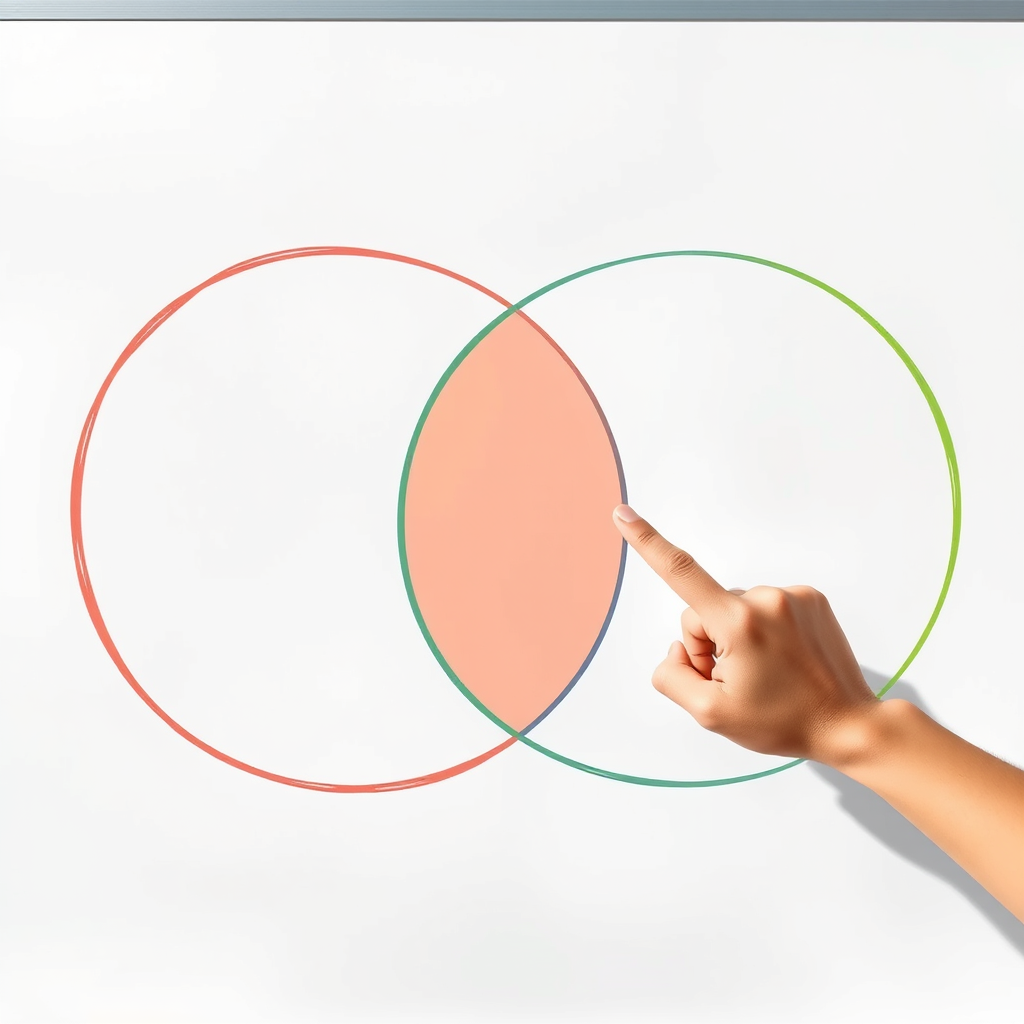
to cover part of the same time or space as something else
Our working hours overlap for two hours in the afternoon.
More examples: There is a small overlap between the two meetings, so I can't attend both. • Our jobs overlap a little, so we sometimes help each other. • The two courses overlap, so some students take them at the same time.
Common collocations: working hours overlap, a slight overlap, schedules overlap
Word family: overlap (noun), overlapping (adjective)
Synonyms: intersect, coincide, share
Antonyms: separate, divide
Related concepts: time zones, schedules, shared time
Contexts: work hours, meetings, maps and areas
Usage note: Used for time, space or ideas that share a common part. Very common in work talk about time zones.
flexible

able to change or be changed easily to fit different situations
My boss is flexible about what time I start work.
More examples: Remote work gives people a more flexible schedule. • We need to be flexible if the client changes the date. • She's very flexible - she can work mornings or evenings.
Common collocations: flexible schedule, flexible working hours, flexible approach
Word family: flexibility (noun), flexibly (adverb)
Synonyms: adaptable, open, easy-going
Antonyms: rigid, fixed, strict
Related concepts: remote work, work-life balance, freedom
Contexts: working hours, plans, personal style
Usage note: Describes people, plans, schedules or rules that can bend or adapt. Opposite idea: 'rigid' or 'fixed'.
workload

the amount of work a person has to do
My workload gets much heavier at the end of the month.
More examples: The team hired two new people to share the workload. • I have a light workload this week, so I can help you. • Working across time zones added to her workload at first.
Common collocations: heavy workload, light workload, share the workload
Word family: work (noun), load (noun)
Synonyms: amount of work, caseload, burden
Antonyms: free time, downtime
Related concepts: stress, deadlines, productivity
Contexts: office life, deadlines, hiring
Usage note: Talk about it as heavy, light, big or reduced. You can share, spread or reduce a workload.
juggle

to deal with several things at the same time, with difficulty
She juggles a full-time job with evening classes.
More examples: I'm juggling three projects right now - it's exhausting. • Parents often juggle work and childcare. • He juggles calls with Tokyo and meetings with the local team.
Common collocations: juggle work and family, juggle responsibilities, juggle several projects
Word family: juggler (noun), juggling (noun)
Synonyms: balance, manage, handle
Antonyms: focus on one thing, drop
Related concepts: multitasking, busy life, priorities
Contexts: family life, busy jobs, studying while working
Usage note: Informal but very common. Use it when someone manages many tasks or roles at once, especially when it's hard.
Vocabulary Check
- What does 'coordinate' mean?
- To work alone without telling anyone
- To organize things together so they work well
- To finish a task quickly
- To copy someone else's idea
- Which sentence uses 'overlap' correctly?
- Our schedules overlap, so we can talk at 3 p.m. in both countries.
- He overlapped the door and went home early.
- I overlap my breakfast every morning before work.
- The overlap was very angry with the delay.
- In which situation would you use 'flexible'?
- When a rule can never change under any circumstances
- When your boss lets you choose your own working hours
- When you arrive late to a meeting
- When you work exactly nine to five every day
- What does 'workload' mean?
- The machine you use at work
- The money you earn from working
- The amount of work you have to do
- The place where you work
- Which sentence uses 'juggle' correctly?
- I juggle my meetings carefully so nobody notices them.
- She juggles studying with a part-time job, and it's hard work.
- He juggled the report to his manager yesterday morning.
- We juggle the office at nine o'clock every day.
Idioms & Phrasal Verbs
pick up
to go and get someone or something, usually by car
I pick up my daughter from school at four o'clock every day.
Usage note: You can split it: 'pick the children up' and 'pick up the children' are both correct. But with a pronoun, only the split works: 'pick her up', never 'pick up her'.
Usage note: It has many other meanings, like 'pick up a language' (learn it without much effort) or 'pick up an infection' (catch it).
spread across
covering or reaching many different places or areas
Our customers are spread across three continents, so someone is always awake.
Usage note: The small word 'across' gives the picture of something covering a wide area, like a map. You can also say 'spread over' with time: 'the course is spread over six months'.
go back to
to return to something you did or had before
After a month of sleeping in, I can't go back to waking up at six.
Usage note: Split it like this: go + back + to. You can't say 'go to back' — 'back' sits before 'to'.
Usage note: It works for habits, jobs, places and even topics: 'let's go back to what you said earlier'.
nine-to-five
a normal office job with fixed hours, often suggesting routine
He gave up his nine-to-five to work for himself from home.
Usage note: From the picture of working from 9 a.m. to 5 p.m. People often use it with a negative feeling, meaning boring and predictable: 'stuck in a nine-to-five'.
Usage note: Usually before a noun: 'a nine-to-five job'. On its own, people say 'my nine-to-five' to mean their job.
Language Practice: Talking About Work Across Time Zones
Practice expressing ideas about remote work, time zones and teamwork.
- Comparing two points of view
- Emerging: Some people say ___, but I think ___ because ___. — Some people say office work is better, but I think working from home is easier because I save time on travel.
- Developing: While some people prefer ___, I'd rather ___ because ___. — While some people prefer a fixed routine, I'd rather have flexible hours because I do my best work in the evening.
- Expanding: Whereas ___ works well for ___, I believe ___ is better for me because ___. — Whereas a fixed office schedule works well for people who need structure, I believe flexible hours are better for me because my energy changes during the day.
- Weighing pros and cons
- Emerging: The good thing about ___ is ___, but the bad thing is ___. — The good thing about remote work is freedom, but the bad thing is feeling lonely.
- Developing: One advantage of ___ is that ___, although ___. — One advantage of working across time zones is that someone is always working, although it can be hard to reach people quickly.
- Expanding: Although ___ has clear benefits like ___, it also means ___, so I'd say ___. — Although a global team has clear benefits like round-the-clock progress, it also means endless scheduling, so I'd say it only works with good planning.
- Imagining situations
- Emerging: If I worked with a team in another time zone, I would ___. — If I worked with a team in another time zone, I would write everything down.
- Developing: If my company let me work from anywhere, I would ___ and ___. — If my company let me work from anywhere, I would move closer to my family and travel more often.
- Expanding: If I had to coordinate a project across three time zones, I would ___ so that ___. — If I had to coordinate a project across three time zones, I would create a shared schedule so that everyone knew when to expect replies.
Fill in the Blanks
Last year, Daniel joined a company with colleagues in India, Germany and Mexico. His first challenge was to _____ a product launch with people in four different countries. Luckily, his afternoons _____ with the morning in Brazil, so the team used that time for weekly calls. The company was very _____ about working hours, which helped Daniel manage his _____ without working weekends. Still, he found it hard to _____ late-night calls with his evening classes, and by Friday he was always exhausted.
Word bank: coordinate, overlap, flexible, workload, juggle
Sentence Unscramble
- our / working / hours / overlap / for / two / hours / every / day
- she / has / to / juggle / a / heavy / workload / with / night / calls
- a / flexible / schedule / makes / it / easier / to / coordinate / with / the / team
Discussion Questions
Maria's team protected the two hours when their schedules overlapped, and used that time for everything important. Outside those hours, people worked alone and shared written updates. Some people love this quiet, focused style of work; others find it lonely and slow.
Could you work with colleagues you never see in person? Why or why not?
In the article, the company was flexible about working hours, so Maria could go to the gym in the morning and her colleague could collect her children from school. Nobody counted hours - they focused on results. But some managers worry that people will slack off without fixed hours.
Would you rather have flexible hours or a fixed schedule? What could go wrong with each one?
Imagine your team is spread across three time zones: yours, one eight hours ahead and one five hours behind. Every time you send a question, you wait half a day for the answer. Deadlines get stressful because the workload piles up while you wait.
How would you coordinate a project with people you can rarely talk to live? What rules would you set?
Many remote workers say they juggle work and home life in the same room all day. The laptop is on the kitchen table, and work emails arrive at dinner time. Some people love the freedom; others say they can never truly switch off.
Do you think you could juggle work and home life in the same space? How would you keep them separate?
Maria says she would never go back to a nine-to-five job in one place, even though she misses casual office chat. Her colleague disagrees - he misses the friendships and the energy of a busy office, and he has taken a hybrid job with two days at home and three in the office.
If you could design your perfect working week, what would it look like? How many days at home, and how many with people?
Knowledge Check
- Which word means 'to organize things together so they work well'?
- juggle
- overlap
- coordinate
- workload
- If two people's schedules overlap, it means they share some of the same time.
- True
- False
- Which phrase describes a lot of work to do?
- a light workload
- a heavy workload
- a flexible workload
- an overlapping workload
- 'Juggle' originally comes from a circus skill.
- True
- False
- Which sentence uses 'flexible' correctly?
- My schedule is flexible, so I can start earlier on Mondays.
- My schedule is flexible, so I must arrive at exactly nine.
- My schedule is flexible, so I never change my plans.
- My schedule is flexible, so I work the same hours every day.
- In the text, Maria's colleague can 'pick up her children from school'. What does 'pick up' mean here?
- learn without much effort
- go and get someone
- improve gradually
- start doing something new
Free to use with your students: Free to teach, screen-share, print and share with your students, with a credit to PlanWise ESL. Please do not sell it or republish it as your own. What you can do with free lessons.