Will AI Take Our Jobs? What People Really Expect
About this lesson: This is a B2 (Upper Intermediate) ESL lesson in the General English category. It takes about 60 minutes. It includes 5 vocabulary words, 4 idioms and phrasal verbs, a reading text, comprehension questions, discussion questions and speaking patterns. Suits one-to-one or small-group online classes. Free to open and teach with no login, and it prints as a PDF.
Print just the discussion questions
How this lesson is built
This is a complete conversation lesson built on a scientific pedagogical formula, not a generic worksheet: recall prior topic vocabulary, pre-teach the new words in depth, read in context, practise active recall with flashcards and synonyms/antonyms, build accuracy with exercises, and finish with deep discussion.
- Warm-up: Discussion questions that connect the topic to the student’s own life and recall vocabulary they already know about the subject.
- Reading: A text written for this CEFR level that uses each new word two or three times in context, giving the student something meaningful to react to.
- Key vocabulary: 5 new words, pre-taught before the reading with a definition, pronunciation guide, example sentences and a picture, plus word families, usage notes, recall flashcards and synonyms/antonyms, giving a solid grounding before reading.
- Comprehension: 5 questions that check the new words: retrieval practice, not rereading.
- Idioms and phrasal verbs: Expressions taken from the reading, each with its meaning, an example and a speaking question.
- Sentence frames: 3 speaking patterns, each at three levels of support (emerging, developing, expanding) with model answers—especially helpful scaffolding for beginners and less confident speakers.
- Gap-fill: The new words again, in a shuffled order, so the student recalls them by meaning in context.
- Sentence unscramble: Natural sentences with the new words to put back in order, reinforcing grammar and collocation.
- Discussion: 5 open questions designed to talk deeply about the subject while actively using the lesson’s target vocabulary: the heart of a conversation lesson.
- Quiz: A short retrieval check that brings every new word back once more.
Unlike a generic worksheet, the new words are taught before the reading and met again in the activities, the speaking is supported at three levels and most of the time goes on the student talking. Teachers who use PlanWise ESL also get per-student vocabulary tracking (recycling earlier words into future readings and questions), a private learner dashboard with flashcards and custom lesson creation, and a downloadable study PDF.
Warm-up: Your First Reactions
Look at the questions and share your first thoughts about AI and the future of work. There are no wrong answers — just talk!
- When you hear 'AI is coming for our jobs', what's your first reaction?
- Do you use any AI tools in your daily life or work? Which ones?
- Which jobs do you think are safest from AI? Which are most at risk?
- Has AI already changed how you work or study? How?
- If a robot could do your job tomorrow, would you feel relieved or worried?
Reading Text: Most People Expect AI to Reduce Jobs for Humans
A recent global survey asked thousands of people how they think AI will change work. The results were surprising — and a little worrying. Read on, then we'll talk about what you think.
Ask people around the world what AI will do to jobs, and most give the same answer: fewer jobs for humans. In a survey of over 20,000 workers across 30 countries, more than half said they expect AI to replace part of their work within ten years. Only a small minority believe AI will create more jobs than it destroys.
The fear is strongest in office jobs. Accountants, translators and customer service workers said they feel most vulnerable. One accountant told researchers she lies awake worrying that she'll be made redundant before she turns forty. 'I trained for years,' she said, 'and now a machine can do half of it.'
But not everyone is pessimistic. Some economists argue that new technology has always destroyed some jobs and created others. When ATMs appeared, bank tellers didn't disappear — their roles changed. The optimists say workers who upskill now, learning to work alongside AI, will be in a stronger position than ever.
Companies, however, face a tricky problem. If employees believe robots will take over their duties, morale drops fast. Several firms have found that announcing an 'AI strategy' made staff anxious and less productive. Workers start asking: will I be next?
So is the change inevitable? Most experts say some disruption is certain, but the size of it is still up to us. Governments, companies and workers all have choices to make — about training, safety nets and how fast to move. The future of work, they insist, isn't written yet.
Key Vocabulary
redundant

losing your job because your position is no longer needed
After the company bought new software, twenty staff were made redundant.
More examples: The factory closed and 300 workers were made redundant. • She got a redundancy payment and used it to travel for six months. • I'd hate to be made redundant — my job is part of who I am.
Common collocations: be made redundant, redundancy payment, face redundancy
Word family: redundancy (noun), make redundant (phrase)
Synonyms: laid off, let go, dismissed
Antonyms: hired, employed
Related concepts: layoffs, unemployment, job security
Contexts: company restructuring, news about layoffs, career conversations
Usage note: Use for job loss caused by the company not needing the role anymore — not because the worker did something wrong. Very common in news about layoffs.
take over
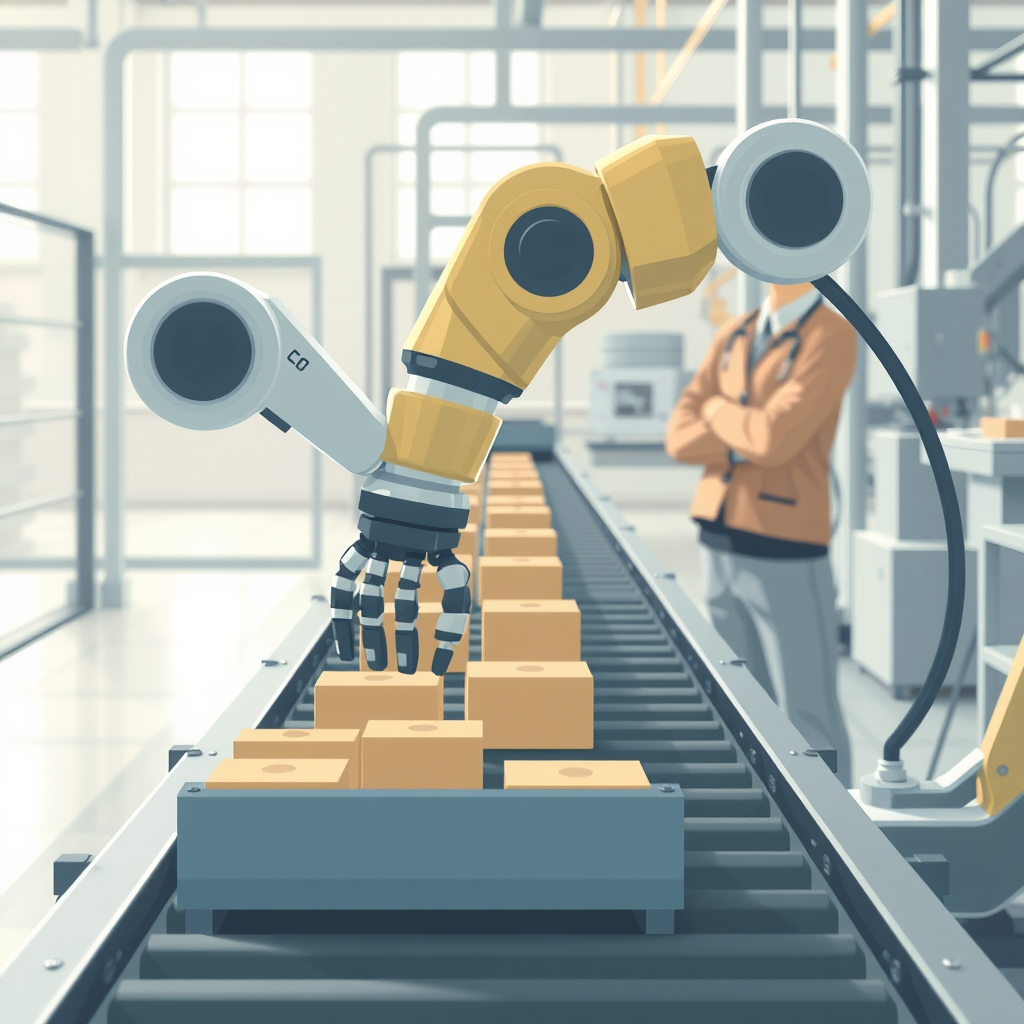
to replace something or gain control of it
Many people worry that machines will take over tasks done by humans.
More examples: Robots have taken over most of the assembly line work. • Don't let your phone take over your evenings. • A bigger company took over the small startup last year.
Common collocations: take over a job, take over the market, AI taking over
Word family: takeover (noun), take over from (phrase)
Synonyms: replace, take control of, substitute for
Antonyms: hand over, give up
Related concepts: automation, replacement, control
Contexts: workplace change, business news, technology discussions
Usage note: Very common in everyday speech about machines, companies or people replacing something. Separable: 'take it over'.
morale

the confidence and positive feeling of a group of people
Rumours about job cuts damaged morale across the whole department.
More examples: Free lunches on Friday really boosted team morale. • Morale was low after the third failed project. • A good manager knows how to keep morale high.
Common collocations: boost morale, low morale, damage morale
Word family: boost morale (phrase), low/high morale (phrase)
Synonyms: team spirit, confidence, enthusiasm
Antonyms: demoralization, discouragement
Related concepts: motivation, teamwork, job satisfaction
Contexts: workplace culture, sports teams, military
Usage note: Talks about group feeling, especially at work or in a team. Uncountable — never 'morales'.
upskill
to learn new skills to improve your job abilities
She upskilled by taking an online course in data analysis.
More examples: Workers are being encouraged to upskill before the new system arrives. • The company offers free courses so staff can upskill. • It's never too late to upskill and change direction.
Common collocations: upskill staff, upskill in something, upskilling programme
Word family: upskilling (noun), reskill (verb)
Synonyms: retrain, develop skills, improve qualifications
Antonyms: stagnate, fall behind
Related concepts: lifelong learning, training, career growth
Contexts: career advice, company training, online courses
Usage note: Modern business word, very common in articles about the future of work. Positive, active feeling — you do it yourself.
inevitable
certain to happen; impossible to avoid
Some experts say job changes caused by AI are inevitable.
More examples: Arguing about it felt pointless — the decision seemed inevitable. • Growth of online shopping made many small shops close; it was inevitable. • She accepted the inevitable and started planning her next step.
Common collocations: seem inevitable, accept the inevitable, almost inevitable
Word family: inevitably (adverb), inevitability (noun)
Synonyms: unavoidable, certain, bound to happen
Antonyms: avoidable, uncertain
Related concepts: fate, change, destiny
Contexts: news analysis, future predictions, personal decisions
Usage note: Often used when talking about big changes people can't stop. Can sound slightly resigned or fatalistic.
Vocabulary Check
- What does 'redundant' mean in 'she'll be made redundant'?
- She will get a promotion
- She will lose her job because it's no longer needed
- She will work extra hours
- She will move to a new office
- Which sentence uses 'take over' correctly?
- I take over coffee every morning.
- Robots may take over many routine tasks in factories.
- She took over her birthday last week.
- We take over the bus to school.
- If a team has 'low morale', how do the people feel?
- Very busy
- Well paid
- Unmotivated and negative
- Physically tired
- What does it mean to 'upskill'?
- To work faster
- To learn new skills for your job
- To ask for a higher salary
- To move to a bigger office
- In which situation would you say something is 'inevitable'?
- It might happen if we're lucky
- It definitely will happen, no matter what
- It happened a long time ago
- It almost happened once
Idioms & Phrasal Verbs
safety net
help or support that stops bad things from hurting you too much
Unemployment benefits are a safety net for people who lose their jobs.
Usage note: The picture: a net under a tightrope walker in a circus. If they fall, the net catches them.
Usage note: Common in the news when talking about government support.
up to someone
it is someone's decision or responsibility
We can't wait for the government — the change is up to us.
Usage note: The person comes between 'up' and 'to': up to ME, up to HER, up to the workers.
Usage note: Don't confuse it with 'up to' meaning 'until' (up to 10 people).
lie awake
to be in bed but unable to sleep because you are worried
I was lying awake all night before my job interview.
Usage note: Past forms: lie awake → lay awake → lain awake. But in relaxed speech, many people say 'I laid awake'.
Usage note: Almost always about worry or stress, not just being awake.
take on
to accept new work, duties or challenges
She took on too much when she said yes to three projects at once.
Usage note: You can split it: 'take on a task' or 'take a task on' — both are fine.
Usage note: It can also mean to hire: 'The company is taking on new staff.'
Language Practice: Talking About AI and Work
Practice expressing ideas about AI, jobs and the future of work.
- Comparing different views
- Emerging: Some people say ___, but I think ___. — Some people say AI will save us time, but I think it will cause stress.
- Developing: While some believe ___, others argue that ___. Personally, I ___. — While some believe AI will create new jobs, others argue that millions will disappear. Personally, I think both are partly right.
- Expanding: Although ___ seems convincing at first, I'd say ___, especially because ___. — Although the 'new jobs will appear' argument seems convincing at first, I'd say the transition will be painful, especially because retraining takes years.
- Weighing pros and cons
- Emerging: The good thing is ___, but the bad thing is ___. — The good thing is faster work, but the bad thing is fewer jobs.
- Developing: On the one hand, AI could ___; on the other hand, it might ___. — On the one hand, AI could take over dangerous work; on the other hand, it might make many people redundant.
- Expanding: The main advantage of ___ is clearly ___, but that comes at the cost of ___, which is why I'd say ___. — The main advantage of AI is clearly speed and accuracy, but that comes at the cost of human jobs, which is why I'd say we need strong retraining programmes.
- Imagining future situations
- Emerging: If AI took my job, I would ___. — If AI took my job, I would learn something new.
- Developing: If my job disappeared tomorrow, I would ___ because ___. — If my job disappeared tomorrow, I would upskill in AI tools because fighting the change seems pointless.
- Expanding: If I found out my role would be made redundant next year, I'd probably ___, and I think that would ___ because ___. — If I found out my role would be made redundant next year, I'd probably start upskilling immediately, and I think that would give me confidence because waiting would only damage my morale.
Fill in the Blanks
When the new warehouse robots arrived, everyone knew change was _____. Within months, the machines had _____ over most of the heavy lifting, and fifteen workers were made _____. Those who stayed felt nervous — _____ in the team dropped, and people kept asking who would be next. The manager's answer was simple: the company would pay for everyone to _____, so they could work alongside the robots instead of competing with them.
Word bank: redundant, take, morale, upskill, inevitable
Sentence Unscramble
- many / fear / that / machines / will / take / over / their / jobs / soon
- she / was / made / redundant / but / quickly / found / a / better / position
- some / change / is / inevitable / so / workers / should / upskill / now
Discussion Questions
The survey found that most people expect AI to reduce jobs for humans. But expectations aren't the same as reality — people once feared computers would wipe out office work, and instead new kinds of jobs appeared. Still, fear itself has effects: it changes how people plan, save and even vote.
Do you think people's fear of AI is bigger than the actual danger? Why or why not?
In the reading, an accountant worries she'll be made redundant before forty. Some jobs involve routine information work — exactly what AI does best. Other jobs need human hands, judgement or trust, like nurses, plumbers or teachers.
Think about your own work or studies: which parts could a machine take over, and which parts could it never touch?
The reading mentions that companies announcing an 'AI strategy' saw morale drop. Workers start wondering if they're next. Some companies handle this well by retraining staff; others stay silent and let rumours spread.
If your boss announced a big AI plan tomorrow, how would you react? What would you want them to say to keep morale high?
Optimists say the answer is simple: upskill. Learn to work with AI and you'll be fine. But courses cost time and money, and not everyone can study after a full day of work. Some people say upskilling is a personal duty; others say it's unfair to put all the pressure on workers.
Who should pay for retraining — the worker, the company, or the government? What would be fair?
Experts in the reading say some disruption is inevitable, but the outcome depends on choices we make now — about training, safety nets and the pace of change. Some countries are already testing ideas like shorter working weeks or support for people whose jobs disappear.
If you could make one rule about how AI enters the workplace, what would it be? Would it actually work?
Knowledge Check
- If a company 'makes staff redundant', it means the staff...
- get a pay rise
- lose their jobs because the roles are no longer needed
- move to a new branch
- get promoted
- 'Morale' refers to...
- the salary a team earns
- the equipment a team uses
- the confidence and spirit of a group
- the rules of a company
- True or false: 'upskill' means to learn new skills to do your job better or prepare for change.
- True
- False
- Which phrase means 'certain to happen and impossible to avoid'?
- redundant
- inevitable
- versatile
- wary
- Complete the sentence: 'Within a year, the software had ___ most of the admin work.'
- taken over
- made redundant
- boosted morale
- upskilled
- If a government gives people unemployment benefits, what is this an example of?
- A safety net
- Taking on
- Lying awake
- Being up to them
Free to use with your students: Free to teach, screen-share, print and share with your students, with a credit to PlanWise ESL. Please do not sell it or republish it as your own. What you can do with free lessons.