Telling Your Story: The STAR Method for Interviews
About this lesson: This is a B2 (Upper Intermediate) ESL lesson in the Workplace Communication category. It takes about 60 minutes. It includes 5 vocabulary words, 4 idioms and phrasal verbs, a reading text, comprehension questions, discussion questions and speaking patterns. Suits one-to-one or small-group online classes. Free to open and teach with no login, and it prints as a PDF.
Print just the discussion questions
How this lesson is built
This is a complete conversation lesson built on a scientific pedagogical formula, not a generic worksheet: recall prior topic vocabulary, pre-teach the new words in depth, read in context, practise active recall with flashcards and synonyms/antonyms, build accuracy with exercises, and finish with deep discussion.
- Warm-up: Discussion questions that connect the topic to the student’s own life and recall vocabulary they already know about the subject.
- Reading: A text written for this CEFR level that uses each new word two or three times in context, giving the student something meaningful to react to.
- Key vocabulary: 5 new words, pre-taught before the reading with a definition, pronunciation guide, example sentences and a picture, plus word families, usage notes, recall flashcards and synonyms/antonyms, giving a solid grounding before reading.
- Comprehension: 5 questions that check the new words: retrieval practice, not rereading.
- Idioms and phrasal verbs: Expressions taken from the reading, each with its meaning, an example and a speaking question.
- Sentence frames: 3 speaking patterns, each at three levels of support (emerging, developing, expanding) with model answers—especially helpful scaffolding for beginners and less confident speakers.
- Gap-fill: The new words again, in a shuffled order, so the student recalls them by meaning in context.
- Sentence unscramble: Natural sentences with the new words to put back in order, reinforcing grammar and collocation.
- Discussion: 5 open questions designed to talk deeply about the subject while actively using the lesson’s target vocabulary: the heart of a conversation lesson.
- Quiz: A short retrieval check that brings every new word back once more.
Unlike a generic worksheet, the new words are taught before the reading and met again in the activities, the speaking is supported at three levels and most of the time goes on the student talking. Teachers who use PlanWise ESL also get per-student vocabulary tracking (recycling earlier words into future readings and questions), a private learner dashboard with flashcards and custom lesson creation, and a downloadable study PDF.
Warm-up Activity
Look at the questions below and talk about your experiences with interviews and telling stories about yourself.
- Have you ever had a job interview? How did it go?
- When someone asks you to describe yourself, do you find it easy or hard? Why?
- Have you ever left an interview thinking, 'I should have said that differently'?
- Do you prefer answering questions about facts or questions about your experiences?
- If a friend asked you for interview advice, what would you tell them first?
Reading Text: Four Letters That Change Your Interview
A short article about why some candidates sound convincing and others don't - and the simple method that makes the difference.
Maria had a problem. In interviews, she talked too much. When an interviewer asked about a difficult project, she explained every small detail, and after five minutes, she could see she had lost them. Her stories were interesting, but they were not concise. The interviewer wanted a clear answer, not a full history of her career.
Then a friend told her about the STAR method. STAR stands for Situation, Task, Action and Result. First, you describe the situation in one or two sentences. Next, you explain your task: what you needed to do. Then you describe the action you personally took. Finally, you give the result - and this is where you highlight your accomplishment.
The method works because it keeps your answer relevant. Interviewers ask behavioural questions - 'Tell me about a time when...' - because past behaviour suggests future behaviour. They do not need every detail. They need one clear story that shows how you think and act.
STAR also helps with tricky questions. What about a time you failed? A setback can actually make a strong answer, if you finish it well. You describe what went wrong, then explain what you learned and how you improved. A setback plus a lesson sounds honest, not weak.
At her next interview, Maria tried it. She kept each part short and made sure every detail was relevant to the question. The interviewer nodded, asked follow-up questions, and smiled. Two days later, she got the job. Her stories had not changed much - only their structure had. Sometimes the difference between a good answer and a great one is simply a clear shape.
Key Vocabulary
accomplishment

something good you succeed in doing, often with effort
Finishing the project two weeks early was her biggest accomplishment last year.
More examples: Learning to drive was a real accomplishment for me. • Tell me about an accomplishment you are proud of. • Getting the team to agree felt like a huge accomplishment.
Common collocations: a major accomplishment, proud of an accomplishment, a sense of accomplishment
Word family: accomplish (verb), accomplished (adjective)
Synonyms: achievement, success, feat
Antonyms: failure, defeat
Related concepts: goal, effort, progress
Contexts: job interviews, performance reviews, personal stories
Usage note: Use it for achievements that took effort or skill, not small everyday tasks. Very common in interviews: 'Describe your greatest accomplishment.'
setback

a problem that delays or stops your progress
Losing their main client was a setback, but the team recovered quickly.
More examples: The injury was a big setback in his career. • Every project has setbacks - what matters is how you respond. • After the setback, she changed her whole plan.
Common collocations: a major setback, suffer a setback, recover from a setback
Word family: set back (phrasal verb)
Synonyms: obstacle, difficulty, blow
Antonyms: breakthrough, advance
Related concepts: failure, resilience, recovery
Contexts: careers, sports, projects
Usage note: Often used with 'suffer', 'face' or 'recover from'. Perfect for the classic interview question about failure - a setback story shows resilience.
concise

short and clear, with no unnecessary words
Keep your answer concise - two minutes is enough.
More examples: Her summary was concise and easy to follow. • He gave a concise explanation of the problem. • A concise email is more likely to get a reply.
Common collocations: a concise answer, concise summary, keep it concise
Word family: concisely (adverb), conciseness (noun)
Synonyms: brief, short and clear, to the point
Antonyms: rambling, wordy, long-winded
Related concepts: clarity, communication, summary
Contexts: interviews, emails, presentations
Usage note: A positive word - being concise is a skill. Use it when talking about speaking, writing and interview answers. Similar to 'brief' but with the idea of completeness.
highlight

to give special attention to the most important part
In your answer, highlight the result - that is what interviewers remember.
More examples: The report highlights the main risks of the plan. • She highlighted her teamwork skills in the interview. • Let me highlight two points before we finish.
Common collocations: highlight your strengths, highlight the importance of, the highlight of the year
Word family: highlight (noun), highlighted (adjective)
Synonyms: emphasise, stress, point out
Antonyms: downplay, hide, ignore
Related concepts: importance, attention, focus
Contexts: interviews, reports, presentations
Usage note: Use it when you want to draw attention to something important. In interviews: highlight your role, your skills, your results. Also common with reports and presentations.
relevant
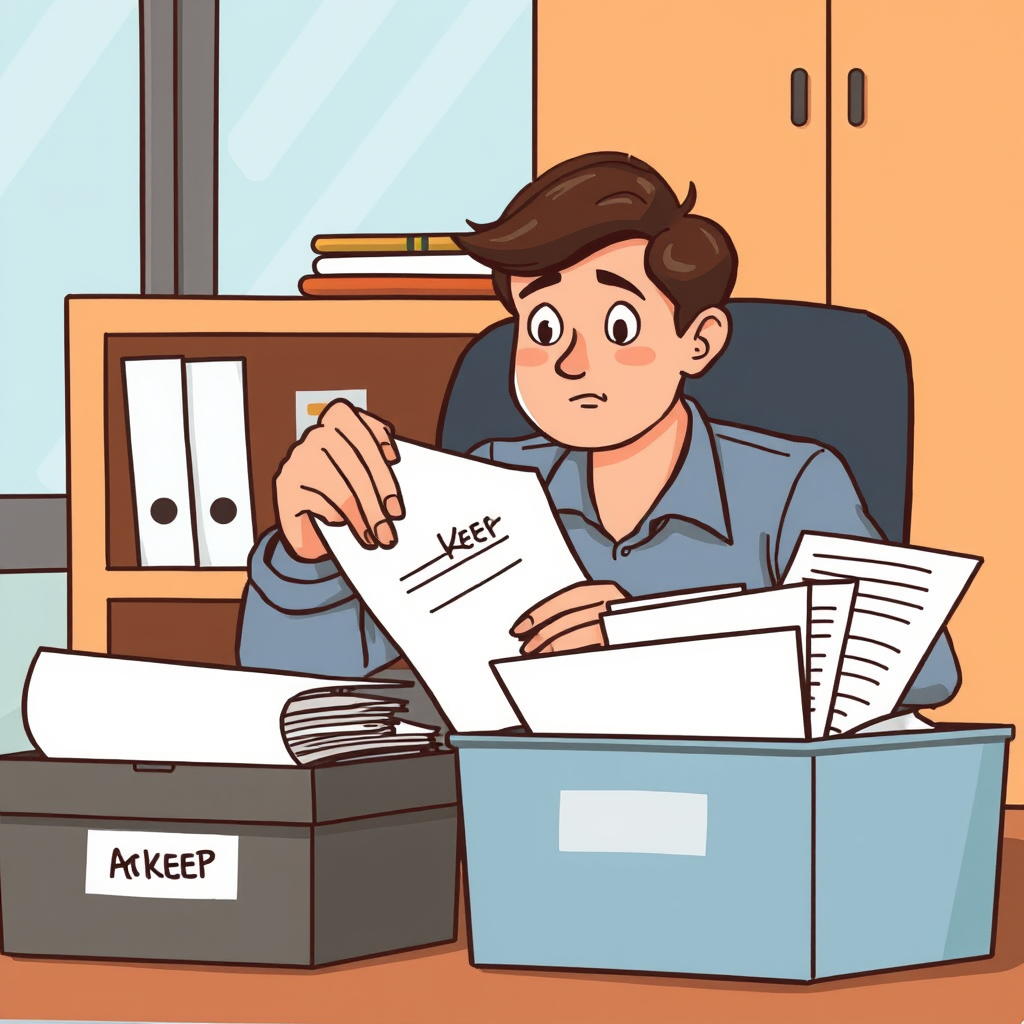
connected to and useful for the subject or situation
Only include details that are relevant to the question.
More examples: Her experience is relevant to this job. • That story is funny, but it isn't relevant here. • Please send only relevant documents.
Common collocations: relevant experience, relevant to the question, highly relevant
Word family: relevance (noun), irrelevant (adjective)
Synonyms: connected, related, applicable
Antonyms: irrelevant, unrelated
Related concepts: focus, topic, selection
Contexts: interviews, meetings, research
Usage note: Very common in work contexts: relevant experience, relevant skills, relevant details. Use 'relevant to' + noun. 'Irrelevant' is useful for politely dismissing off-topic details.
Vocabulary Check
- What does 'setback' mean?
- A problem that delays your progress
- A plan for the future
- A big success
- A type of interview question
- Which sentence uses 'concise' correctly?
- Her concise answer took twenty minutes.
- He gave a concise answer: three clear sentences, no extra details.
- The concise meeting was cancelled.
- She felt concise after winning the prize.
- In which situation would you 'highlight' something?
- When you want to hide a mistake
- When you want to make an important point stand out
- When you want to speak for a long time
- When you want to change the subject
- What does 'relevant' mean?
- Very long and detailed
- Connected to the subject being discussed
- Difficult to understand
- Happening in the past
- Which of these is an 'accomplishment'?
- Waking up late on Sunday
- Reading a message on your phone
- Finishing a difficult project after months of hard work
- Walking to the shop near your house
Idioms & Phrasal Verbs
stand for
to be what the letters of a short word mean
In text messages, 'tbh' stands for 'to be honest'.
Usage note: No object between the two words. Say: · Right: It stands for 'Situation...' · Avoid: It stands 'Situation...' for
Usage note: You can also ask 'What does NASA stand for?' to ask for the full name.
go wrong
to not happen the way you planned; to fail
The meeting went wrong when the screen stopped sharing.
Usage note: The 'go' here means 'become', like 'go crazy'. It cannot be split: · Right: Something went wrong. · Avoid: Something went it wrong.
Usage note: Very common in stories about problems, at work and in the news.
lose someone
when someone stops listening or understanding you
He used too many technical words and lost the audience halfway through.
Usage note: Nothing to do with losing a person in real life - the picture is that they were 'with' you and then disappeared.
come across as
to seem a certain way to other people
She comes across as confident in interviews, even when she's nervous.
Usage note: The 'as' needs an adjective or a phrase after it: · Right: You come across as honest. · Avoid: You come across honest.
Usage note: It's about how others see you, which may be different from how you feel inside.
Language Practice: Talking About Your Experiences
Practice telling stories about your work and life using the STAR structure.
- Describing a past accomplishment
- Emerging: One accomplishment I'm proud of is ___. I ___ last year. — One accomplishment I'm proud of is passing my English exam. I studied every day last year.
- Developing: A few months ago, I ___. The situation was ___, and in the end I ___. — A few months ago, I organised a team event. The situation was stressful because we had little time, and in the end I managed everything successfully.
- Expanding: One accomplishment I'd highlight is ___. At the time, ___ was happening, so I decided to ___, and as a result, ___. — One accomplishment I'd highlight is leading our website redesign. At the time, the old site was losing customers, so I decided to build a small team and test new ideas, and as a result, sales went up twenty percent.
- Talking about a setback and what you learned
- Emerging: I once had a setback: ___. I learned to ___. — I once had a setback: I failed a test. I learned to prepare earlier.
- Developing: A big setback for me was ___. At first I ___, but then I ___, and it taught me ___. — A big setback for me was missing a deadline. At first I panicked, but then I told my manager honestly, and it taught me to communicate early.
- Expanding: I remember a setback when ___. Although ___ at first, I decided to ___, and looking back, that experience taught me ___, which is still relevant to my work today. — I remember a setback when our biggest client cancelled. Although I felt the situation was hopeless at first, I decided to visit them and listen to their complaints, and looking back, that experience taught me to listen before defending, which is still relevant to my work today.
- Comparing opinions about interviews
- Emerging: Some people say ___, but I think ___. — Some people say interviews are unfair, but I think they're useful.
- Developing: Some people say ___, but I think ___ because ___. — Some people say interviews are unfair, but I think they're useful because they show how you think under pressure.
- Expanding: While some people say ___, I'd argue ___, because ___. If I were the interviewer, I would ___. — While some people say interviews are unfair tests of confidence, I'd argue they're fair if you prepare, because a structured answer shows real thinking. If I were the interviewer, I would care more about clear stories than perfect English.
Fill in the Blanks
Last month, Daniel had an interview for a team leader position. He prepared carefully, thinking about every _____ he could talk about. When the interviewer asked about a difficult time, he described a _____ from two years ago, when his project lost its funding. He kept his answer _____, finishing in under two minutes. He made sure every detail was _____ to the question, and he used the last sentence to _____ what he had learned. A week later, he got the job.
Word bank: accomplishment, setback, concise, highlight, relevant
Sentence Unscramble
- My / biggest / accomplishment / was / finishing / the / project / ahead / of / schedule
- Keep / your / answers / concise / and / highlight / the / results
- Every / setback / taught / her / something / relevant / to / her / career
Discussion Questions
The STAR method gives every answer the same four-part shape: Situation, Task, Action, Result. Some people love this because it stops them rambling. Others worry it makes everyone sound like a robot, reciting a formula instead of talking like a human being.
Do you think a structured answer sounds more professional, or less natural? Which would you rather hear if you were the interviewer?
Maria's problem in the article was talking too much. Many people have the opposite problem: their mind goes blank, and they answer in one short sentence, even when they have a great story to tell. Nerves, language and habit all play a part.
When you're asked to describe an experience, do you talk too much or too little? What do you think causes it?
One classic interview question is 'Tell me about a setback and how you handled it.' The best answers describe a real failure honestly, then show what the person learned and changed. A fake answer with no real failure often sounds empty.
Think of a setback in your work or studies. Could you tell it as a STAR story? What would the 'result' part be?
Interviewers often say they can tell within two minutes whether a candidate has prepared. Preparation means having a few true stories ready, each one relevant to the job, rather than memorising scripts. But some people feel prepared answers sound fake.
If you had an interview next week, which three stories from your life would you prepare? Why those?
The STAR method isn't only for interviews. People use it in performance reviews, when convincing a boss to fund a project, or even when telling friends about a trip - situation, what you had to do, what you did, how it ended. Clear structure helps anywhere.
Where else in daily life could a clear story structure help you? Can you think of a time when a badly told story caused a misunderstanding?
Knowledge Check
- What do the four letters in STAR stand for?
- Story, Time, Answer, Reason
- Situation, Task, Action, Result
- Skill, Talent, Attitude, Reward
- Start, Try, Achieve, Repeat
- True or false: a setback can make a strong interview answer if you explain what you learned from it.
- True
- False
- Which word means 'short and clear, with no unnecessary words'?
- Relevant
- Setback
- Concise
- Accomplishment
- True or false: in a STAR answer, you should include every detail of the story, even irrelevant ones.
- True
- False
- Which sentence uses 'highlight' correctly?
- I want to highlight my experience leading a team.
- I want to highlight because I was tired.
- The highlight was very concise yesterday.
- She highlighted the setback into a relevant.
- In the sentence 'My laptop stopped working halfway through the presentation - I couldn't explain what went wrong', what does 'go wrong' mean?
- to become broken or fail
- to become correct
- to walk in the wrong direction
- to be finished
Free to use with your students: Free to teach, screen-share, print and share with your students, with a credit to PlanWise ESL. Please do not sell it or republish it as your own. What you can do with free lessons.