Building Trust and Value: The Consultant's Approach to Client Success
About this lesson: This is a B2 (Upper Intermediate) ESL lesson in the Business English category. It takes about 60 minutes. It includes 5 vocabulary words, a reading text, comprehension questions, discussion questions and speaking patterns. Suits one-to-one or small-group online classes. Free to open and teach with no login, and it prints as a PDF.
Print just the discussion questions
How this lesson is built
This is a complete conversation lesson built on a scientific pedagogical formula, not a generic worksheet: recall prior topic vocabulary, pre-teach the new words in depth, read in context, practise active recall with flashcards and synonyms/antonyms, build accuracy with exercises, and finish with deep discussion.
- Warm-up: Discussion questions that connect the topic to the student’s own life and recall vocabulary they already know about the subject.
- Reading: A text written for this CEFR level that uses each new word two or three times in context, giving the student something meaningful to react to.
- Key vocabulary: 5 new words, pre-taught before the reading with a definition, pronunciation guide, example sentences and a picture, plus word families, usage notes, recall flashcards and synonyms/antonyms, giving a solid grounding before reading.
- Comprehension: 5 questions that check the new words: retrieval practice, not rereading.
- Sentence frames: 3 speaking patterns, each at three levels of support (emerging, developing, expanding) with model answers—especially helpful scaffolding for beginners and less confident speakers.
- Gap-fill: The new words again, in a shuffled order, so the student recalls them by meaning in context.
- Sentence unscramble: Natural sentences with the new words to put back in order, reinforcing grammar and collocation.
- Discussion: 5 open questions designed to talk deeply about the subject while actively using the lesson’s target vocabulary: the heart of a conversation lesson.
- Quiz: A short retrieval check that brings every new word back once more.
Unlike a generic worksheet, the new words are taught before the reading and met again in the activities, the speaking is supported at three levels and most of the time goes on the student talking. Teachers who use PlanWise ESL also get per-student vocabulary tracking (recycling earlier words into future readings and questions), a private learner dashboard with flashcards and custom lesson creation, and a downloadable study PDF.
Warm-up Activity
Explore your understanding of consulting relationships and professional value creation
- What makes a consultant valuable to their clients?
- How do professionals build trust with new clients?
- What should be clearly defined before starting a project?
- Why is it important for consultants and clients to share similar goals?
- How can professionals exceed client expectations?
Reading Text: The Foundation of Successful Consulting
Read about how consultants create value and build strong client relationships
Successful consultants understand that every deliverable must demonstrate clear value to their clients. Whether producing reports, strategies, or recommendations, each deliverable should address specific client needs and contribute to business objectives. The most effective consultants ensure their deliverables exceed basic requirements by incorporating innovative solutions and actionable insights.
Creating genuine value-add services distinguishes exceptional consultants from average ones. A true value-add goes beyond completing assigned tasks; it involves identifying opportunities for improvement that clients may not have considered. This value-add approach builds long-term relationships and establishes the consultant as a strategic partner rather than just a service provider.
Defining project scope clearly prevents misunderstandings and ensures successful outcomes. The scope outlines specific responsibilities, timelines, and boundaries for the consulting engagement. When scope is well-defined, both parties understand their roles and can work efficiently toward shared goals without confusion or conflict.
Strategic alignment between consultant and client creates the foundation for productive collaboration. This alignment means sharing similar values, understanding business priorities, and working toward compatible objectives. Without proper alignment, even the most skilled consultants may struggle to deliver results that satisfy client needs and expectations.
Managing client expectation requires ongoing communication and transparency throughout the consulting process. Clear expectation setting prevents disappointment and builds trust between all parties involved. Regular updates and honest discussions about challenges help maintain realistic expectation levels and strengthen professional relationships over time.
Key Vocabulary
deliverable

A specific product or result that must be provided to complete a project
The consultant's final deliverable included a comprehensive market analysis and strategic recommendations.
More examples: Each deliverable has a clear deadline and quality standard. • The project manager reviewed all deliverables before client presentation. • Our team focuses on creating high-quality deliverables that exceed expectations.
Common collocations: final deliverable, project deliverable, key deliverable
Word family: deliver, delivery, delivered
Synonyms: output, result, product
Antonyms: input, requirement, request
Related concepts: milestone, outcome, achievement
Contexts: project management, consulting, business contracts
Usage note: Used in business contexts to describe concrete outputs or results from work projects
value-add

An extra benefit or improvement that goes beyond basic requirements
The consultant's value-add was identifying cost savings that weren't part of the original project scope.
More examples: This software's main value-add is its ability to integrate with existing systems. • Our value-add approach helps clients achieve better results than they expected. • The team's creative value-add impressed the client and led to additional contracts.
Common collocations: significant value-add, unique value-add, clear value-add
Word family: add, addition, additional
Synonyms: bonus, enhancement, improvement
Antonyms: basic service, minimum requirement, standard offering
Related concepts: innovation, differentiation, competitive advantage
Contexts: sales, consulting, product development
Usage note: Often used in business to describe extra benefits that justify higher costs or differentiate services
scope
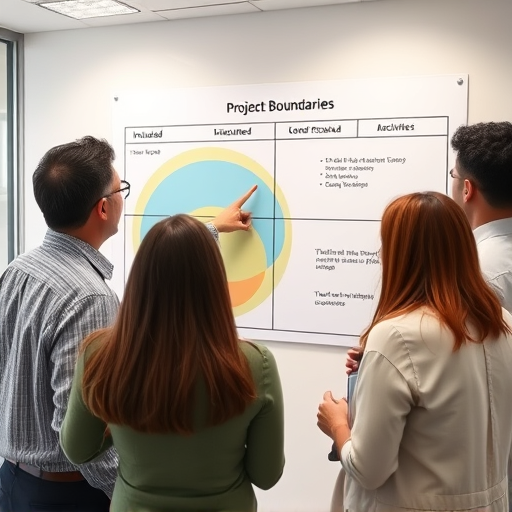
The range of activities, responsibilities, or work included in a project
The project scope clearly defined which departments would be included in the organizational review.
More examples: We need to expand the scope to include international markets. • The scope of this research is limited to small businesses in urban areas. • Changes to the project scope require additional budget approval.
Common collocations: project scope, scope of work, within scope
Word family: scoped, scoping, telescope
Synonyms: range, extent, boundaries
Antonyms: unlimited, boundless, unrestricted
Related concepts: parameters, limits, framework
Contexts: project management, research, business planning
Usage note: Essential in project management and business contracts to define what is and isn't included
alignment

The state of having similar goals, values, or approaches between different parties
The successful partnership resulted from strong alignment between the company's values and the consultant's methodology.
More examples: We need better alignment between our marketing and sales teams. • The alignment of interests made negotiations much smoother. • Strategic alignment ensures everyone works toward the same objectives.
Common collocations: strategic alignment, perfect alignment, alignment of interests
Word family: align, aligned, realign
Synonyms: harmony, agreement, coordination
Antonyms: misalignment, conflict, discord
Related concepts: synchronization, compatibility, consensus
Contexts: teamwork, partnerships, strategic planning
Usage note: Used in business to describe harmony between goals, strategies, or values of different parties
expectation

What someone believes will happen or what they think should be provided
Setting clear expectations at the beginning of the project prevented misunderstandings later.
More examples: The client's expectations were higher than what the budget could support. • Managing expectations requires honest communication about what's possible. • Our service exceeded customer expectations and generated positive reviews.
Common collocations: realistic expectations, exceed expectations, manage expectations
Word family: expect, expected, unexpected
Synonyms: anticipation, assumption, prediction
Antonyms: surprise, uncertainty, unpredictability
Related concepts: standard, requirement, hope
Contexts: customer service, project management, relationships
Usage note: Critical in business relationships for preventing disappointment and building trust
Vocabulary Check
- What does 'deliverable' mean?
- A method of transportation
- A specific product that must be provided
- A type of business meeting
- A financial payment
- Which situation best describes a 'value-add'?
- Completing exactly what was requested
- Adding extra benefits beyond requirements
- Charging additional fees for services
- Following standard procedures
- In which situation would you define 'scope'?
- When celebrating project completion
- When starting a new project
- When receiving payment
- When hiring new employees
- What does 'alignment' mean in business contexts?
- Physical positioning of objects
- Having similar goals and approaches
- Creating detailed schedules
- Measuring financial performance
- Which sentence uses 'expectation' correctly?
- The expectation arrived late to the meeting
- We need to manage client expectations carefully
- The expectation costs too much money
- Please expectation the documents tomorrow
Language Practice for The Consultant's Value Proposition and Client Rapport
Practice expressing ideas about consulting relationships and professional value creation.
- Evaluating consulting effectiveness
- Emerging: A good consultant should _____ because _____. — A good consultant should listen carefully because clients need to feel understood.
- Developing: While some consultants focus on _____, more effective ones tend to _____ in order to _____. — While some consultants focus on technical solutions, more effective ones tend to build relationships in order to create lasting value.
- Expanding: The most successful consulting relationships are characterized by _____, which enables _____ and ultimately leads to _____. — The most successful consulting relationships are characterized by mutual trust and clear communication, which enables honest feedback and collaborative problem-solving, and ultimately leads to innovative solutions that exceed expectations.
- Analyzing client relationship challenges
- Emerging: If a client _____, the consultant should _____ to solve this problem. — If a client seems confused, the consultant should explain things more clearly to solve this problem.
- Developing: When consultants encounter _____, they might consider _____ rather than _____ because _____. — When consultants encounter resistance to change, they might consider involving key stakeholders rather than pushing forward because buy-in is essential for success.
- Expanding: Should consultants face _____, the most effective approach would likely involve _____, given that _____ and considering that _____. — Should consultants face unrealistic deadlines, the most effective approach would likely involve transparent communication about risks and alternative timelines, given that quality deliverables require adequate time and considering that rushed work often creates more problems than it solves.
- Expressing professional opinions about value creation
- Emerging: I think _____ is important for consultants because _____. — I think clear communication is important for consultants because misunderstandings create problems.
- Developing: From my perspective, _____ appears to be crucial for _____, particularly when _____. — From my perspective, continuous learning appears to be crucial for consulting success, particularly when industries change rapidly.
- Expanding: Based on _____, it seems evident that _____ represents a critical factor in _____, especially considering _____ and the fact that _____. — Based on successful consulting case studies, it seems evident that emotional intelligence represents a critical factor in client relationship management, especially considering the complexity of organizational dynamics and the fact that technical skills alone rarely guarantee project success.
Fill in the Blanks
Successful consulting relationships require careful attention to multiple factors. First, consultants must establish clear _____ with their clients' strategic objectives and organizational culture. This _____ ensures that everyone understands the project boundaries and prevents misunderstandings about what work is included. Each _____ should be designed to provide genuine _____ that goes beyond basic requirements. Finally, managing client _____s through regular communication helps build trust and ensures project success.
Word bank: deliverable, value-add, scope, alignment, expectation
Sentence Unscramble
- The / consultant's / final / deliverable / exceeded / all / client / expectations / significantly
- Strategic / alignment / between / teams / creates / better / project / outcomes / consistently
- Defining / project / scope / clearly / prevents / misunderstandings / and / reduces / conflicts
Discussion Questions
In today's competitive business environment, consultants must differentiate themselves through exceptional value creation. Many clients can choose from numerous consulting firms, making it essential for consultants to demonstrate unique benefits and build strong relationships. The most successful consultants understand that technical expertise alone is insufficient; they must also excel at communication, relationship building, and strategic thinking.
What specific qualities or approaches do you think make some consultants more successful than others in building long-term client relationships?
Managing client expectations is one of the most challenging aspects of consulting work. Clients often have unrealistic timelines, unlimited scope expectations, or budget constraints that don't match their desired outcomes. Successful consultants must balance being helpful and accommodating with being realistic and honest about what's achievable. This requires excellent communication skills and the ability to educate clients about project realities.
How would you handle a situation where a client's expectations seem unrealistic given their budget and timeline constraints?
The concept of value-add services has evolved significantly in recent years. Clients increasingly expect consultants to go beyond basic deliverables and provide insights, innovations, or improvements that weren't explicitly requested. This shift means consultants must be proactive in identifying opportunities and creative in developing solutions. However, providing value-add services without clear boundaries can lead to scope creep and profitability issues.
What are the potential risks and benefits of consistently providing value-add services that go beyond the original project scope?
Cultural differences can significantly impact consulting relationships, especially in international business environments. What seems like professional behavior in one culture might be perceived as rude or inappropriate in another. Consultants working across cultures must adapt their communication styles, meeting approaches, and relationship-building strategies. Understanding these differences is crucial for establishing trust and achieving project success.
How important do you think cultural awareness is for consultants, and what strategies would you recommend for building rapport across different cultural contexts?
Technology is rapidly changing how consulting services are delivered and what clients expect from their consultants. Digital tools enable remote collaboration, data analysis, and project management in ways that weren't possible before. However, technology also creates new challenges, such as maintaining personal relationships in virtual environments and ensuring data security. Consultants must balance leveraging technology benefits while preserving the human elements that build trust.
In your opinion, how has technology changed the consulting industry, and what skills do you think consultants need to develop to remain relevant in the digital age?
Knowledge Check
- According to the lesson, what is the primary purpose of defining project scope?
- To increase project costs
- To prevent misunderstandings and ensure successful outcomes
- To limit consultant creativity
- To extend project timelines
- True or False: Value-add services are the same as completing basic project requirements.
- True
- False
- Which of the following best describes strategic alignment in consulting?
- Completing projects on time
- Sharing similar values and working toward compatible objectives
- Using the latest technology
- Charging competitive rates
- What distinguishes exceptional consultants from average ones?
- Higher fees
- Creating genuine value-add services
- Working longer hours
- Having more certifications
- True or False: Managing expectations requires ongoing communication throughout the consulting process.
- True
- False
Free to use with your students: Free to teach, screen-share, print and share with your students, with a credit to PlanWise ESL. Please do not sell it or republish it as your own. What you can do with free lessons.