Build It or Buy It? The Big Product Strategy Debate
About this lesson: This is a B2 (Upper Intermediate) ESL lesson in the General English category. It takes about 60 minutes. It includes 5 vocabulary words, 4 idioms and phrasal verbs, a reading text, comprehension questions, discussion questions and speaking patterns. Suits one-to-one or small-group online classes. Free to open and teach with no login, and it prints as a PDF.
Print just the discussion questions
How this lesson is built
This is a complete conversation lesson built on a scientific pedagogical formula, not a generic worksheet: recall prior topic vocabulary, pre-teach the new words in depth, read in context, practise active recall with flashcards and synonyms/antonyms, build accuracy with exercises, and finish with deep discussion.
- Warm-up: Discussion questions that connect the topic to the student’s own life and recall vocabulary they already know about the subject.
- Reading: A text written for this CEFR level that uses each new word two or three times in context, giving the student something meaningful to react to.
- Key vocabulary: 5 new words, pre-taught before the reading with a definition, pronunciation guide, example sentences and a picture, plus word families, usage notes, recall flashcards and synonyms/antonyms, giving a solid grounding before reading.
- Comprehension: 5 questions that check the new words: retrieval practice, not rereading.
- Idioms and phrasal verbs: Expressions taken from the reading, each with its meaning, an example and a speaking question.
- Sentence frames: 3 speaking patterns, each at three levels of support (emerging, developing, expanding) with model answers—especially helpful scaffolding for beginners and less confident speakers.
- Gap-fill: The new words again, in a shuffled order, so the student recalls them by meaning in context.
- Sentence unscramble: Natural sentences with the new words to put back in order, reinforcing grammar and collocation.
- Discussion: 5 open questions designed to talk deeply about the subject while actively using the lesson’s target vocabulary: the heart of a conversation lesson.
- Quiz: A short retrieval check that brings every new word back once more.
Unlike a generic worksheet, the new words are taught before the reading and met again in the activities, the speaking is supported at three levels and most of the time goes on the student talking. Teachers who use PlanWise ESL also get per-student vocabulary tracking (recycling earlier words into future readings and questions), a private learner dashboard with flashcards and custom lesson creation, and a downloadable study PDF.
Warm-up: Make It or Buy It?
Look at the questions and share your first thoughts. There are no wrong answers - we're just getting into the topic.
- Imagine you want a birthday cake. Would you bake one yourself or buy one from a shop? Why?
- Do you think it's usually better to make something yourself or pay someone else to do it?
- When you buy a new phone or app, what do you look for first - price, quality, or something else?
- Have you ever spent a lot of time building or fixing something that you could have just bought? What happened?
- What kinds of things do you think companies should always make themselves?
Reading Text: Build It or Buy It?
A short article about one of the biggest decisions every company faces: should they build something themselves, or buy a ready-made solution?
Every company that makes a product faces the same question at some point: should we build this ourselves, or buy something that already exists? It sounds simple, but the answer can shape the whole future of a business. A small team might spend six months building a tool that they could have bought in a week.
Take the example of a young food delivery company. They needed a system to track their drivers. Building it themselves would give them full control, and they could tailor every detail to fit their business. But it would also take time and money away from their main product - the food.
In the end, they decided to outsource the problem. They bought a ready-made tracking system from a specialist company. It wasn't perfect, but it worked from day one, and the team could focus on what they did best. The founder later said it was the smartest decision they made.
But buying isn't always the easy answer. Ready-made solutions can come with limits, and companies sometimes pay for features they never use. Over time, the costs can add up. And if the supplier raises prices or closes down, the company is stuck. Some managers see buying as a gamble - it feels safe at first, but risks appear later.
So what's the best approach? Most experts say there is no perfect answer, only a trade-off. Building gives you control but costs time. Buying gives you speed but less freedom. The real mistake isn't choosing wrong - it's looking for a shortcut and not thinking the decision through at all.
Key Vocabulary
trade-off

a situation where you give up one thing to get another
Choosing a bigger apartment is a trade-off - more space, but higher rent.
More examples: There's always a trade-off between speed and quality. • The main trade-off is cost versus control. • For me, the trade-off was worth it - I got freedom but lost free time.
Common collocations: a trade-off between A and B, make a trade-off, an unavoidable trade-off
Word family: trade off (phrasal verb), trade-off (noun)
Synonyms: compromise, balance, exchange
Antonyms: win-win, free lunch
Related concepts: cost, benefit, choice
Contexts: business decisions, daily life choices, product design
Usage note: Very common in work discussions and news about decisions. Use it when both options have good and bad sides.
outsource

to pay another company or person to do work for you
The company outsources its cleaning to a local firm.
More examples: Many tech companies outsource customer service. • We outsourced the design work to a freelancer. • It's cheaper to outsource than to hire full-time staff.
Common collocations: outsource work to a company, outsource a task, decide to outsource
Word family: outsource (verb), outsourcing (noun), outsourced (adjective)
Synonyms: contract out, hire outside help, delegate
Antonyms: handle in-house, do it yourself
Related concepts: freelancer, supplier, cost saving
Contexts: business, technology, manufacturing
Usage note: Used for work given to outside companies or people, often to save money or time. Common in business news.
gamble

an action that could succeed or fail badly; a risk
Launching without testing was a gamble, but it paid off.
More examples: Moving abroad for work was a gamble that changed my life. • Buying the smaller supplier's product is a gamble - they might close. • It's a gamble, but the rewards could be huge.
Common collocations: take a gamble, a big gamble, the gamble paid off
Word family: gamble (verb), gamble (noun), gambler (noun)
Synonyms: risk, bet, leap of faith
Antonyms: safe choice, sure thing
Related concepts: chance, reward, loss
Contexts: business decisions, investments, personal choices
Usage note: Common in both business and everyday talk. 'The gamble paid off' means the risk succeeded. Slightly negative or neutral tone.
tailor
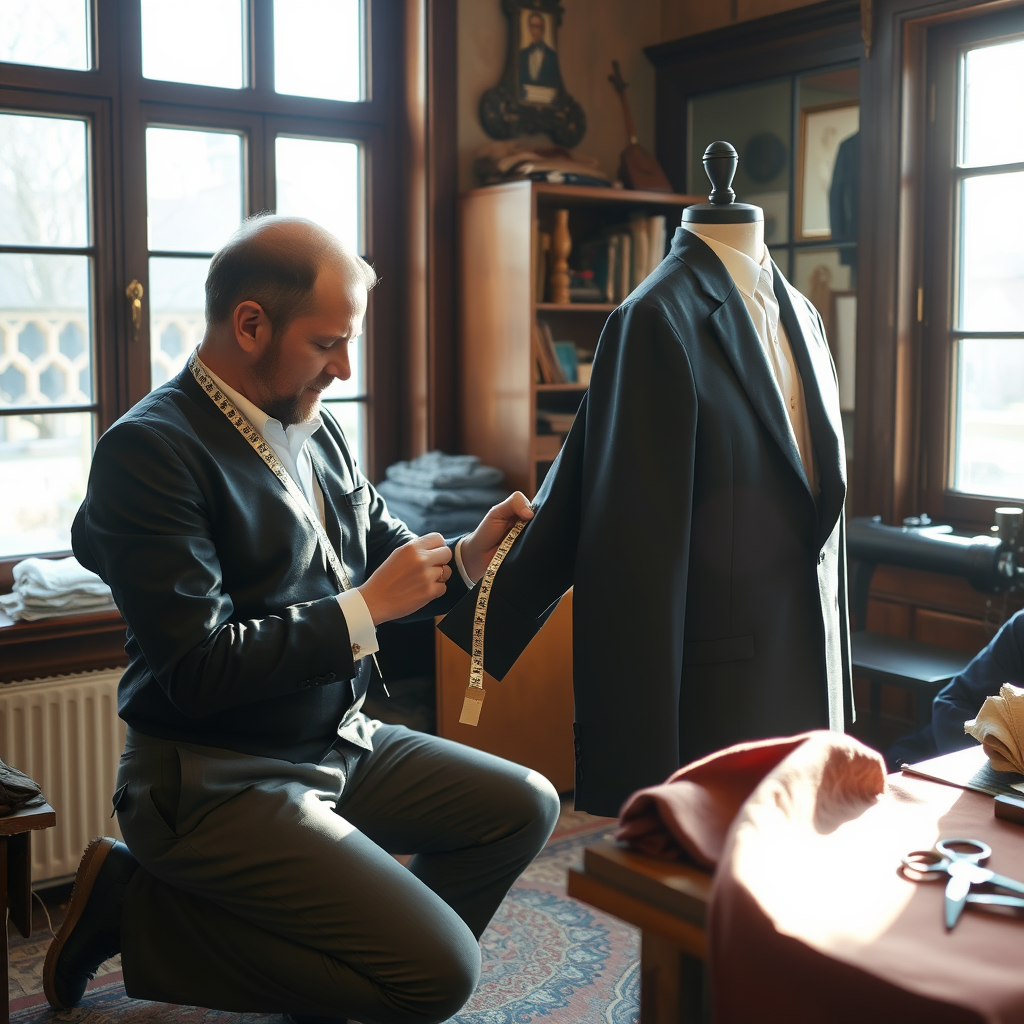
to make or change something to fit a specific need
You can tailor the app to match your team's workflow.
More examples: The course is tailored to complete beginners. • We tailored the service to each customer. • Ready-made suits are cheaper, but a tailored one fits better.
Common collocations: tailor something to your needs, a tailored solution, tailor-made
Word family: tailor (verb), tailored (adjective), tailor (noun - a person who makes clothes)
Synonyms: customize, adapt, adjust
Antonyms: standardize, generalize
Related concepts: customization, personal fit, made to order
Contexts: business services, education, software
Usage note: Common in business and marketing talk. Often used with 'to': 'tailored to their needs'. Sounds professional but not academic.
shortcut

a faster way of doing something that skips steps
There are no shortcuts to learning a language well.
More examples: Buying the software felt like a shortcut to launching faster. • He took a shortcut through the park to save ten minutes. • Cutting the research stage was a shortcut that cost us later.
Common collocations: take a shortcut, look for shortcuts, there are no shortcuts
Word family: shortcut (noun), short (adjective), cut (verb)
Synonyms: quick fix, fast track, easy way
Antonyms: long way, proper process
Related concepts: efficiency, time saving, cutting corners
Contexts: work, learning, directions
Usage note: Can be neutral (a quicker route) or slightly negative (skipping important steps). Very common in everyday speech.
Vocabulary Check
- What does 'trade-off' mean?
- A situation where you give up one thing to get another
- A special deal between two companies
- A type of business contract
- A sudden change of plan
- Which sentence uses 'outsource' correctly?
- She outsourced her homework to a friend every night.
- The company outsourced its customer service to a firm abroad.
- He outsourced the recipe because it was delicious.
- They outsourced to the beach for their holiday.
- In which situation would you call something 'a gamble'?
- When the result is completely certain
- When you follow a plan that has worked many times
- When you risk time or money on something that might fail
- When you save money by buying something cheap
- What does it mean to 'tailor' something?
- To sell it in large quantities
- To change it to fit a specific need
- To check it for mistakes
- To copy it from another company
- Which sentence uses 'shortcut' correctly?
- There are no shortcuts to becoming a good musician - you have to practise.
- She shortcut the answer because it was too long.
- The shortcut was very friendly and helpful.
- We bought a shortcut at the supermarket.
Idioms & Phrasal Verbs
add up
to increase little by little until the total is big
Small subscriptions can add up - I pay for five apps and it's expensive every month.
Usage note: No object needed - the costs add up, you don't 'add up the costs' with this meaning. · Right: the costs add up · Avoid: add up the costs (that means calculate them)
let down
to disappoint someone by not doing what you promised
The delivery service let us down twice last week, so we changed companies.
Usage note: Split it with the person: 'let me down', 'let the team down'. · Right: let me down · Avoid: let down me
Usage note: The picture is like dropping something - the person 'falls' because you didn't support them.
play it safe
to choose the option with the least risk
I usually play it safe with food when I travel - no strange street food for me!
Usage note: Very common in conversation and business talk. 'Play safe' also works, but 'play it safe' is more frequent.
from day one
from the very beginning
I liked my new job from day one - the team was so friendly.
Usage note: The picture is simple: day one is the first day. Use it for things that are true since the beginning.
Language Practice: Build vs. Buy
Practice expressing ideas about build vs. buy decisions.
- Comparing two options
- Emerging: Building is ___, but buying is ___. — Building is slow, but buying is fast.
- Developing: Building gives you ___, whereas buying gives you ___. — Building gives you full control, whereas buying gives you speed.
- Expanding: While building lets you ___ , buying means you ___ , so it really depends on ___. — While building lets you tailor every detail, buying means you depend on a supplier, so it really depends on how unique your needs are.
- Weighing pros and cons
- Emerging: The good thing is ___ , but the problem is ___. — The good thing is it's fast, but the problem is it costs more.
- Developing: On the plus side, ___ . On the other hand, ___. — On the plus side, we'd launch in weeks. On the other hand, we'd be locked into someone else's product.
- Expanding: The main advantage is ___ , though the trade-off is ___ , and that's why I'd probably ___. — The main advantage is total control, though the trade-off is losing six months of development time, and that's why I'd probably only build it if it's our core product.
- Imagining situations and consequences
- Emerging: If I had a company, I would ___. — If I had a company, I would buy the software.
- Developing: If we ___ , we would ___ , but we might ___. — If we built it ourselves, we would save money long-term, but we might fall behind our competitors.
- Expanding: If I ___ , I would ___ , unless ___ , in which case I'd probably ___. — If I ran the company, I would buy first and build later, unless the tool was central to our business, in which case I'd probably invest in building it properly.
Fill in the Blanks
Last year, our startup faced a big decision: should we build our own payment system or buy one? There was a clear _____ - building would give us control, but it would take months. In the end, we decided to _____ the job to a specialist company. Buying ready-made software felt like a _____ to launching quickly, and honestly, it worked. Of course, some people on the team thought it was a _____ - what if the supplier raised prices or shut down? But because we could _____ the settings to our customers' needs, the product felt like our own. A year later, everyone agrees it was the right call.
Word bank: trade-off, outsource, shortcut, gamble, tailor
Sentence Unscramble
- there / is / always / a / trade-off / between / speed / and / control
- many / companies / outsource / their / customer / service / to / save / money
- taking / a / shortcut / at / the / start / cost / us / months / later
Discussion Questions
Imagine you're starting a small online business, maybe selling handmade products or offering a service. You need a website and a payment system. You could hire someone, use a ready-made platform, or learn to build it yourself over several weekends.
What would you do, and why? Would you take the shortcut or build it yourself?
The food delivery company in the reading outsourced its tracking system and it worked well. But not every company makes that choice. Some famous tech companies build almost everything themselves, even when buying would be faster and cheaper.
Why do you think some companies prefer to build things themselves even when it's harder? Is it stubbornness or smart strategy?
Every big decision involves a trade-off: control versus speed, cost versus quality, time versus money. This is true in business, but also in normal life - choosing where to live, what to study, even how to spend a free Sunday.
What's a trade-off you've faced in your own life? Looking back, do you think you chose well?
The reading called buying from a supplier 'a gamble' - it feels safe at first, but risks can appear later. The same is true when we rely on other people or companies for anything important, from a landlord to a phone company to a food supplier.
Have you ever depended on something that let you down? Would you take that gamble again, or change your approach?
Suppose you became the manager of a team tomorrow. Your company needs a new customer service tool. Option A: buy a popular ready-made tool today. Option B: have your team build a custom one over six months, tailored exactly to your customers.
As the boss, which option would you choose? Would you gamble on your team or play it safe?
Knowledge Check
- Which word means 'paying another company to do work for you'?
- tailor
- gamble
- outsource
- shortcut
- True or false? A 'trade-off' means getting everything you want with no disadvantages.
- True
- False
- Which phrase completes this sentence naturally: 'Buying the software without testing it first was ___ .'
- a shortcut
- a gamble
- a tailor
- an outsource
- True or false? 'Tailor-made' describes something made to fit a specific need perfectly.
- True
- False
- Which sentence uses 'shortcut' in a slightly negative way?
- I take a shortcut through the park to work.
- There are no shortcuts to real success.
- The shortcut saved us twenty minutes.
- Google Maps found a shortcut around the traffic.
- If the costs of something 'add up', what happens?
- They become easier to calculate
- They slowly become a bigger total
- They stay exactly the same
- They go down over time
Free to use with your students: Free to teach, screen-share, print and share with your students, with a credit to PlanWise ESL. Please do not sell it or republish it as your own. What you can do with free lessons.