Saying It Kindly: The Art of Constructive Feedback
About this lesson: This is a B2 (Upper Intermediate) ESL lesson in the Workplace Communication category. It takes about 60 minutes. It includes 5 vocabulary words, 4 idioms and phrasal verbs, a reading text, comprehension questions, discussion questions and speaking patterns. Suits one-to-one or small-group online classes. Free to open and teach with no login, and it prints as a PDF.
Print just the discussion questions
How this lesson is built
This is a complete conversation lesson built on a scientific pedagogical formula, not a generic worksheet: recall prior topic vocabulary, pre-teach the new words in depth, read in context, practise active recall with flashcards and synonyms/antonyms, build accuracy with exercises, and finish with deep discussion.
- Warm-up: Discussion questions that connect the topic to the student’s own life and recall vocabulary they already know about the subject.
- Reading: A text written for this CEFR level that uses each new word two or three times in context, giving the student something meaningful to react to.
- Key vocabulary: 5 new words, pre-taught before the reading with a definition, pronunciation guide, example sentences and a picture, plus word families, usage notes, recall flashcards and synonyms/antonyms, giving a solid grounding before reading.
- Comprehension: 5 questions that check the new words: retrieval practice, not rereading.
- Idioms and phrasal verbs: Expressions taken from the reading, each with its meaning, an example and a speaking question.
- Sentence frames: 3 speaking patterns, each at three levels of support (emerging, developing, expanding) with model answers—especially helpful scaffolding for beginners and less confident speakers.
- Gap-fill: The new words again, in a shuffled order, so the student recalls them by meaning in context.
- Sentence unscramble: Natural sentences with the new words to put back in order, reinforcing grammar and collocation.
- Discussion: 5 open questions designed to talk deeply about the subject while actively using the lesson’s target vocabulary: the heart of a conversation lesson.
- Quiz: A short retrieval check that brings every new word back once more.
Unlike a generic worksheet, the new words are taught before the reading and met again in the activities, the speaking is supported at three levels and most of the time goes on the student talking. Teachers who use PlanWise ESL also get per-student vocabulary tracking (recycling earlier words into future readings and questions), a private learner dashboard with flashcards and custom lesson creation, and a downloadable study PDF.
Warm-up: Have You Ever Said the Wrong Thing?
Talk about times when giving or receiving honest opinions went well — or badly.
- When a friend asks for your honest opinion, do you always give it? Why or why not?
- Have you ever told someone the truth and immediately regretted it?
- Who gives you the most useful feedback in your life — and how do they do it?
- Is it possible to be too honest? Where would you draw the line?
- Do people in your country tend to say things directly or indirectly? Is that changing?
Reading Text: The Feedback Problem
A short article about why honest feedback is so hard to give — and what happens when we get it wrong.
Maya's colleague asked her what she thought of his presentation. She was blunt: 'Honestly, it was boring and the slides were a mess.' He was quiet for the rest of the day, and their working relationship never quite recovered. Maya hadn't lied — but she had paid a price for the way she said it.
Most of us face this problem regularly. We want to be helpful, but we also don't want to hurt anyone. Some people react by sugarcoating everything, so the real message disappears completely. Others go the opposite way and say whatever they think, then act surprised when people take it the wrong way.
Researchers who study workplace communication say the solution is to be constructive. Constructive feedback focuses on what someone can actually do next, not on their personality. 'The slides were a mess' gives no direction. 'Try putting one idea per slide' gives the person something to work with.
There is also the question of timing and tact. A tactful person chooses the right moment, often in private, and starts with something genuine before moving to the criticism. This isn't dishonesty — it's packaging. The same message, delivered well, is far more likely to be heard.
Of course, culture plays a part too. In some workplaces, blunt comments are normal and nobody is offended. In others, the same words would end a friendship. The skill, experts say, is reading the situation first — then deciding how honest to be, and how gently to say it.
Key Vocabulary
tactful

careful not to upset or offend people when you speak
She was tactful enough not to mention his mistake in front of the team.
More examples: It was tactful of you to wait until the meeting ended. • A tactful answer saved her from an awkward argument. • I try to be tactful when I comment on my friends' choices.
Common collocations: a tactful reply, be tactful about something, tactful way of saying
Word family: tact, tactfully, tactlessness
Synonyms: diplomatic, considerate, sensitive
Antonyms: tactless, insensitive
Related concepts: politeness, timing, discretion
Contexts: workplace feedback, difficult conversations, family discussions
Usage note: Used to describe people, replies, questions and behaviour. Often praised: 'That was very tactful.' The opposite, 'tactless', is a common criticism.
blunt

saying exactly what you think, without trying to be polite
To be blunt, your first draft needs a lot of work.
More examples: He's blunt, but at least you always know where you stand with him. • Her blunt reply surprised everyone in the room. • Let me be blunt with you: this plan won't work.
Common collocations: to be blunt, a blunt reply, put it bluntly
Word family: bluntly, bluntness
Synonyms: direct, frank, straight-talking
Antonyms: tactful, evasive
Related concepts: honesty, rudeness, candour
Contexts: performance reviews, arguments, close friendships
Usage note: Can be negative (rude) or positive (refreshingly honest) depending on tone and context. 'To put it bluntly' is a common phrase to introduce an uncomfortable truth.
constructive

helpful and intended to improve something, not just criticize
Try to give constructive comments, not just 'I didn't like it'.
More examples: Her manager always gives constructive feedback after a project. • The meeting was constructive — we left with clear next steps. • Instead of complaining, let's have a constructive discussion.
Common collocations: constructive feedback, constructive criticism, a constructive discussion
Word family: construct, constructively, construction
Synonyms: helpful, productive, useful
Antonyms: destructive, unhelpful
Related concepts: feedback, improvement, coaching
Contexts: performance reviews, teaching, team projects
Usage note: Very common at work: 'constructive criticism' is a set phrase. Often contrasted with 'destructive' comments. Note: it describes comments, criticism, feedback, discussions — not usually people.
sugarcoat

to make bad news sound nicer than it really is
Don't sugarcoat it — just tell me if I got the job or not.
More examples: The report sugarcoated the company's financial problems. • She didn't sugarcoat her opinion of my cooking. • Doctors sometimes sugarcoat a diagnosis to protect the patient.
Common collocations: sugarcoat the truth, don't sugarcoat it, a sugarcoated version
Word family: sugarcoated, sugarcoating
Synonyms: soften, play down, gloss over
Antonyms: blunt, tell it straight
Related concepts: bad news, white lies, honesty
Contexts: doctor visits, job rejections, performance reviews
Usage note: Almost always slightly negative — it suggests hiding the truth. Very common in the phrase 'don't sugarcoat it', meaning 'be honest with me'.
take it the wrong way
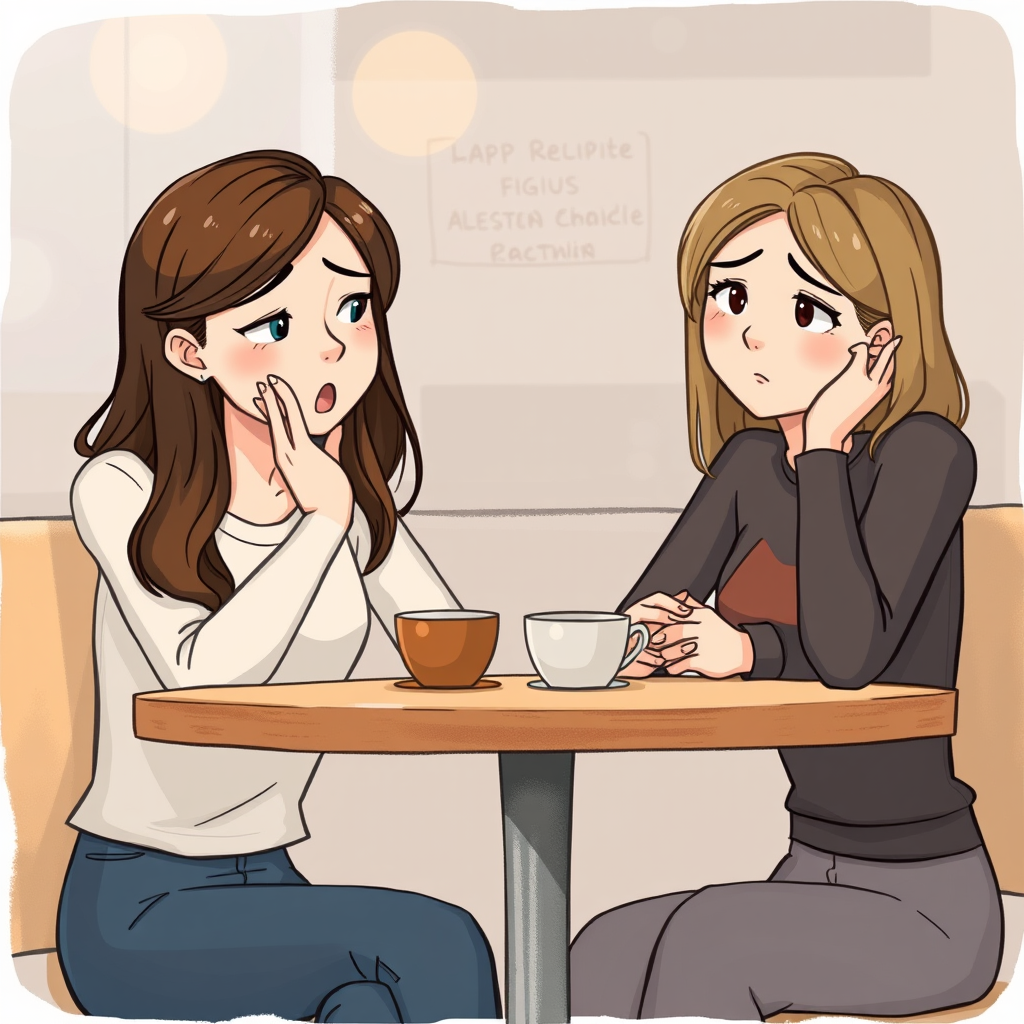
to understand a comment as an insult when it wasn't meant that way
Don't take it the wrong way, but your essay needs restructuring.
More examples: I hope you don't take this the wrong way — I'm only trying to help. • He took my joke the wrong way and stopped speaking to me. • She said it kindly, so nobody took it the wrong way.
Common collocations: don't take it the wrong way, take this the wrong way, but..., took my comment the wrong way
Word family: take something personally, misunderstand, get the wrong idea
Synonyms: misunderstand, get offended, take personally
Antonyms: take it well, see the good intention
Related concepts: miscommunication, intent vs impact, apologies
Contexts: giving criticism, jokes, advice from friends
Usage note: Almost always used to prevent offence, usually before or after a critical comment: 'Don't take this the wrong way, but...'. Very common in spoken English.
Vocabulary Check
- What does 'tactful' mean?
- Speaking loudly and clearly
- Careful not to upset people
- Very funny
- Completely honest with everyone
- Which sentence uses 'blunt' correctly?
- She gave a blunt answer and everyone felt uncomfortable.
- The blunt soup was delicious.
- He blunt the door open angrily.
- They painted the wall a blunt colour.
- In which situation would you use 'constructive'?
- When you want to ignore someone
- When you want to end a friendship
- When you want to help someone improve
- When you want to win an argument
- What does it mean to 'sugarcoat' bad news?
- To make it sound nicer than it is
- To repeat it several times
- To say it as loudly as possible
- To write it in an email
- If someone 'takes your comment the wrong way', what happened?
- They wrote your comment down
- They thought you meant it as an insult
- They agreed with you completely
- They forgot what you said
Idioms & Phrasal Verbs
pay a price
to suffer a bad result because of something you did
He paid a price for arriving late to the meeting — the boss gave the project to someone else.
Usage note: The picture is like paying money: your action costs you something.
Usage note: Common in news headlines, e.g. 'He paid a price for his mistake'.
go the opposite way
to do the opposite of what others do
Most people stay quiet in meetings, but she always goes the opposite way and speaks her mind.
Usage note: 'Go' here means 'move or act', not just walking somewhere.
Usage note: You can also say 'go the other way' — same meaning.
play a part
to have an influence on something
Luck played a part in getting the job, but so did hard work.
Usage note: Often used with 'big' or 'important': 'Personality plays a big part in how we give feedback.'
Usage note: Very common in news and discussions about causes of things.
stick with you
to stay in your memory for a long time
My first boss's advice really stuck with me — I still think about it years later.
Usage note: The picture is something sticky that won't fall off — like glue in your memory.
Usage note: Informal but very common in conversation. Past form: 'stuck'.
Language Practice: Giving Feedback Kindly
Practice expressing ideas about giving feedback kindly.
- Softening criticism before giving it
- Emerging: Don't take this the wrong way, but ___. — Don't take this the wrong way, but the presentation was a bit long.
- Developing: I really like ___, and I think ___ could be even better if ___. — I really like your introduction, and I think the ending could be even better if you summed up your main point.
- Expanding: Overall it works well, though if I were you, I'd ___ because ___. — Overall it works well, though if I were you, I'd cut the second example because it repeats the first one.
- Comparing direct and indirect communication styles
- Emerging: Some people are very direct, but I prefer ___. — Some people are very direct, but I prefer a gentler style.
- Developing: Direct feedback is ___ because ___, but indirect feedback is ___ because ___. — Direct feedback is faster because you know exactly what to fix, but indirect feedback is safer because nobody loses face.
- Expanding: While some cultures see bluntness as honesty, others see it as rude, so I think ___. — While some cultures see bluntness as honesty, others see it as rude, so I think you have to read the person before you speak.
- Imagining difficult feedback situations
- Emerging: If a friend asked me, I would ___. — If a friend asked me, I would tell the truth gently.
- Developing: If I had to give that feedback, I would ___ and then ___. — If I had to give that feedback, I would start with something positive and then suggest one clear change.
- Expanding: If I were in that situation, I'd probably ___, unless ___, in which case I'd ___. — If I were in that situation, I'd probably message them privately, unless they asked in front of others, in which case I'd keep it vague and follow up later.
Fill in the Blanks
Last month, my manager asked me to review a new team member's report. I wanted to be honest, but I didn't want her to _____ it the wrong way, so I planned my words carefully. First, I tried to be _____ about the weakest section — I mentioned it privately, not in the meeting. I didn't _____ the problem, though; I told her clearly that the data was confusing. To be _____, her first version needed a lot of work, but I explained exactly why. In the end, my comments were _____: she rewrote the report, and this time it was excellent.
Word bank: tactful, blunt, constructive, sugarcoat, take
Sentence Unscramble
- don't / take / this / the / wrong / way / but / your / slides / need / work
- she / was / tactful / enough / not / to / mention / his / mistake
- to / be / blunt / the / first / draft / needs / a / lot / of / work
Discussion Questions
Imagine a close friend shows you a photo of their new haircut and asks, 'What do you think?' You honestly think it looks terrible. Your answer could make their day — or ruin it.
What would you actually say to your friend? Would you sugarcoat it or tell the truth? Why?
At work, some managers give feedback in a very direct way — 'This is wrong, fix it.' Others wrap the same message in praise and gentle hints. Both styles get results, but people react to them very differently.
Which style works better on you: blunt or tactful? Has a boss or teacher ever given you feedback in a way that really stuck with you?
Online reviews and comments are famous for being brutally honest. People write things online they would never say to someone's face. Some say this honesty is useful; others say it's just cruelty with a keyboard.
Why do you think people are blunter online than in person? Have you ever written — or received — a comment you regret?
In some families, criticism is a sign of love: 'You've gained weight' is said with affection. In others, the same sentence would start a war. Culture and family habits shape how direct we are, often without us noticing.
How direct is feedback in your family or culture? Have you ever had to change your style when talking to people from somewhere else?
Imagine your best friend is about to quit a stable job to start a business, and you think the plan is risky and half-finished. They ask for your honest opinion before signing anything tomorrow.
If you were in this situation, what exactly would you say — and what would you avoid saying?
Knowledge Check
- Your colleague's presentation was weak. Which comment is the most constructive?
- 'That was boring.'
- 'Try opening with a story next time — it would grab attention.'
- 'Presentations aren't really your thing.'
- 'I've seen better.'
- 'Don't take this the wrong way, but...' is used to:
- start an argument
- soften a critical comment
- end a conversation
- give a compliment
- True or false: 'blunt' always means rude.
- True
- False
- Which word means 'making bad news sound nicer than it is'?
- constructive
- tactful
- sugarcoating
- blunt
- A tactful person would most likely give criticism:
- in front of the whole team
- in private, at a good moment
- in a group chat
- never at all
- If someone 'paid a price' for a comment they made, what happened?
- They spent a lot of money on it
- They suffered a bad result because of it
- They got a reward for being honest
- They forgot what they said
Free to use with your students: Free to teach, screen-share, print and share with your students, with a credit to PlanWise ESL. Please do not sell it or republish it as your own. What you can do with free lessons.