Networking and Introducing Your Work at International Conferences
About this lesson: This is a B2 (Upper Intermediate) ESL lesson in the Business English category. It takes about 60 minutes. It includes 5 vocabulary words, 4 idioms and phrasal verbs, a reading text, comprehension questions, discussion questions and speaking patterns. Suits one-to-one or small-group online classes. Free to open and teach with no login, and it prints as a PDF.
Print just the discussion questions
How this lesson is built
This is a complete conversation lesson built on a scientific pedagogical formula, not a generic worksheet: recall prior topic vocabulary, pre-teach the new words in depth, read in context, practise active recall with flashcards and synonyms/antonyms, build accuracy with exercises, and finish with deep discussion.
- Warm-up: Discussion questions that connect the topic to the student’s own life and recall vocabulary they already know about the subject.
- Reading: A text written for this CEFR level that uses each new word two or three times in context, giving the student something meaningful to react to.
- Key vocabulary: 5 new words, pre-taught before the reading with a definition, pronunciation guide, example sentences and a picture, plus word families, usage notes, recall flashcards and synonyms/antonyms, giving a solid grounding before reading.
- Comprehension: 5 questions that check the new words: retrieval practice, not rereading.
- Idioms and phrasal verbs: Expressions taken from the reading, each with its meaning, an example and a speaking question.
- Sentence frames: 3 speaking patterns, each at three levels of support (emerging, developing, expanding) with model answers—especially helpful scaffolding for beginners and less confident speakers.
- Gap-fill: The new words again, in a shuffled order, so the student recalls them by meaning in context.
- Sentence unscramble: Natural sentences with the new words to put back in order, reinforcing grammar and collocation.
- Discussion: 5 open questions designed to talk deeply about the subject while actively using the lesson’s target vocabulary: the heart of a conversation lesson.
- Quiz: A short retrieval check that brings every new word back once more.
Unlike a generic worksheet, the new words are taught before the reading and met again in the activities, the speaking is supported at three levels and most of the time goes on the student talking. Teachers who use PlanWise ESL also get per-student vocabulary tracking (recycling earlier words into future readings and questions), a private learner dashboard with flashcards and custom lesson creation, and a downloadable study PDF.
Warm-up: Talking to Strangers
Let's start by thinking about meeting new people in professional situations.
- Have you ever been to a conference or a big work event? What was it like?
- Do you find it easy or difficult to talk to strangers? Why?
- What do you usually say when you meet someone new at work?
- Do you think networking is a useful skill, or does it feel fake to you?
- If you could meet anyone in your field, who would it be and what would you ask them?
Reading Text: The Coffee Break That Changed Everything
A short story about a nervous researcher at her first international conference.
Maya arrived at her first international conference feeling nervous. She knew her research well, but the idea of talking to hundreds of strangers scared her. During the opening session, she stood alone by the coffee table, checking her phone and hoping nobody would speak to her.
Then a woman next to her smiled and made some small talk about the weather and the long flight. It was nothing important, but it relaxed Maya immediately. The woman, Dr. Chen, turned out to be a well-known expert in Maya's field. A simple icebreaker had opened a door.
They talked for twenty minutes, and Maya felt a real rapport growing between them. They laughed about conference food and shared stories about difficult projects. When Dr. Chen asked about Maya's work, Maya gave a short, clear pitch: two sentences about what she studied and why it mattered.
"That's exactly what my team needs," Dr. Chen said, and she invited Maya to visit her lab in Singapore. Maya almost couldn't believe it. She had spent months preparing her presentation, but a casual conversation had done more for her career in twenty minutes.
A week later, Maya followed up with a friendly email, thanking Dr. Chen and attaching her paper. They now work together on a project. Maya's advice to anyone attending a conference: don't hide by the coffee table. The best opportunities often start with the smallest conversations.
Key Vocabulary
small talk

light, friendly conversation about unimportant topics
We made small talk about the traffic before the meeting started.
More examples: I'm not great at small talk, but I'm getting better. • He used small talk with the taxi driver to practice his Spanish. • Do you make small talk with your neighbors?
Common collocations: make small talk, good at small talk, hate small talk
Word family: small talk (uncountable noun)
Synonyms: chit-chat, light conversation, chat
Antonyms: deep conversation, serious discussion
Related concepts: politeness, first meetings, waiting rooms
Contexts: conferences, elevators, parties
Usage note: Use for polite, light conversation with people you don't know well, often at events or before meetings. Always uncountable.
icebreaker
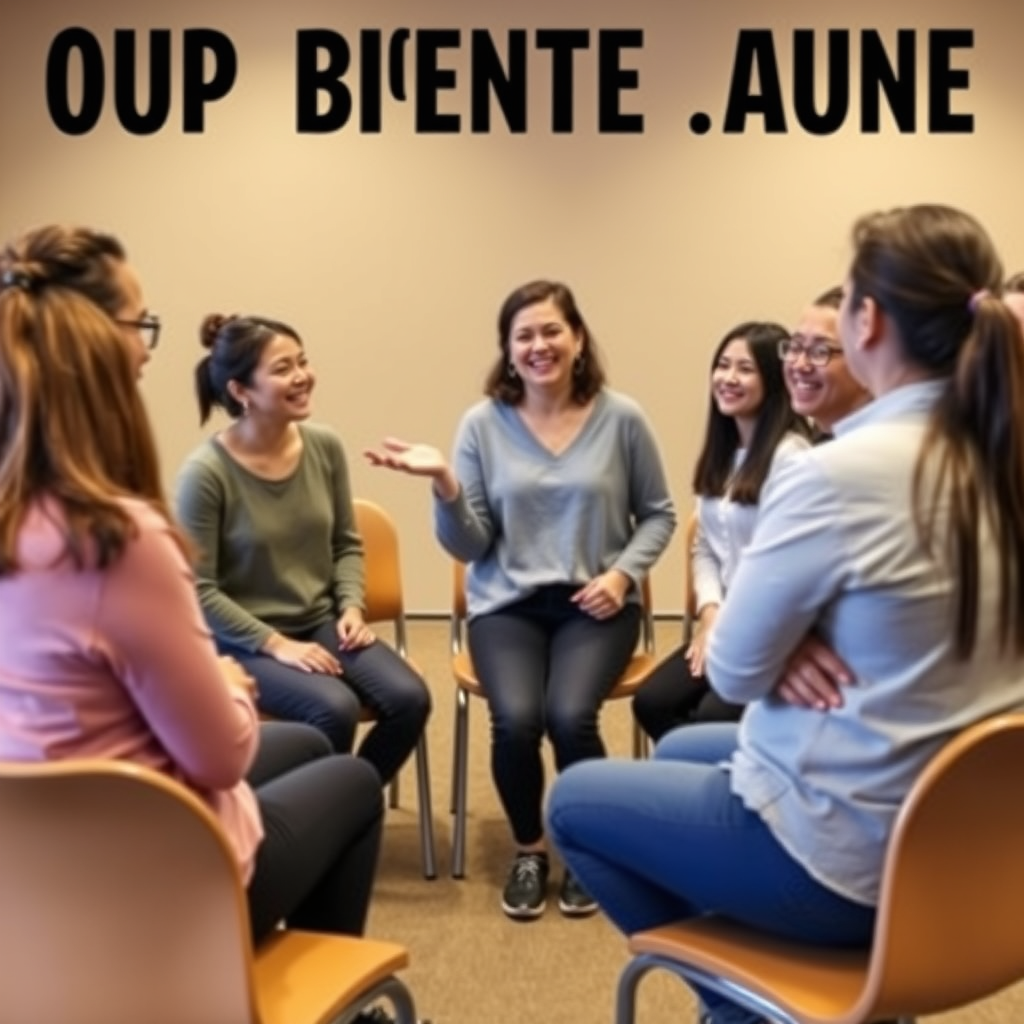
a comment, question or game that helps people start talking
Asking about someone's luggage is a classic icebreaker at airports.
More examples: The trainer used a fun icebreaker to start the workshop. • A good icebreaker takes the pressure off everyone. • Her joke was the perfect icebreaker.
Common collocations: a good icebreaker, use an icebreaker, icebreaker game
Word family: break the ice (idiom)
Synonyms: conversation starter, opener, warm-up activity
Antonyms: awkward silence, cold shoulder
Related concepts: first impressions, team building, introductions
Contexts: workshops, parties, first days at work
Usage note: Use for anything that reduces awkwardness when strangers meet: a question, a joke or a group game.
rapport

a friendly, comfortable connection between people
She built a good rapport with her new clients in one meeting.
More examples: There was instant rapport between the two colleagues. • Good teachers build rapport with their students quickly. • I felt a real rapport with him; we'd had similar experiences.
Common collocations: build rapport, establish rapport, good rapport with someone
Word family: build rapport (verb phrase)
Synonyms: connection, understanding, chemistry
Antonyms: tension, distance
Related concepts: trust, teamwork, friendship
Contexts: business meetings, teaching, networking
Usage note: Use to describe mutual comfort and trust, especially in work relationships. Often with 'build' or 'have'.
pitch

a short talk explaining an idea to persuade people
He gave a thirty-second pitch about his new app.
More examples: Her pitch was so clear that everyone understood the project. • Investors listened to five pitches that morning. • Practice your pitch until it sounds natural.
Common collocations: give a pitch, sales pitch, elevator pitch
Word family: pitch (verb), pitch deck (noun)
Synonyms: presentation, proposal, sales talk
Antonyms: ramble, monologue
Related concepts: persuasion, startups, job interviews
Contexts: investor meetings, conferences, job fairs
Usage note: Use for short, persuasive presentations of an idea, product or yourself. An 'elevator pitch' is extremely short, like a lift ride.
follow up

to contact someone again after a first meeting
I followed up with an email two days after the conference.
More examples: Don't forget to follow up on that conversation. • She always follows up with new contacts within a week. • He followed up our meeting with a phone call.
Common collocations: follow up with an email, follow up on a conversation, send a follow-up
Word family: follow-up (noun/adjective), follow-up email (noun phrase)
Synonyms: get back to, recontact, check in
Antonyms: ignore, drop contact
Related concepts: email, professional relationships, networking
Contexts: after conferences, job applications, sales
Usage note: Use when continuing contact after a meeting or conversation. Verb: two words. Noun: hyphenated.
Vocabulary Check
- What does 'small talk' mean?
- A quiet whisper
- Light conversation about unimportant topics
- A very short speech
- A private discussion
- In which situation would you use an 'icebreaker'?
- When ending a phone call
- When you want to finish a meeting early
- When strangers meet and need to start talking
- When you disagree with someone
- What does 'rapport' mean?
- A business contract
- A friendly, comfortable connection between people
- A formal presentation
- A written report
- Which sentence uses 'pitch' correctly?
- She gave a short pitch about her project to the investors.
- He pitched the report into the drawer.
- They made a pitch about the rainy weather.
- I pitched my homework last night.
- What does it mean to 'follow up' with someone?
- To walk behind them
- To contact them again after a first meeting
- To copy their work
- To argue with them
Idioms & Phrasal Verbs
turn out (to be)
to become known in the end; the real result
The new job turned out to be harder than I expected, but I love it.
Usage note: It cannot be split: say 'it turned out well', not 'it turned well out'.
open a door
to create a new opportunity or chance
Learning English opened a door to jobs in other countries.
Usage note: The picture: a door that was closed is now open, so you can walk through it. You can also say 'open doors' for many chances.
draw the line
to set a limit on what you will accept or do
I don't mind helping colleagues, but I draw the line at doing their whole project.
Usage note: The picture: drawing a line on the floor that you will not cross. Common structure: 'draw the line at + doing something'.
get along with
to have a friendly relationship with someone
I get along with my new manager really well, even though we're very different.
Usage note: The small word 'with' needs a person: 'get along with her', not 'get along her'. Informal and very common in conversation.
Language Practice: Talking About Networking
Practice expressing your ideas about meeting people and introducing your work.
- Comparing your views with others
- Emerging: Some people say ___, but I think ___. — Some people say networking is fake, but I think it's useful.
- Developing: Some people say ___, but I think ___ because ___. — Some people say networking feels fake, but I think it's useful because you meet people you'd never find online.
- Expanding: Although many people say ___, I'd argue that ___, especially when ___. — Although many people say networking feels fake, I'd argue that it's just making friends professionally, especially when you genuinely share interests.
- Introducing your work briefly
- Emerging: I work in ___. Basically, I ___. — I work in marketing. Basically, I help companies sell products online.
- Developing: I work in ___, where I ___. At the moment, I'm ___. — I work in software, where I design mobile apps. At the moment, I'm building a fitness app.
- Expanding: I work in ___, where my main focus is ___. Recently I've been ___, and I'm hoping to ___ next. — I work in research, where my main focus is water quality. Recently I've been testing rivers in my region, and I'm hoping to publish my results next year.
- Imagining situations and hypothetical choices
- Emerging: If I met ___, I would ___. — If I met a famous scientist, I would ask for advice.
- Developing: If I met ___ at a conference, I would ___ and then ___. — If I met a famous researcher at a conference, I would introduce myself and then ask about their latest project.
- Expanding: If I met ___ at a conference, I'd probably ___, because ___, and afterwards I'd ___. — If I met a leading expert at a conference, I'd probably start with small talk, because jumping straight into business feels rude, and afterwards I'd follow up with an email the same week.
Fill in the Blanks
Diego was nervous about his first big work event in Berlin. He didn't know anyone, so he started with some _____ about the food and the city. His friendly question about the conference app worked well as an _____, and soon he was chatting with a group of engineers. He felt a real _____ with one of them, a designer named Lena. When she asked about his job, he gave a clear, confident _____ about his startup. A few days later, he _____ed with an email, and now they meet online every month.
Word bank: small talk, icebreaker, rapport, pitch, follow up
Sentence Unscramble
- good / small / talk / is / a / way / to / start / a / conversation
- she / built / a / strong / rapport / with / her / new / clients
- always / follow / up / with / an / email / after / a / conference
Discussion Questions
At conferences, coffee breaks are often where the real networking happens. Some people love walking up to strangers and chatting. Others find it uncomfortable and prefer to stay with people they already know. Maya's story shows that one small conversation can matter a lot.
How do you feel about starting a conversation with a stranger at an event? What do you usually talk about first?
Maya gave a two-sentence pitch about her work and it impressed Dr. Chen immediately. Many people prepare long, complicated descriptions of their jobs, but the shortest versions are often the most powerful. An 'elevator pitch' should take less than thirty seconds.
Can you introduce your work or studies in two sentences right now? What would you change to make it shorter and clearer?
Some cultures see small talk as an important part of building trust before any business. In others, people prefer to get straight to the point. When people from these cultures meet at international events, they sometimes misunderstand each other completely.
Is small talk common in your country or workplace? Do you think it's a waste of time or a useful skill?
Maya's career changed because she followed up with one email. Most people collect business cards at events and then never contact anyone again. Experts say the follow-up matters more than the first meeting itself.
If you collected five interesting contacts at a conference this weekend, what would you do next week? Would you send emails, or would you feel too shy?
Some people say networking is just making friends with a purpose. Others say it feels fake and uncomfortable, like pretending to like people for career benefits. Maya's story suggests the truth might be somewhere in between.
Do you think networking is a genuine skill or just a polite word for using people? Where would you draw the line?
Knowledge Check
- Which phrase means 'light conversation about unimportant topics'?
- A pitch
- Small talk
- A follow-up
- An icebreaker
- True or false: 'rapport' means a formal written agreement between two companies.
- True
- False
- What is an 'elevator pitch'?
- A speech given inside a real elevator
- A very short talk explaining your idea
- A long formal presentation
- A type of business email
- Which sentence uses 'follow up' correctly?
- I followed up the meeting with a short email.
- I followed up the coffee this morning.
- She followed up her boss to the station.
- We followed up the weather all week.
- True or false: an 'icebreaker' is something that makes conversation harder to start.
- True
- False
- Your friend says: "I don't mind parties, but I draw the line at karaoke." What does she mean?
- She loves singing karaoke at parties.
- She refuses to sing karaoke, even though she likes parties.
- She never goes to parties at all.
- She wants you to teach her karaoke.
Free to use with your students: Free to teach, screen-share, print and share with your students, with a credit to PlanWise ESL. Please do not sell it or republish it as your own. What you can do with free lessons.