Polite Follow-Up and Thank-You Emails After an Interview
About this lesson: This is a B1 (Intermediate) ESL lesson in the Workplace Communication category. It takes about 60 minutes. It includes 5 vocabulary words, 3 phrasal verbs and expressions, a reading text, comprehension questions, discussion questions and speaking patterns. Suits one-to-one or small-group online classes. Free to open and teach with no login, and it prints as a PDF.
Print just the discussion questions
How this lesson is built
This is a complete conversation lesson built on a scientific pedagogical formula, not a generic worksheet: recall prior topic vocabulary, pre-teach the new words in depth, read in context, practise active recall with flashcards and synonyms/antonyms, build accuracy with exercises, and finish with deep discussion.
- Warm-up: Discussion questions that connect the topic to the student’s own life and recall vocabulary they already know about the subject.
- Reading: A text written for this CEFR level that uses each new word two or three times in context, giving the student something meaningful to react to.
- Key vocabulary: 5 new words, pre-taught before the reading with a definition, pronunciation guide, example sentences and a picture, plus word families, usage notes, recall flashcards and synonyms/antonyms, giving a solid grounding before reading.
- Comprehension: 5 questions that check the new words: retrieval practice, not rereading.
- Idioms and phrasal verbs: Expressions taken from the reading, each with its meaning, an example and a speaking question.
- Sentence frames: 3 speaking patterns, each at three levels of support (emerging, developing, expanding) with model answers—especially helpful scaffolding for beginners and less confident speakers.
- Gap-fill: The new words again, in a shuffled order, so the student recalls them by meaning in context.
- Sentence unscramble: Natural sentences with the new words to put back in order, reinforcing grammar and collocation.
- Discussion: 5 open questions designed to talk deeply about the subject while actively using the lesson’s target vocabulary: the heart of a conversation lesson.
- Quiz: A short retrieval check that brings every new word back once more.
Unlike a generic worksheet, the new words are taught before the reading and met again in the activities, the speaking is supported at three levels and most of the time goes on the student talking. Teachers who use PlanWise ESL also get per-student vocabulary tracking (recycling earlier words into future readings and questions), a private learner dashboard with flashcards and custom lesson creation, and a downloadable study PDF.
Warm-Up: After the Interview
Talk about what happens after a job interview and how small messages can make a big difference.
- Have you ever had a job interview? How did it go?
- What do you usually do after an important meeting or interview?
- Do you think sending a thank-you email is a good idea? Why?
- How do you feel when someone says thank you to you?
- Do you write emails in English at work or school? Is it easy or difficult?
Reading Text: The Email That Got the Job
A short story about Maria, who sent a thank-you email after a job interview. Read it and think about what you would do.
Last month, Maria had a job interview at a travel company. The interview went well, but she was nervous. She really wanted the job, so she decided to follow up with an email the next morning.
In her email, she wrote: 'Thank you for the opportunity to interview yesterday. I enjoyed learning about your team.' She kept the message short and polite. She did not ask for an answer or push for a decision.
Maria also used the email to remind the manager about her skills. She wrote one sentence about a project she had done before. This helped the manager remember her among many other people.
Two days later, the manager replied. He wrote that he appreciated her quick message, because most people never send one. He said it showed she was serious about the job.
A week after that, Maria got a phone call with good news: she got the job! She believes the thank-you email made a real difference. It was a small thing, but it took only ten minutes to write.
Key Vocabulary
follow up

to contact someone again after a meeting or message
I will follow up with an email after the interview.
More examples: She followed up on her application with a phone call. • Can you follow up on that email from last week? • I always follow up after meeting someone new at work.
Common collocations: follow up on an email, follow up with a call, send a follow-up email
Word family: follow-up (noun), follow-up (adjective)
Synonyms: check in, get back to, contact again
Antonyms: ignore, drop it
Related concepts: email, job application, customer service
Contexts: work emails, job hunting, business meetings
Usage note: Use 'follow up' as a verb (two words) and 'follow-up' as a noun or adjective (with a hyphen). Very common in work emails.
polite

showing respect and good manners to other people
She wrote a short, polite email to the manager.
More examples: It is polite to say thank you after an interview. • He was very polite to the receptionist. • A polite question is better than an angry one.
Common collocations: a polite email, polite request, be polite to someone
Word family: politely (adverb), politeness (noun), impolite (adjective)
Synonyms: respectful, well-mannered, courteous
Antonyms: rude, impolite
Related concepts: manners, thank-you notes, professional emails
Contexts: emails, customer service, meeting new people
Usage note: Use 'polite' to describe people, messages and behaviour. In emails, polite phrases include 'Could you please...' and 'Thank you for...'.
appreciate

to be thankful for something someone does
The manager appreciated her quick message.
More examples: I appreciate your help with this project. • She appreciates honest feedback from her team. • We would appreciate a reply by Friday.
Common collocations: I appreciate your time, greatly appreciate, appreciate the opportunity
Word family: appreciation (noun), appreciative (adjective)
Synonyms: be grateful for, be thankful for, value
Antonyms: take for granted, ignore
Related concepts: gratitude, thank-you emails, kindness
Contexts: work emails, saying thanks, professional relationships
Usage note: Common in polite emails: 'I would appreciate it if you could reply.' The thing you appreciate usually comes right after the verb.
opportunity

a chance to do something good or important
Thank you for the opportunity to interview for the job.
More examples: This job is a great opportunity for her. • I missed the opportunity to ask my question. • Studying abroad is a big opportunity.
Common collocations: a great opportunity, miss an opportunity, the opportunity to do something
Word family: opportunities (plural noun)
Synonyms: chance, opening, possibility
Antonyms: missed chance, closed door
Related concepts: jobs, interviews, career growth
Contexts: job interviews, studying, business
Usage note: Often used with 'to' plus a verb: 'the opportunity to learn'. Very common in job emails and interviews.
remind
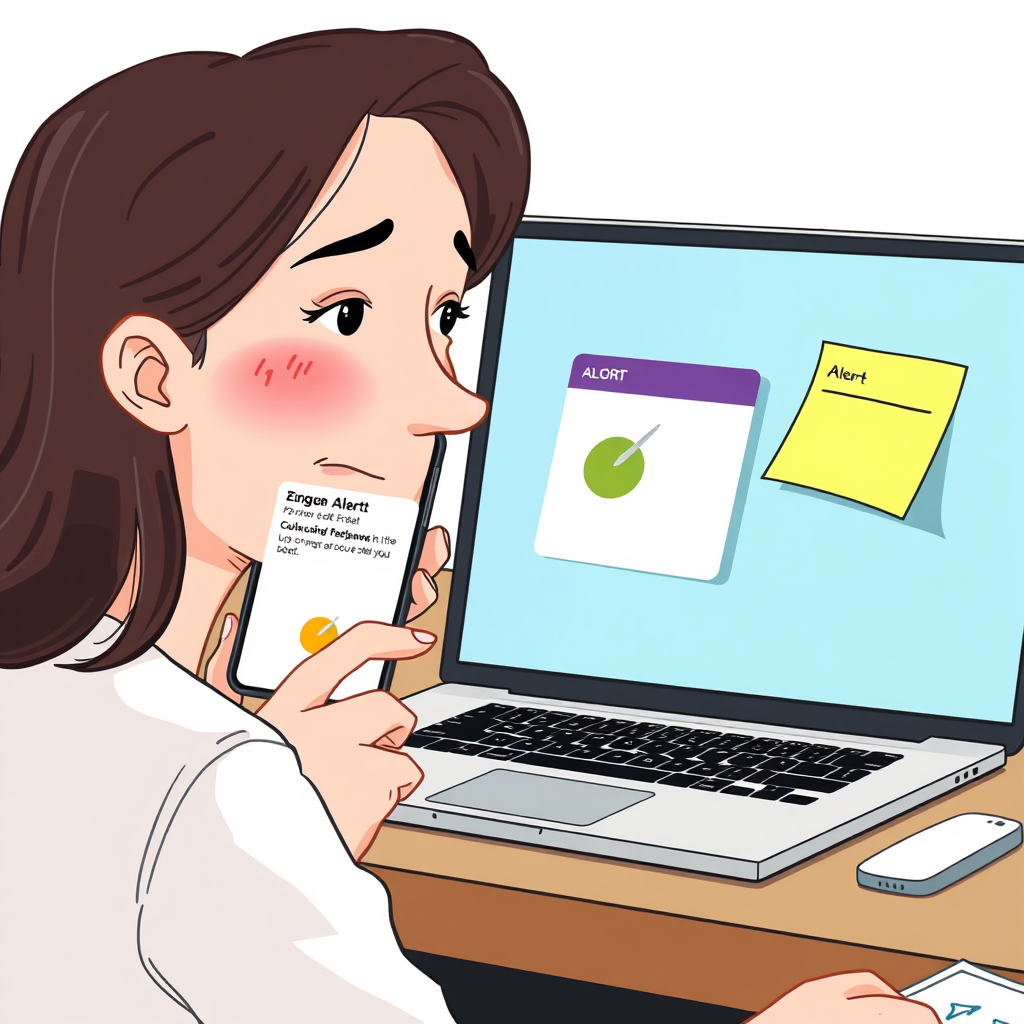
to help someone remember something
She used the email to remind the manager about her skills.
More examples: Please remind me to send the report tomorrow. • The photo reminds me of my old school. • He reminded his boss about the meeting.
Common collocations: remind someone about something, remind someone to do something, send a reminder
Word family: reminder (noun)
Synonyms: prompt, jog someone's memory
Antonyms: forget, ignore
Related concepts: memory, notes, deadlines
Contexts: work emails, daily planning, school
Usage note: Two patterns: 'remind someone about something' and 'remind someone to do something'. Careful: 'remind' is not the same as 'remember'.
Vocabulary Check
- What does 'follow up' mean?
- To contact someone again after a meeting or message
- To walk behind someone
- To delete an old email
- To start a completely new project
- Which sentence uses 'appreciate' correctly?
- I appreciate you for helping me with the report.
- I appreciate your help with the report.
- I appreciate to your help with the report.
- I am appreciate your help with the report.
- In which situation would you use the word 'polite'?
- When you shout at a friend
- When you say thank you and please
- When you forget a meeting
- When you arrive very late without a reason
- What is an 'opportunity'?
- A problem you must solve
- A rule at work
- A chance to do something good
- A type of email
- Which sentence uses 'remind' correctly?
- Please remind me about the meeting tomorrow.
- Please remind to me the meeting tomorrow.
- Please remind the meeting tomorrow.
- Please remind me the meeting is tomorrow about.
Phrasal Verbs & Expressions
go well
to happen in a good or successful way
I hope your meeting goes well today.
Usage note: Use it for events and situations, not for people: · Right: The interview went well. · Avoid: I went well at the interview.
Usage note: The opposite is 'go badly' or 'go wrong'.
push for
to try hard to make someone give you something or decide
Don't push for an answer the next day. Wait a little.
Usage note: The small word 'for' shows what you want: push FOR a decision, FOR more money.
make a difference
to change a situation or result in a good way
Saying thank you really makes a difference to people.
Usage note: Often used with 'a big' or 'a real': 'It made a big difference.'
Language Practice: Talking About Follow-Up Emails
Practice expressing ideas about polite emails and follow-up messages.
- Giving an opinion with a reason
- Emerging: I think sending a thank-you email is ___ because ___. — I think sending a thank-you email is good because it shows you care.
- Developing: In my opinion, it's a good idea to ___ after an interview because ___. — In my opinion, it's a good idea to follow up after an interview because it shows you are serious.
- Expanding: I believe following up is important because ___, and it also shows ___. — I believe following up is important because it keeps you in the manager's mind, and it also shows good manners.
- Describing cause and effect
- Emerging: When I send a polite email, the company ___. — When I send a polite email, the company remembers me.
- Developing: When people follow up after an interview, they usually ___. — When people follow up after an interview, they usually look more professional.
- Expanding: When someone reminds the manager about their skills, it can help them ___ because ___. — When someone reminds the manager about their skills, it can help them get the job because the manager remembers their best work.
- Making polite requests in emails
- Emerging: Thank you for the opportunity to ___. — Thank you for the opportunity to interview for the job.
- Developing: Could you please tell me ___? I would appreciate it. — Could you please tell me when you will make a decision? I would appreciate it.
- Expanding: I would appreciate it if you could ___ when you have ___ because ___. — I would appreciate it if you could let me know your decision when you have made it because I am planning my next steps.
Fill in the Blanks
Last week, Daniel had an interview at a hotel, and he really wanted the job. The next morning, he decided to _____ with a short email. In the email, he wrote: 'Thank you for the _____ to meet you yesterday.' He wanted to sound _____, so he did not ask for an answer too quickly. He also used one sentence to _____ the manager about his experience with customers. A few days later, the manager replied and said she _____d his message, because most people never send one.
Word bank: follow up, opportunity, polite, remind, appreciate
Sentence Unscramble
- thank / you / for / the / opportunity / to / interview / yesterday
- i / will / follow / up / with / a / polite / email / tomorrow
- please / remind / me / to / send / the / thank-you / email
Discussion Questions
Maria sent a thank-you email after her interview, and the manager said most people never send one. A short message took only ten minutes, but it helped her get the job. Small actions can sometimes have big results.
Do you think a thank-you email can really change a hiring decision? Why or why not?
Some people write long emails with many details. Others write two short sentences and stop. In emails after interviews, the length really matters, because managers are busy and read many messages.
Is it better to write a short email or a longer one after an interview? Why?
Imagine you had an interview last Monday and the company said they would answer 'soon'. Now it is Friday and you have heard nothing. You are starting to worry, but you don't want to sound pushy.
Would you follow up and ask about the decision, or wait longer? Why?
In some countries, people write very direct messages. In others, messages are softer and more formal. When you write in English, you may need to use a style that is different from your own language.
Is it easy or difficult for you to sound polite in English emails? What is hard about it?
Maria used her email to remind the manager about a project she had done before. Some people think this is smart. Others think it sounds like showing off. It depends on how you do it.
Would you remind the manager about your skills in a thank-you email, or keep it simple? Why?
Knowledge Check
- What should a follow-up email after an interview usually do?
- Ask for a higher salary
- Thank the interviewer and stay polite
- Complain about the interview questions
- Send your CV again with no message
- True or false? 'Remind' and 'remember' mean exactly the same thing.
- True
- False
- Which phrase is best for a polite email request?
- Send me the information now.
- Give me an answer today.
- Could you please tell me the next steps?
- I want an answer immediately.
- True or false? In the story, the manager appreciated Maria's email because most people never send one.
- True
- False
- When is the best time to send a thank-you email after an interview?
- Six months later
- Soon after the interview, usually the next day
- Only after you get the job
- Never, it is not polite
- Maria didn't push for a decision. What does 'push for' mean here?
- She waited quietly for a decision.
- She tried hard to make the manager decide.
- She said no to the decision.
- She forgot about the decision.
Free to use with your students: Free to teach, screen-share, print and share with your students, with a credit to PlanWise ESL. Please do not sell it or republish it as your own. What you can do with free lessons.